TripTease Ten
by Olegus8 ToursNiagara Falls: The City Cheap Current Built
This is the story of Niagara Falls, New York. Its name, its work and its troubles all trace back to the water beside it, across a history that runs from deep geological time to a riverfront still being rebuilt. But the story starts with the name itself.Burlington: Lake, Rail, and the Institutions That Remade a Port
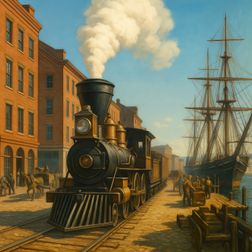
This is the story of Burlington, Vermont. Its waterfront helped make it the country's third-largest lumber port before becoming shared public ground, a transformation tied to institutions that still shape the city. But the story starts in the Intervale, before Burlington itself.Salem: Privateers, Pepper, and Five Percent of U.S. Customs Revenue
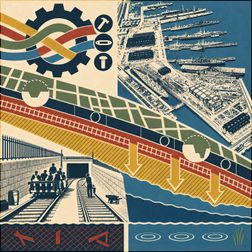
This is the story of Salem, Massachusetts. From an Indigenous homeland through settlement, trade, industry and tourism, it follows a city repeatedly reshaped by what earlier eras left behind. That story begins before Salem bore its present name.Boston: The First American Subway, the Navy Yard, and a Harbor Rebuilt
This is the story of Boston. Over four centuries, trade, government, migration, conflict, and development repeatedly remade the city, changing who held power and who shared in its growth. To see how those forces took hold, we begin with the people and place that came first.New Haven: From Muskets to Microscopes
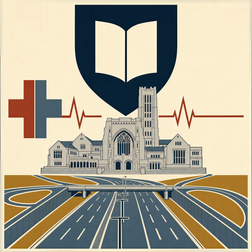
This is the story of how New Haven was built, reshaped, and still organized by its harbor, its institutions, and the choices made about its people and land. What follows moves from a religious colonial settlement to a city of Yale, wharves, factories, railroads, planning, redlining, urban renewal, and a later turn toward hospitals, research, and redevelopment, while older inequalities remain in view. To understand the city that emerges at the end, it helps to begin where its physical and civic foundations were first laid beside the water.From Fells Point to Harborplace: Baltimore’s Long Story
This narrative follows how Baltimore grew from a small settlement on the Patapsco into a port city shaped by trade, railroads, industry, segregation, redevelopment, and unequal reinvestment. Along the way, it shows how geography, migration, war, labor, race, and the waterfront repeatedly remade the city’s fortunes and its divisions. To understand how that long story begins, we can start with the ground and water that first gave Baltimore its chance.Camelback: From Summit View to Four-Season Resort
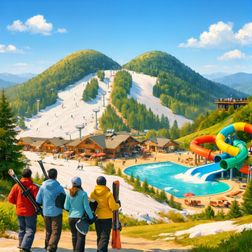
A brisk, story-driven tour of Camelback Mountain in Pennsylvania’s Poconos—how a camel-shaped ridgeline became both a scenic lookout and a year-round resort. The episode traces the summit’s early draw for views (including the stone cabin and fire tower era), the start of commercial skiing and the resort’s 1963 opening, and the way Camelback expanded into night skiing and a major tubing hill. It then shifts into the warm-weather and all-season evolution with Camelbeach, the 2015 Camelback Lodge and Aquatopia indoor waterpark, and a handful of recent upgrades and efficiency efforts—ending with a simple suggestion: don’t skip the Big Pocono State Park overlook.From Lenapehoking to Liberty: Philadelphia’s Long Story
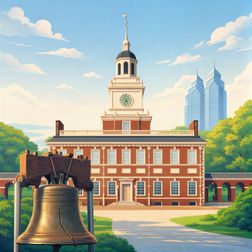
In this episode, we trace Philadelphia’s story from its Lenape roots and early European rivalries to William Penn’s founding vision and the city’s rise as a port of ideas. We follow the Revolutionary era at Independence Hall, the 1790s when Philadelphia served as the nation’s capital and endured the 1793 yellow fever epidemic, and the 1800s transformation into an industrial powerhouse shaped by canals, rail, parks, and rowhouse neighborhoods. Along the way, we visit enduring landmarks like Fairmount Water Works, Eastern State Penitentiary, City Hall, and the Benjamin Franklin Parkway, and we bring the narrative into the late 20th century and beyond—through reform, the MOVE bombing, a changing skyline, and the city’s modern identity expressed in public art.Peddler’s Village: From Chicken Farm to Storybook Escape
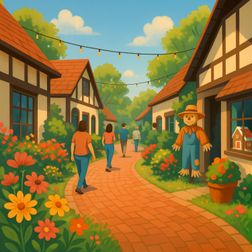
In this episode, we take a calm walk through Peddler’s Village in Bucks County, Pennsylvania—looking at how a former chicken farm became a small, privately run shopping and festival destination. You’ll hear a straightforward story of its founding in the 1960s, how the layout and gardens were designed, and how traditions like the Strawberry Festival, Scarecrow displays, holiday lights, and gingerbread competition grew over time. It’s not a guide packed with secret tips, but a simple, narrative overview of what the place is, how it came to be, and what visitors can expect in different seasons.Ride the Movies, For Real: Universal Orlando 1990–2025
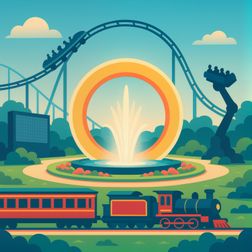
This is a clear, no-hype tour of how Universal Orlando learned to “ride the movies” for real. We’ll start with the 1990 opening that stumbled, the Jaws rebuild that taught reliability, and the 1999 leap to Islands of Adventure and Spider-Man’s moving-media breakthrough. We’ll trace the toolkit that followed—Mummy and Transformers hybrids; Forbidden Journey’s KUKA-arm flight; Hogsmeade to Diagon Alley linked by the Hogwarts Express; queue-light experiments with Virtual Line and TapuTapu; coaster craft from Hagrid’s to VelociCoaster; screen-and-stunt theater like Bourne; family refreshes—and arrive at 2025’s Epic Universe and its portal-linked worlds. Knowing this backstory will make your visit richer by revealing the engineering choices shaping every scene.