Toxic History!

Toxic History!

by Adam Blumenberg MD
Season 1

Toxic Murderer Dr William Palmer
Dr. William Palmer, surgeon, gambler, toxic murderer. The historical account of Dr Palmer and the events that made him a notorious serial killer.

One Drop

Karen Wetterhahn, a super star organic chemist at Dartmouth College who worked on heavy metal toxicity, presented to Dartmouth-Hitchcock Memorial Hospital on January, 20th 1997. She was profoundly ill, and shortly lapsed into a coma. Her records were scoured and her medical team was able to trace her symptoms back to a single exposure she had received 6 months earlier in her laboratory.

Bluer than Velvet

Methylene blue is a vividly blue dye that holds the distinction of being the first fully synthetic medication to be given to human beings, and played a major part in the scientific advances of the late 19th century. Its almost unnatural hue belies its modern use as a life-saving antidote to methemoglobinemia.

Folklore, Fact, and the Manchineel Tree
Apples have been associated being forbidden fruit and source of nefarious poisonings all throughout folklore. This presentation delves into whether there is any historical legitimacy to these tales, and if we have anything to fear when it comes to an apple a day.

Radiant Tragedy

Join us as we discuss the history of the radium craze in the early 1900s and how its early popularity led to the tragic demise of many young women who worked as radium dial painters. Their story helped establish the field of medical physics and led to important legislation aimed at the protection of the health and safety of workers.

The Deadly Art of Seeing Green

The goal of bringing the full color spectrum onto the canvas is important to artists but many of the early compounds had significant toxicity. The talk will discuss the adverse effects from some of the heavy metals found in early pigments.

The Mary Lafarge Affair: How the ‘King of Poisons’ Lost its Crown
Arsenic, known since antiquity as the ‘king of poisons’, gained infamy among nobility and the bourgeoisie as a public menace. Synonymous with crimes of ‘fashion’, arsenic poisoning was the silent killer and a nearly untraceable means of murder. It wasn’t until early 19th century France that the poudre de succession met its match, ushering in a revolution in forensic toxicology with the ‘chief terror of poisoners’.

Witchcraft, Werewolves, and Flying Ointment
This presentation delves into the toxicological roots of the infamous Witch Trials and other historical confessions of witchcraft and lycanthropy. Discover how the use of plants like belladonna and datura contributed to vivid hallucinations, leading individuals to believe in supernatural experiences, all while unaware that they were under the influence of potent deliriants.

The 1943 Bombing of Bari and the Development of Alkylating Chemotherapeutics
The German bombing of Bari, Italy in December 1943 had disastrous consequences for the Allies. Learn more about the mysterious cargo in the port that day, the Allied cover-up that followed, and the diligent detective work that contributed to the discovery of modern cancer therapy.

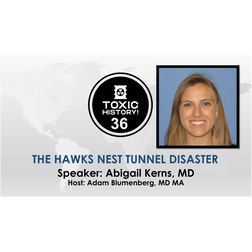
The Hawks Nest Tunnel Disaster

Construction of the Hawks Nest Tunnel was one of the worst occupational disasters in American history. Its construction resulted in large numbers of casualties, both acute and chronic, secondary to silicosis and other occupational related illnesses.
2 of 6