
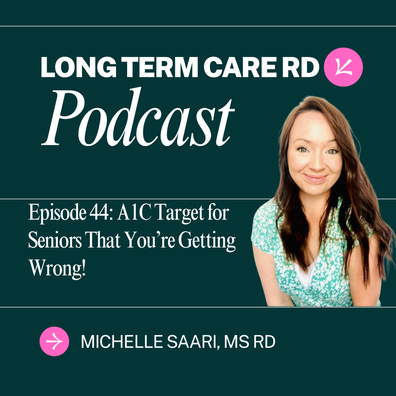
Episode notes
For years, people with diabetes have heard the same message: get your A1C as low as possible. Tighter blood sugar control is always better… right?
Not necessarily.
For many older adults, especially those living with multiple health conditions, frailty, cognitive changes, or functional limitations, aggressively lowering blood sugar can increase the risk of hypoglycemia. And in older adults, low blood sugar can have serious consequences, including confusion, weakness, dizziness, falls, hospitalization, and loss of independence.
In this episode, we’re talking about why diabetes management changes as we age and why there is no single “perfect” A1C target for everyone.
In this episode, you'll learn:
• Why the traditional “lower is always better” approach doesn't apply to every older adult
• Why current diabetes guidelines recommend individualized blood sugar and A1C targets
• Why hypoglycemia can be particularly dangerous and harder to recognize in older adults
• Common symptoms of low blood sugar that may look different with age
• How low blood sugar can increase the risk of falls and other serious complications
• Why a moderately higher A1C may actually be the safer choice for some older adults
• Which older adults may benefit from more relaxed blood sugar targets
• What questions to ask your healthcare provider about your personal diabetes goals
The big takeaway? Good diabetes care isn't about chasing the lowest possible number. It's about finding the safest and most appropriate target for the individual sitting in front of you.
If you're an older adult with diabetes or care for someone who is, this is a conversation worth having with your healthcare team.
More Resources
Looking for more practical, evidence-informed nutrition information for older adults?
Visit my website: https://longtermcarerd.com/
You'll find articles, resources, and practical nutrition information focused on older adults and the healthcare professionals who care for them.
Are you a dietitian or healthcare professional working with older adults? Explore additional clinical resources, education, tools, and support through Clinical Nutrition Central:
https://clinicalnutritioncentral.com/
Medical Disclaimer
This podcast is provided for educational and informational purposes only and is not intended to provide individual medical advice, diagnosis, or treatment. The information discussed should not replace advice from your physician, dietitian, pharmacist, or other qualified healthcare professional.