The Botstiber Podcast

The Botstiber Podcast

by Botstiber Institute for Austrian-American Studies
Season 3

Dominique K. Reill | Fiume: A City in Crisis

In this episode of The Botstiber Podcast, Luke sits down with Dr. Reill to discuss the crisis city of Fiume, known today as Rijeka, Croatia. Fiume faced immense challenges between 1918-21 after the dissolution of the Austro-Hungarian Empire left it stateless, leaving room for celebrity poets like Gabriele D'Annunzio to stoke nationalist flames and attempt to benefit from the chaos. Public-Use Intro & Outro Music from the European Archive (Beethoven Coriolan Overture, Op. 62 - Download free sheet music (musopen.org): Overture to Coriolanus, Op. 62 (1807) by Ludwig van Beethoven
Season 2

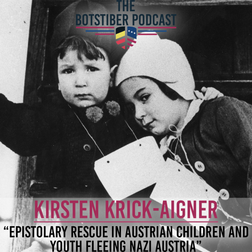
Kirsten Krick-Aigner w/ Guest Host Jacqueline Vansant | Epistolary Rescue in Austrian Children and Youth Fleeing Nazi Austria

Originally Recorded: 2021 Special guest host Jacqueline Vansant, professor emerita of German at the University of Michigan-Dearborn, discusses different research perspectives examining Austrian-Jewish Child Migration during WWII. In "Epistolary Rescue in Austrian Children and Youth Fleeing Nazi Austria" with Kirsten Krick-Aigner, adolescent agency is featured as well as the diversity of archival resources available in the record of Marianne Winter and her family's migration.

Tim Corbett w/ Guest Host Jacqueline Vansant | A History of Jewish Cemeteries in Austria
Originally Recorded: 2021 Guest host Jacqueline Vansant sits down with Tim Corbett to discuss his research into the history of Jewish Cemeteries throughout Austria.

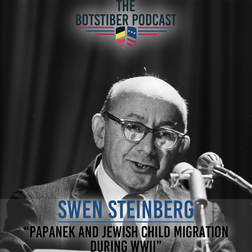
Swen Steinberg w/ Guest Host Jacqueline Vansant | Papanek and Jewish Child Migration During WWII
Originally Recorded: 2021 Special guest host Jacqueline Vansant, professor emerita of German at the University of Michigan-Dearborn, discusses different research perspectives examining Austrian-Jewish Child Migration during WWII. In Early Refugee Studies in Austrian Children and Youth Fleeing Nazi Austria with Swen Steinberg, the conversation features the research questionnaires from Ernst Papanek's graduate work. Papanek rescued almost 300 children during WWII, and he further sought to understand their experiences in a manner unmitigated by adult intervention, time, and experience.

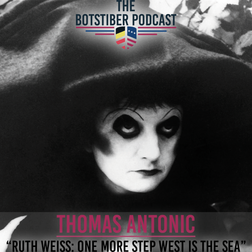
Thomas Antonic | Ruth Weiss: One More Step West is the Sea
Originally Recorded: 2021 In this podcast, Thomas Antonic discusses the life and work of Austrian-American Beat poet ruth weiss. His film about weiss, "One More Step West Is the Sea," won New York Independent Cinema's 2021 Best International Documentary Feature Award.

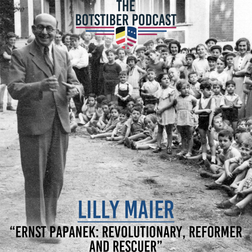
Lilly Maier | Ernst Papanek: Revolutionary, Reformer and Rescuer

Originally Recorded: 2021 Lilly Maier is the author of Ernst Papanek biography, "Auf Wiedersehen, Kinder!: Ernst Papanek. Revolutionär, Reformpädagoge und Retter jüdischer Kinder." In this podcast, she discusses the remarkable life of the Viennese-born socialist and educator who saved the lives of almost 300 children from the Nazis.

Alison Clarke | Victor Papanek: Designer for the Real World
Originally Recorded: 2021 Prof. Alison J. Clarke discusses her book, "Victor Papanek: Designer for the Real World," a biography of social design's Austrian-American trailblazer. Victor Papanek wrote "Design for the Real World," a book that augured the ascent of socially and ecologically sustainable design movements many years later. Published in 1971, the impact and relevance of his book persists globally. Prof. Clarke argues that Papanek's Austrian and émigré experiences are significant for understanding the designer and his theories.

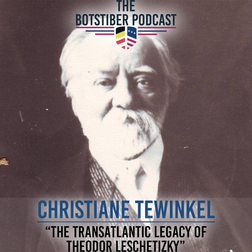
Christiane Tewinkel | The Transatlantic Legacy of Theodor Leschetizky
Originally Recorded: 2021 Dr. Christiane Tewinkel discusses her musicology research as related to Theodor Leschetizky and his American students. Born in Galicia in 1830, Theodor Leschetizky, a pianist and composer himself, became internationally famous as a piano teacher with over 1,000 students. Of these, 350-400 were American. Although Leschetizky had enormous influence during his time, his personal records had never been studied. That is, until now. Christiane Tewinkel traveled to the Leschetizky Association in New York to see their special collection for herself. Her findings are fascinating, revealing so much about a man, his "Method," students, transatlantic relations, musicology, and more.

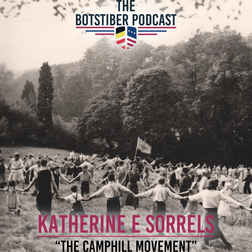
Katherine E. Sorrels | The Camphill Movement

Originally Recorded: 2021 The Camphill Movement is a global network of intentional communities for abled and intellectually disabled people. With over 100 communities today, Camphill began in 1939 after Dr. Karl Koenig, his wife Tilla, and a group of volunteers—all having fled Nazi-occupied Vienna in 1938—rejoined in Aberdeen, Scotland. There they undertook the care of Austrian- and German-Jewish refugee children, as well as British children with disabilities. From that first Camphill Special School, a fusion of Jewish diasporas with Austrian and German spiritual movements and the U.S. counterculture all developed Camphill's extraordinary approach to disability.

Michael Burri | Clemens von Pirquet and Austria's Interwar Hunger Crisis

Originally Recorded: 2020 Clemens von Pirquet, an Austrian pediatrician and scientist, held a prominent role in the international post-WWI humanitarian relief efforts during Austria’s hunger crisis. Pirquet directed his unique, scientific-based system of nutrition (no cocoa here, please) with the support of the American Relief Administration. As a result of this transatlantic partnership, hundreds of thousands of Austrian children were saved from starvation. Pirquet is primarily remembered today for his eponymous tuberculin skin test and for imparting the term “allergy” to represent the body’s heightened responses to a foreign substance. In this podcast with Dr. Michael Burri, we appreciate Pirquet’s significant achievements as an early global public health figure.
4 of 5