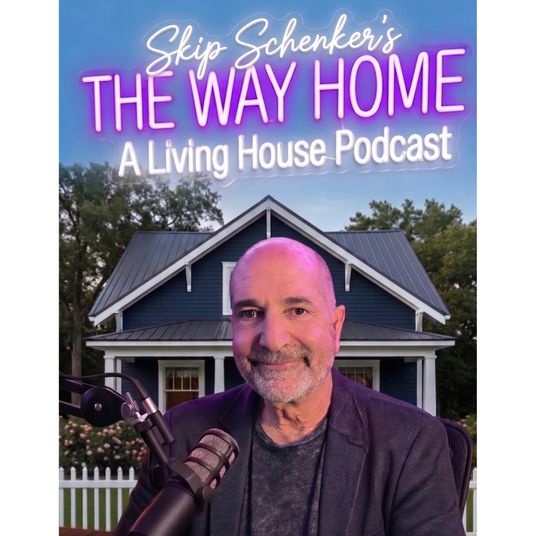
The Way Home - A Living House Podcast

The Way Home - A Living House Podcast

by Skip Schenker

The Way Home - A Living House Podcast - Trailer
Trailer
If you are a first-time buyer who feels like homeownership has slipped out of reach, this is for you. Maybe you have watched prices rise, interest rates climb, and rent take more of your paycheck every year. Maybe you are tired of being told to wait, save more, or lower your expectations. I’m Skip Schenker, and I believe you are not out of the running. You may simply need another way in. On The Way Home, we will make sense of what changed in the housing market—and explore a practical path forward through older homes, renovation financing, and the opportunities most buyers never see. Each episode is under 30 minutes, and every one builds on the last. If you are ready to stop standing on the sidelines and start finding a home you can build equity in and truly love, follow The Way Home. The Way Home — A Living House Podcast. Your path to another way in.

Episode 01 — The Day the Door Closed

AI
Show notes Cold open: A young couple sat at with Skip at their kitchen table in 2021 and decided they would wait for rates to return to their recent lows. Five years later, they are still waiting — and they are far from alone. Between 2020 and 2026, prices, mortgage rates, insurance, taxes, and consumer debt all moved in the same direction. Skip frames the series as a practical roadmap for first-time buyers who are ready to stop waiting for the market to change and start working a different angle. The three movements 01 The five-cost explosion Prices, rates, insurance, property taxes, and consumer debt rose together, putting pressure on every line item of a first-time buyer’s budget. 02 The mistake everyone is making Waiting for the market to recreate yesterday’s conditions has a cost. The buyers who win learn to approach today’s market differently. 03 The 20-episode roadmap The series moves from the squeeze to the older-home opportunity, the psychology, the renovation loan, and the families who used the process to build equity. Bridge to the book The Living House, Introduction — “Two Solutions to One Problem.” The renovation loan is the tool for transformation and thriving in this market; the parallel between home and body is the purpose. What to do this week Pull your last three months of housing-related anxiety into one sentence and write it on an index card. Carry it with you through the next nineteen episodes. Presented with support from Ready4Remodel.com and The Living House book by Skip Schenker.

Episode 07 — The Pond Nobody’s Fishing In

AI
The renovation loan has existed for decades. So why are so few first-time buyers using it—and why are so many overlooking the homes it makes possible? In Episode 7, Skip Schenker begins Part 2 of The Way Home by explaining the financing tool that changes the field of play for buyers who are tired of competing for move-in-ready homes. A renovation loan combines the purchase and renovation funds into one mortgage, allowing a buyer to evaluate an older home for what it can become—not only for what it looks like today. In this episode: • What a renovation loan actually is and how purchase and renovation funds can work together • Why many lenders and real-estate professionals do not offer this option • How after-improved value changes the way a buyer can evaluate an older property • Why the right team matters—from the loan officer to the consultant and contractor • How overlooked listings can become a more attainable path to ownership and equity From The Living House: Chapter 16, “The Prescription: How to Finance a Healthy Home from Day One,” and the Section VII introduction. What to do this week: Visit Ready4Remodel.com and run one address through the V.E.B. tool. Notice what the property reveals when you look beyond its current condition and begin to see its potential. The Way Home is hosted by Skip Schenker and presented with support from Ready4Remodel.com and The Living House.

Episode 08 — Two Solutions to One Problem

AI
A house and a body are two solutions to the same problem: how to protect a fragile, complex life from a world that is always trying to disrupt it. In Episode 8, Skip Schenker introduces the central framework behind The Living House: boundary, flow, intelligence, and soul. He explains why a home is more than a real-estate asset—and why learning to see its systems can help a first-time buyer separate cosmetic work from meaningful opportunity before making an offer. Through a practical two-houses, one-street example, Skip shows how a buyer who understands a roof, HVAC, ventilation, electrical capacity, and a workable floor plan can identify an equity gap that surface-level buyers miss. He also explores the larger promise of a thoughtfully renovated home: a place that supports safety, comfort, identity, and the life lived inside it. In this episode: • The four shared systems of the body and the home: boundary, flow, intelligence, and soul • Why a building envelope, HVAC, plumbing, and electrical system should be evaluated before cosmetic finishes • How to distinguish repair costs from opportunity when comparing an older fixer-upper with a move-in-ready home • Why renovation financing can turn deferred maintenance into a path toward equity and a home that reflects your family • A practical walkthrough to begin seeing the four systems in the home you live in now From The Living House: The introduction, “Two Solutions to One Problem.” What to do this week: Walk through your current home—whether you rent or own—and identify its boundary, flow, intelligence, and soul. Look at windows, doors, ceilings, water heater, furnace, bathroom fans, electrical panel, smoke detectors, and the rooms that do or do not reflect the people you love. Do not try to fix anything yet; simply train your eye to see the whole system. The Way Home is hosted by Skip Schenker and presented with support from Ready4Remodel.com and The Living House.

Episode 09 — The Building Envelope and Your Skin

AI
The roof, walls, foundation, windows, and doors do more than shape a house—they protect the interior life of everyone inside it. In Episode 9, Skip Schenker explains why the building envelope is the home’s first defense, and why it belongs at the front of a first-time buyer’s renovation plan. Drawing a parallel between human skin and a home’s protective layers, Skip shows how a small failure in a roof, window seal, drainage system, or insulation can become a cascade of higher utility bills, stressed HVAC equipment, water damage, mold, and costly repairs. He then gives buyers a practical field guide for identifying envelope clues before they make an offer: curling shingles, damaged flashing, water staining, failing caulk, drainage that slopes toward the foundation, drafts, cold exterior walls, and more. Most importantly, this episode reframes envelope work as one of the highest-return renovation investments a buyer can make. A sound roof, tighter windows, insulation, air sealing, and appropriate drainage can support comfort, help protect insurability, reduce energy costs, prevent larger repair scopes, and strengthen after-improved value. In this episode: • Why the building envelope and human skin perform the same essential job: protecting a regulated interior • How roof leaks, failing window seals, and poor drainage can create expensive system-wide cascades • What to look for outside and inside an older home before making an offer • Why utility bills can reveal what an envelope inspection should investigate • Why roof, windows, insulation, air sealing, and drainage should come before cosmetic upgrades in a renovation budget From The Living House: Chapter 1, “The First Defense: Your Building Envelope and Your Skin.” What to do this week: Choose one older home from the listings you have been tracking. From the public sidewalk, spend 10 minutes observing the roof, chimney flashing, eaves, foundation, grade, vegetation, and windows. Do not estimate costs yet—simply write down what you see and begin training your eye to recognize the building envelope. The Way Home is hosted by Skip Schenker and presented with support from Ready4Remodel.com and The Living House.

Episode 10 — The Systems Clock

AI
Most buyers spend thirty seconds in a basement, utility closet, or mechanical room before returning to the kitchen. In Episode 10, Skip Schenker shows why those few minutes can reveal the real financial story of an older home. Every major system has a clock: plumbing, water heaters, furnaces, air conditioning, ductwork, electrical panels, and wiring all have a useful life, recognizable warning signs, and a likely replacement scope. Skip teaches first-time buyers how to read the labels, dates, materials, and visual cues that turn an older home from a mystery into a plan. Using the home-and-body framework from The Living House, this episode connects plumbing to digestion, HVAC to thermoregulation, and electrical systems to the nervous system. You will learn what to notice when a water heater is on borrowed time, when older supply lines or drain lines deserve closer review, when HVAC equipment is nearing the end of its useful life, and why certain electrical panel brands can become an immediate safety and insurance issue. Most importantly, Skip explains how a renovation loan can help a buyer finance necessary systems work before move-in—at a long-term mortgage rate—rather than waiting for a failure to create an expensive emergency. In this episode: • How to identify a home’s “systems clock” by reading equipment data plates and visible materials • What plumbing, water-heater, HVAC, ductwork, and electrical-system ages can tell a buyer • The visual cues that signal corrosion, weak flow, aging equipment, poor maintenance, or limited capacity • Why Federal Pacific, Zinsco, and certain Pushmatic electrical panels require immediate professional attention • How to turn known systems work into a clear, financeable renovation scope before move-in From The Living House: Chapter 5, “Clean In, Waste Out”; Chapter 6, “The Hypothalamus of Your Home”; and Chapter 8, “Wired.” What to do this week: Find an open house or property you can enter. Locate the water heater, furnace, air-conditioning condenser (if present), and electrical panel. Write down each manufacture date and the electrical panel brand. Do not estimate costs or judge the deal yet—just practice reading the clocks. The Way Home is hosted by Skip Schenker and presented with support from Ready4Remodel.com and The Living House.
Season 1

Episode 02 — Why First-Time Buyers Are Now Forty
AI
Today, the median first-time buyer is 40 — an entire decade of equity-building moved to the back of adult life. The aging of the first-time buyer is not a character flaw. It is the mathematical result of prices rising faster than wages, monthly payments multiplying, and down-payment assistance becoming a dividing line. Understanding the math is a first step toward changing the outcome. The three movements 01 The income-to-price gap Wages have increased modestly while home prices and monthly payments have moved much more dramatically. 02 The down-payment trap Family gifts can accelerate entry into the market, while buyers without them are systematically held back longer. 03 The cost of waiting Waiting for rates is itself a financial decision, one that can move both the purchase price and the missed opportunity for equity.

Episode 03 - The Golden Handcuffs

AI
Cold open Owners with low mortgage rates may want to move, but replacing an affordable payment with today’s payment keeps many of them in place. The result is less inventory and a harder contest for every clean listing. Rate lock-in is a structural market condition, not a temporary glitch. Skip explains why buyers using traditional low-down-payment financing struggle against cash offers on move-in-ready homes, and where the overlooked opportunity lives instead. The three movements 01 What rate lock-in actually does Fewer sellers and fewer move-up buyers mean fewer starter homes and more pressure on the homes that do come up for sale. 02 Why cash buyers win clean listings Speed, waived contingencies, and appraisal flexibility often create an advantage that a traditional first-time buyer cannot reasonably match. 03 The pond nobody is fishing in Listings that need work and have been sitting can become a different kind of opportunity for a buyer equipped with the right financing tool.

Episode 04 - A Country of Old Homes

AI
Here's the episode description for Episode 4: America has more old houses than new opportunities — until you know how to read them. In this episode, Skip Schenker reveals why the "problem" of aging housing stock is actually the biggest hidden opportunity for first-time homebuyers today. From the median 66-year-old home in Buffalo to the nationwide age of 43 years, Skip walks you through his "systems clock" framework — the roof, water heater, furnace, plumbing, and electrical panel clocks ticking inside every older home — and shows you how to read them like a pro. Using a real "two houses, one street" scenario, he breaks down exactly how a dated fixer at $310,000 can out-compete a renovated comp at $425,000, once you factor in an FHA 203(k) renovation loan. This is the episode where the series turns the corner: from diagnosing the housing affordability crisis to showing you how to capture the equity gap hiding in every overlooked listing. 🏠 Topics covered: FHA 203(k) loans, renovation financing, systems clock, deferred maintenance, home equity gap, first-time homebuyer strategy, aging housing stock, Ready4Remodel V.E.B. tool 📖 From the book: This episode bridges to Chapter 17 of The Living House — "Inherited Brokenness: The Hidden Cost of America's Aging Homes." This week's challenge: Pick a listing that's been sitting 60+ days and scroll through every photo asking one question — what system is this picture showing me? Then come tell us in the comments what you found. Which system clock surprised you the most? 🔗 Learn how the Visualize, Estimate, Build tool works at Ready4Remodel.com

Episode 05 - The Other Debt Story

AI
She looked at her husband and said, "We knew. We just needed to hear it from a professional." Episode 5 is about the debt story underneath the housing story — and the order of operations to fix it.
1 of 2