The Security Nexus Deep Dive

The Security Nexus Deep Dive

by The Security Nexus
Season 1

Jammed: The New GPS Battlefield
GPS is under attack. From jamming in war zones to spoofing near airports and farms, GNSS threats are rising fast. This post explores how critical infrastructure is affected and what technologies—like AI, sensor fusion, and multi-antenna arrays—are being developed to fight back. The future of navigation depends on resilience. https://www.thesecuritynexus.net

Chokepoints of the Digital Ocean: Securing Subsea Cables

Subsea cables carry over 99% of the world's digital traffic but remain critically vulnerable to sabotage, espionage, natural disasters, and accidental damage. This post explores the triple invisibility of subsea infrastructure, highlights threats to cable security, and examines deterrence, detection, and redundancy options. thesecuritynexus.net

After the Coup: How Intelligence Services Survive (or Collapse) in Political Upheaval

When regimes collapse or survive a coup, intelligence agencies face purges, realignment, or ruin. This post examines how Egypt, Turkey, and Thailand rewired their intelligence structures to maintain control—offering stark lessons in power, paranoia, and statecraft. https://www.thesecuritynexus.net #thesecuruitynexus

Operation Echo Chamber: How Algorithms Are Becoming Intelligence Actors

What began as convenience has evolved into covert capability. This deep dive explores how recommendation systems—once designed to ease cognitive load—have quietly matured into powerful intelligence actors. By collecting behavior trajectories and analyzing sentiment at scale, algorithms can now detect societal unrest, fuel disinformation, and even function as tools of modern espionage. The question isn’t just what these systems know—but how they’re being used, and by whom. https://www.thesecuritynexus.net

Security by Design: Why We Need a Department of Cyber Infrastructure
The United States needs a dedicated Department of Cyber Infrastructure—a centralized executive-level body focused solely on safeguarding the nation’s digital backbone. Much like DHS was created post-9/11 to unify disparate agencies under a counterterrorism mandate, today’s cyber threats—from ransomware to foreign supply chain attacks—demand a coordinated federal response. Our current approach is fragmented and inadequate for the pace, scale, and complexity of cyber-physical convergence. This post argues for a reimagined structure that treats digital infrastructure as strategic infrastructure—vital, vulnerable, and in need of federal stewardship. #TheSecurityNexus https://www.thesecuritynexus.net

The Unseen Theater: Intelligence and Security Operations in Space: Beyond satellites—how the race for orbital dominance, intelligence surveillance, and cyber/kinetic/EW converge in orbit
Space is no longer “just” about satellites beaming weather pics or GPS timing. It’s a contested, surveilled battlespace where autonomous constellations, on‑orbit proximity ops, and dual‑use cyber/EW/kinetic tools shape deterrence, crisis stability, and escalation pathways. The same AI that optimizes space traffic can cue counterspace missions; the same cameras that map crops can quietly stalk satellites; and a glitch in orbit can ripple straight into nuclear C3 timelines. Policymakers need to build redundancy, attribution, and norms into orbital ops—before ambiguity becomes the spark. www.thesecuritynexus.net

Surveilled and Unaware: How Everyday Life Feeds the Watchers
In a hyper-connected world, we are not just observed—we are quantified. This blog post dissects the invisible architecture of ubiquitous technical surveillance (UTS), the erosion of privacy by design, and how our everyday interactions—both voluntary and coerced—fuel a vast ecosystem of data-driven control. From algorithmic profiling to emotional surveillance and counterterrorism’s moral gray zones, this piece interrogates the unsettling convergence of security, commerce, and control. https://www.thesecuritynexus.net

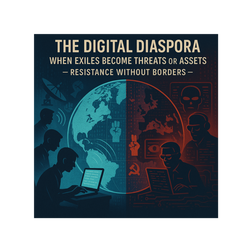
The Digital Diaspora: When Exiles Become Strategic Threats or Assets

Authoritarian regimes have long viewed exiled dissidents as a threat—but in the digital era, this contest has gone transnational. Today’s exiles are not just passive victims of repression but strategic actors in global information warfare. Armed with smartphones and secure messaging apps, they amplify dissent, shape international opinion, and even provide actionable intelligence to foreign governments. But they also face mounting risks—malware, phishing, threats to family back home—as regimes extend their coercive power across borders. Drawing on cases from Iran, Syria, and beyond, this post examines the evolving dynamic of digital transnational repression and the emerging power of the digital diaspora. https://www.thesecuritynexus.net/blog.html

The Bureaucracy of Secrecy: Is Classification Hindering Innovation?
Overclassification and rigid compartmentalization are suffocating innovation in the intelligence community. In an era where technological speed determines security relevance, our antiquated secrecy protocols increasingly serve as roadblocks, not safeguards. This piece analyzes how bureaucratic secrecy undermines agility, collaboration, and digital transformation—and argues for a recalibration of risk in how we handle classified knowledge. https://www.thesecuritynexus.net/blog.html

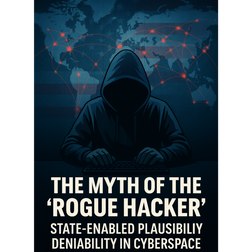
The Myth of the ‘Rogue Hacker’: State-Enabled Plausible Deniability in Cyberspace

The popular image of the rogue hacker as a lone digital warrior—unaffiliated, ideologically driven, and detached from state control—is a myth that obfuscates the real structure of cyber conflict. States increasingly outsource cyber operations to non-state proxies, leveraging patriotic hackers, private contractors, and criminal syndicates. This blog post deconstructs the lone actor narrative and examines how state-enabled plausible deniability remains a core feature—and growing liability—in contemporary cyber strategy. https://www.thesecuritynexus.net/blog.html
4 of 5