The Science of Age-less Living

The Science of Age-less Living

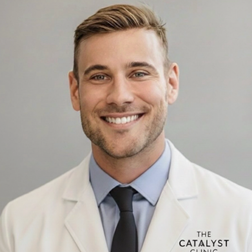
by Dr. Ethan Hausman-Marquis
Season 2
Age-less by Design: The Centenarian Genes That Rewrite How We Grow Old
What separates someone managing a pharmacy's worth of medications at seventy-five from someone who's just getting started on the road to a hundred and two? In this episode, we crack open the biological instruction manual of the world's centenarians and read its most remarkable pages. We start with a crucial distinction — the difference between lifespan (how long you live) and healthspan (how long you live well) — and the striking pattern researchers call the compression of morbidity: the way the very longest-lived people tend to stay healthy far longer and then decline quickly, burning clean and steady rather than guttering out over decades. From there, we tour the genes that show up again and again in centenarian studies across the globe. We meet APOE, the double-edged gene whose different versions tilt the odds toward risk or protection; FOXO3, the "building superintendent" that switches on your cells' repair, cleanup, and recycling crews; and the counterintuitive growth paradox of IGF-1 and mTOR, where dialing down the body's relentless "grow!" signal turns out to favor a longer, more durable life. We round out the cast with Klotho, the DNA-repair scribes that keep your genetic manuscript faithful over a lifetime, and the immune-signaling genes that know when to stand inflammation down instead of letting it smolder into "inflammaging." But the real payoff isn't a list of genes you either have or don't. It's the single idea underneath all of them: genetics loads the gun, but lifestyle pulls the trigger. Many of the exact pathways centenarians inherit for free — maintenance, repair, restraint, regulation — have handles that your daily choices can reach, through movement, sleep, the rhythm of eating, and managing chronic inflammation. You can't swap your DNA, but you can influence which genes are switched on and how loudly. This episode is about learning where those dimmer switches are, and why aging age-lessly was never a locked door.
The Age-less Night: How Your Pineal Gland Rewrites Your Genes While You Sleep
Most people treat sleep as simple recovery, but this episode reframes it as the nightly window in which a gland smaller than a pea helps decide how fast you age. That gland is the pineal gland, buried at the center of your brain, and its job is to release melatonin — not really a "sleep chemical" but a darkness signal that tells every cell in your body it's night. This signal is wired to light hitting your eyes and routed through your brain's master clock, the SCN. The catch: the pineal gland tends to calcify and its melatonin output declines with age, so the darkness signal that once washed cleanly through your body every night grows quieter over the decades. That fading signal matters because you don't have one clock — you have trillions. Nearly every cell runs its own roughly-24-hour rhythm built from "clock genes," and those genes control the timing of a huge share of what your body does, from DNA repair to metabolism to immune activity. Melatonin helps keep all these clocks synchronized. When chronic stress and poor sleep scramble that synchronization, gene expression shifts: the inflammation program (driven by NF-κB) creeps on, while repair-and-protection systems tied to the clock — like the longevity-linked SIRT1 — get thrown off schedule. Crucially, none of this mutates your DNA; it changes which genes are switched on and off through epigenetic "bookmarks" that respond to how you live. The hopeful takeaway is that because these are shifts in gene expression rather than permanent damage, much of it responds to daily behavior. The episode's highest-leverage moves are unglamorous and free: get bright light into your eyes early in the morning, defend real darkness in the hour before bed, keep your sleep timing consistent, and wind down evening stress so your cortisol rhythm stays intact. Melatonin supplements are framed honestly as a timing tool, not a proven anti-aging cure. The through-line is the show's core promise — that the most powerful levers on aging are often the quietest ones you already control.
The Age-Less Off-Ramp: What Happens When You Stop GLP-1s
The GLP-1 receptor agonists are the most effective weight loss agents ever brought to market, and their efficacy is entirely contingent on continued administration. Three randomized withdrawal studies across two molecules make this unambiguous: the STEP-1 extension found participants regained roughly two-thirds of their lost weight within a year of stopping, with blood pressure, lipids, glycaemia and inflammatory markers reverting alongside it. STEP-4 and SURMOUNT-4 showed the same pattern under cleaner designs, with the gap between continuing and stopping running to fifteen percentage points of body weight in under a year. The science of getting onto these drugs is mature. The science of getting off them is roughly a decade behind. This episode explains why, and the answer is physiological rather than behavioral. Weight loss of any kind provokes a coordinated defense — leptin falls disproportionately, ghrelin rises above pre-treatment levels, satiety peptides decline, and energy expenditure adapts downward — and that response persists for at least a year. Throughout treatment, the drug doesn't resolve this counter-regulation; it masks it by agonizing the same receptors the system uses to signal satiety. Withdraw the drug and what emerges isn't the patient's old appetite. It's the unopposed appetite of a person who has just lost fifteen percent of their body weight. Compounding this is an asymmetry in body composition: lean tissue is lost readily and regained poorly, so a completed cycle returns the patient to their starting weight with a worse ratio — a trajectory that runs directly counter to healthy aging. We work through the pharmacology properly — albumin-binding, hypothalamic melanocortin signaling, dual GIP/GLP-1 agonism, the mesolimbic reward effects — then take the off-ramp strategies one at a time and label the evidence for each honestly: chronic therapy, maintenance dosing, tapering, bridging technologies like Fractyl's duodenal resurfacing, and the next-generation oral and triple agonists. Most of what is currently done in clinical practice rests on mechanistic reasoning rather than trial data, and the distinction matters. The conclusion is straightforward: these drugs are a chronic therapy for a chronic condition, not a course of treatment, and anyone presenting them as a finite intervention with a permanent result is either not reading the withdrawal trials or choosing not to mention them.
Age-less by Design: Inside the Cell's Peptide Factory
Episode summary Right now, inside every cell in your body, trillions of microscopic factories are assembling molecules called peptides — the short chains of amino acids your body uses to talk to itself, from insulin to oxytocin. But how does your body actually build one? In this episode we follow a single peptide all the way from blueprint to finished product, using the real scientific terms but giving you a picture for every one. We start in the "library" of your DNA, where each recipe is written in three-letter words called codons, then watch the cell make a disposable photocopy — messenger RNA — so the precious original never has to leave. That copy travels to the ribosome, the cell's assembly line, where a fleet of molecular "delivery trucks" brings exactly the right amino acids and snaps them into a chain, bead by bead. But coming off the assembly line isn't the finish line. We walk through the finishing shop — where the floppy chain folds into its working shape, gets reinforced with molecular "staples," and is often trimmed down from an oversized version (the surprising way your body actually builds insulin) — and then the packaging and shipping department that releases the final peptide out into your body. We close by zooming out to nature's other method of building peptides without a ribosome at all (the route behind many antibiotics), and how humans manufacture peptides ourselves, from building them one bead at a time in the lab to turning engineered bacteria into living insulin factories. By the end, you'll understand one of the most elegant manufacturing processes in the known universe — the one that's been running inside you your whole life.
Age-less or Overhyped? The Sixty-Year Cerebrolysin Puzzle | The Age-Less Top 20 Peptides
Episode summary Cerebrolysin is a peptide preparation with a strange résumé: developed in Austria more than sixty years ago, approved in nearly fifty countries for stroke, traumatic brain injury, and dementia, put through hundreds of clinical trials — and yet still surrounded by a genuinely unresolved question about whether it works. In this episode we unpack what it actually is (not a single peptide, but a standardized mixture of amino acids and small fragments made by enzymatically digesting pig brain tissue), the one clever idea at its core (fragments small enough to slip across the blood-brain barrier and mimic the brain's own neurotrophic factors like BDNF and NGF), and the crucial gap between an effect in a lab dish and a real benefit in a human being. Then we get to the part the marketing skips. A 2023 systematic review found Cerebrolysin likely offers no benefit for survival in acute ischemic stroke and may even raise the rate of serious adverse events — and much of the supportive research has been funded by the manufacturer. We also cover the uncomfortable reality behind the vials sold online: it's not FDA-approved in the US, and the "research use only" label is a legal workaround for shipping an unregulated injectable with no purity or sterility guarantees. The takeaway is neither hype nor dismissal — Cerebrolysin is a genuinely interesting compound aimed at a real target, but the honest evidence says it's worth watching, not worth self-experimenting on with a needle. As always: not medical advice, and a real conversation for a licensed physician.
Age-Less LL-37: The Antibiotic in Your Blood | The Age-Less Top 20 Peptides
LL-37 is the odd one out in the Age-Less peptide series. Where Humanin and MOTS-c were mitochondrial longevity signals, LL-37 is the human cathelicidin — your body's own broad-spectrum antibiotic, a small positively charged peptide cut from a larger precursor and stationed at every barrier where you meet the outside world. Dr. Ethan walks through what it actually is: how it's encoded, how it's stored and released, and how that little two-faced helix kills bacteria on contact, neutralizes endotoxin, recruits immune cells, heals wounds, and links your innate immunity to your vitamin D status. Then he turns the coin over. LL-37 is genuinely double-edged — a superb defender when it fires correctly, and a documented driver of disease when it doesn't. This episode lays out the mechanisms behind its role in psoriasis, rosacea, and lupus, explains why "more is better" is exactly the wrong instinct here, and separates the strong evidence for your own endogenous LL-37 from the thin, narrow evidence for LL-37 as an administered therapy. Along the way: the real vitamin D connection (and why supplementing on top of sufficiency won't reliably raise it), and why a regulator has specifically flagged this molecule as a safety concern. The honest bottom line runs opposite to the marketing. This isn't a level to chase or a peptide to inject — it's a system to keep in good working order. No hype, no discount codes: just what LL-37 is, what it does, what the human data shows, and what the regulatory picture actually looks like in 2026. One note: I kept the title's framing accurate to the science (the "shouldn't inject" line reflects the real safety picture, not editorializing). If you'd prefer something shorter or more neutral for a feed, say the word and I'll trim it.
Age-Less Protection: The Real Science of Humanin | The Age-Less Top 20 Peptides
In this episode of The Science of Age-less Living, Dr. Ethan Hausman-Marquis unpacks Humanin — a molecule with one of the most remarkable origin stories in longevity science. Discovered in 2001 in the surviving neurons of an Alzheimer's-affected brain, Humanin turned out to be encoded not in our nuclear DNA but inside the mitochondrial genome, making it the founding member of an entirely new class of molecules: the mitochondrial-derived peptides. It reframed the mitochondrion as more than a power plant — as a sensor that, under stress, sends peptide messages to the rest of the body. Dr. Hausman-Marquis walks through what Humanin actually is, its two forms, and its well-characterized protective biology: blocking apoptosis by neutralizing pro-death Bcl-2 proteins, signaling through a trimeric cell-surface receptor to activate survival pathways, engaging the IGF-1 axis, and improving insulin sensitivity. Then comes the honest reckoning. Humanin declines substantially with age, tracks with better outcomes in observational data, and runs high in the children of centenarians — but the human evidence largely stops there. There are no completed efficacy trials, no approved product, and no established dose, and much of the most impressive preclinical work relied on a synthetic analog roughly a thousand times more potent than the natural peptide. The episode separates the compelling biology from the near-blank clinical page, covers the evidence-based ways to support Humanin naturally — exercise, caloric discipline, and mitochondrial health — and closes with a look ahead to MOTS-c, the second major mitochondrial-derived peptide. No hype, no discount codes — just the science, as it actually stands in 2026.
Age-Less Energy: The Real Science of SS-31 | Age-Less Top 20 Peptides
SS-31 — also known as elamipretide — occupies a category no other compound in this series can claim: it is the first mitochondria-targeted therapy ever to receive FDA approval. In this episode, Dr. Ethan traces the compound from its accidental discovery in a Weill Cornell pharmacology lab through to its September 2025 accelerated approval for Barth syndrome, unpacking the biology of cardiolipin — the inner mitochondrial membrane phospholipid whose decline with age sits at the centre of SS-31's entire mechanistic rationale — and explaining precisely why a peptide that concentrates over 1,000-fold inside the mitochondrial membrane represents a genuinely novel class of therapeutic tool. The mechanism is well-supported, the preclinical literature is large and independently replicated, and the clinical trial programme is the most rigorous of any compound covered in this series so far. The honest picture is more nuanced than the approval alone would suggest. The regulatory journey was long and difficult — an initial refusal to file, a subsequent rejection, and an eventual accelerated approval based on an intermediate endpoint in a rare paediatric disease population. The heart failure and AMD programmes remain in active development, not yet approved. And for the application most longevity-focused listeners are actually interested in — preserving mitochondrial function in a healthy ageing adult — there are no completed trials and no approved protocols. Dr. Ethan draws a precise line between what the approval actually means, what the active trial pipeline shows, and where the extrapolation to healthy ageing begins — and explains why SS-31 is simultaneously the most clinically credible mitochondrial compound in the longevity space and still some distance from a validated longevity intervention.
Age-Less Cognition: The Real Science of Pinealon | Age-Less Top 20 Peptides
Pinealon is one of the least discussed compounds in mainstream longevity medicine — and that obscurity is itself worth examining. Derived from pineal gland tissue and developed within a serious, decades-long Russian bioregulatory peptide research programme, it sits at the intersection of two of the most compelling areas in ageing biology: the decline of the pineal gland as a master regulator of circadian timing, and the emerging science of epigenetic modulation as a mechanism for restoring youthful gene expression patterns in ageing neurons. In this episode, Dr. Ethan Hausman-Marquis traces Pinealon from its origins in the St. Petersburg school of biogerontology through to its proposed mechanisms — BDNF-adjacent neuroprotection, circadian clock gene modulation, and a genuinely novel hypothesis about direct peptide-DNA interaction — and examines what the preclinical evidence actually shows. The honest answer is that Pinealon's evidence base is the thinnest in this series so far — geographically concentrated, not independently replicated, and nowhere near randomised controlled trial territory for any indication. But the biological target is one of the most legitimate in longevity medicine, and the mechanistic hypothesis, if it survives independent scrutiny, would represent something genuinely new in the neuroprotection space. This episode draws a precise line between what is established, what is plausible, and what remains speculation — and explains why the right response to Pinealon in 2026 is neither clinical enthusiasm nor dismissal, but a structured research agenda that has not yet been built.
Age-Less Cognition: The Real Science of SEMAX | Age-Less Top 20 Peptides
SEMAX is one of the most discussed cognitive compounds in the longevity and nootropic world — and arguably one of the most poorly understood. In this episode, Dr. Ethan does what this series always does: follows the science wherever it leads, without the hype and without the dismissiveness. The story of SEMAX starts not in a supplement company's marketing department, but in a Soviet government research institute in the 1980s, where neuropeptide scientists were asking a genuinely interesting question: could fragments of ACTH — the pituitary hormone best known for driving cortisol production — exert direct effects on the brain entirely independent of the adrenal axis? The answer was yes. And SEMAX was the engineered result: a stable, intranasally bioavailable heptapeptide designed to deliver those neuropeptide effects to the central nervous system. The mechanistic story is one of the more coherent in this series. SEMAX upregulates BDNF — brain-derived neurotrophic factor — in hippocampal and prefrontal circuits, the very regions most implicated in age-related cognitive decline. It modulates serotonin availability. It attenuates neuroinflammatory cascades. Each of those mechanisms has a plausible link to cognitive ageing, and together they form a rational basis for the compound's proposed effects. The evidence picture is more complicated. SEMAX has genuine peer-reviewed data — animal studies, Russian clinical trials in stroke and cerebrovascular disease, a 40-year research history. It is a licensed pharmaceutical in Russia, not a grey-market research chemical. But the clinical data has real structural limitations, and for the application most listeners are actually interested in — sharper cognition in a healthy ageing adult — the human randomised controlled trial evidence does not yet exist. Dr. Ethan also addresses the elephant in the room: the unusually consistent subjective reports from people who use SEMAX, what they actually tell us, and — critically — what they don't. And he covers the regulatory picture across the UK, EU, and US, the quality control risks of sourcing outside a licensed pharmaceutical supply chain, and what a properly designed research agenda for SEMAX would actually look like. If you've been offered SEMAX at a clinic, or you're considering it, or you simply want to understand why the gap between online enthusiasm and clinical evidence is so wide — this is the episode to start with.
1 of 5