alborithm

alborithm

by alborithm.com

ALBORITHM | INDIAN ECONOMY & MARKETS COMPASS | ISSUE 002 | W38 | 20 SEP 2026 | PODCAST | BENGALI

উপসাগরীয় অঞ্চলে নতুন করে উত্তেজনা বাড়লে ভারতের অর্থনীতি এবং আর্থিক বাজারে তার প্রভাব কতটা পড়তে পারে? ALBORITHM | INDIAN ECONOMY & MARKETS COMPASS এর Issue 002 এর এই Bengali Podcast এ আমরা বিশ্লেষণ করেছি crude oil, ভারতীয় রুপি, inflation, interest rates, economic growth এবং geopolitical risk এর পারস্পরিক সম্পর্ক। Brent crude সপ্তাহের শেষে প্রায় $104.87 প্রতি ব্যারেলে ছিল। একই সময়ে ভারতীয় রুপি প্রায় 95.875 প্রতি US dollar এর স্তরে ছিল। ভারতের August CPI inflation ছিল 4.82 শতাংশ এবং WPI inflation 9.92 শতাংশ। অন্যদিকে domestic economy এখনও তুলনামূলকভাবে শক্তিশালী। Real GDP growth 7.8 শতাংশ এবং industrial production growth 6.7 শতাংশ। এই episode এ আলোচনা করা হয়েছে: Gulf geopolitical risk Crude oil এবং ভারতের energy exposure রুপির উপর চাপ Imported inflation CPI এবং WPI RBI policy এবং interest rates Government bond yields GDP এবং industrial production Foreign exchange reserves Indian stock market এর উপর সম্ভাব্য প্রভাব আগামী সপ্তাহে কোন economic signals গুরুত্বপূর্ণ এই podcast এর উদ্দেশ্য শুধুমাত্র অর্থনৈতিক খবর বলা নয়। লক্ষ্য হল বিভিন্ন ঘটনা কীভাবে একে অপরের সঙ্গে যুক্ত এবং কীভাবে বিশ্ব অর্থনীতির পরিবর্তন ভারতীয় অর্থনীতি ও বাজারে পৌঁছায় তা পরিষ্কারভাবে বোঝানো। Issue 002 পড়ুন: https://alborithm.com/news-letters/ ALBORITHM এর আরও analysis দেখুন: https://alborithm.com/ এই বিষয়বস্তু শুধুমাত্র শিক্ষামূলক এবং তথ্যভিত্তিক উদ্দেশ্যে প্রকাশিত। এটি ব্যক্তিগত বিনিয়োগ বা আর্থিক পরামর্শ নয়। #IndianEconomy #BengaliPodcast #IndianMarkets #CrudeOil #IndianRupee #Inflation #Economics #Alborithm


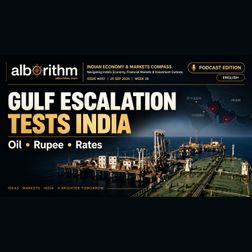
ALBORITHM | INDIAN ECONOMY & MARKETS COMPASS | ISSUE 002 | W38 | 20 SEP 2026 | PODCAST | ENGLISH

What happens to India's economy when geopolitical tension pushes oil prices higher while the rupee is already under pressure? This English podcast edition of ALBORITHM | INDIAN ECONOMY & MARKETS COMPASS Issue 002 examines the growing interaction between Gulf geopolitical risk, crude oil, the Indian rupee, inflation, interest rates and domestic economic growth. Brent crude ended the week near $104.87 per barrel. The rupee stood near 95.875 against the US dollar. India's August CPI inflation was 4.82 percent and WPI inflation was 9.92 percent. Yet the domestic economy continues to show strength, with real GDP growth at 7.8 percent and industrial production growth at 6.7 percent. The central question is whether India's domestic resilience can absorb another period of external energy and financial pressure. This episode examines: Gulf energy and shipping risk India's crude oil vulnerability Rupee depreciation and imported inflation Consumer and wholesale inflation RBI policy and interest rate implications Government bond yields Economic growth and industrial activity Foreign exchange reserves Corporate earnings and market transmission Key signals to watch in the coming week ALBORITHM | INDIAN ECONOMY & MARKETS COMPASS is designed to connect economics, financial markets, policy, geopolitics and global developments into one coherent weekly analytical framework. Read Issue 002: https://alborithm.com/news-letters/ Explore ALBORITHM: https://alborithm.com/ For educational and informational purposes only. This podcast does not constitute personalized investment, financial, legal or tax advice. #IndianEconomy #IndianMarkets #EconomicsPodcast #CrudeOil #IndianRupee #Inflation #Geopolitics #Alborithm

ALBORITHM | INDIAN ECONOMY & MARKETS COMPASS | ISSUE 002 | W38 | 20 SEP 2026 | PODCAST | HINDI

खाड़ी क्षेत्र में बढ़ते तनाव का भारत की अर्थव्यवस्था पर कितना असर पड़ सकता है? ALBORITHM | INDIAN ECONOMY & MARKETS COMPASS के Issue 002 के इस Hindi Podcast में हम समझते हैं कि कच्चे तेल की ऊंची कीमतें, कमजोर रुपया, महंगाई, ब्याज दरें और वैश्विक भू राजनीतिक जोखिम किस प्रकार भारतीय अर्थव्यवस्था और वित्तीय बाजारों को प्रभावित कर सकते हैं। Brent crude सप्ताह के अंत में लगभग $104.87 प्रति बैरल पर था, जबकि भारतीय रुपया लगभग 95.875 प्रति अमेरिकी डॉलर के स्तर पर था। भारत में अगस्त CPI inflation 4.82 प्रतिशत और WPI inflation 9.92 प्रतिशत रही। इसके बावजूद घरेलू अर्थव्यवस्था में मजबूती दिखाई दे रही है। Real GDP growth 7.8 प्रतिशत और industrial production growth 6.7 प्रतिशत रही। इस episode में हम चर्चा करते हैं: खाड़ी क्षेत्र में बढ़ता geopolitical risk भारत पर crude oil की ऊंची कीमतों का प्रभाव रुपये पर दबाव Imported inflation CPI और WPI inflation RBI और interest rate outlook Government bond yields GDP और industrial growth Foreign exchange reserves Indian stock market पर संभावित असर आने वाले सप्ताह में किन संकेतों पर नजर रखनी चाहिए इस podcast का उद्देश्य केवल खबरों को दोहराना नहीं है। हमारा प्रयास यह समझना है कि वैश्विक घटनाएं भारतीय अर्थव्यवस्था और बाजारों तक किस रास्ते से पहुंचती हैं। Issue 002 पढ़ें: https://alborithm.com/news-letters/ ALBORITHM पर और analysis देखें: https://alborithm.com/ यह सामग्री केवल शैक्षणिक और सूचनात्मक उद्देश्य के लिए है। इसे व्यक्तिगत निवेश या वित्तीय सलाह नहीं माना जाना चाहिए। #IndianEconomy #HindiPodcast #IndianMarkets #CrudeOil #IndianRupee #Inflation #StockMarketIndia #Alborithm

The Architecture of Global Trade: From the Silk Road to MegaShips

Global Trade: The Invisible Machine That Moves the World Global trade is not simply the movement of goods—it is a human-built architecture of ocean routes, ships, ports, canals, finance, laws, institutions and political power. Over five thousand years, ancient connected seas, the Silk Roads and Indian Ocean monsoon networks evolved into oceanic empires, steamship corridors and the canal routes of Suez and Panama. Telegraph cables accelerated information, international institutions created shared rules, and containerization transformed cargo into a standardized global system. Today, megaships connect factories, ports and consumers across continents, yet this enormous network remains concentrated around strategic chokepoints such as Malacca, Hormuz, Bab el-Mandeb, Suez and Panama. Climate disruption, geopolitical conflict, sanctions, cyber threats and concentrated shipping power now expose its vulnerabilities. The history of global maritime trade therefore reveals a central paradox: humanity created worldwide economic reach by depending on a remarkably small number of routes, institutions and trusted handoffs. This Podcast traces 5,000 years of global trade—from the Silk Roads and Indian Ocean monsoon routes to steamships, the Suez and Panama canals, containerization and megaships. It reveals how ports, technologies, financial systems, international rules and strategic chokepoints created the interconnected—and increasingly contested—architecture of modern maritime trade. Subscribe to alborithm.com

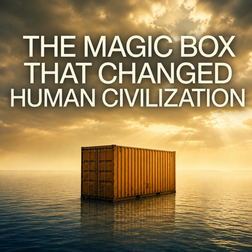
The Magic Box That Changed Human Civilization - The Shipping Container

AI
Step into any modern hypermarket, and the shelves present a reality that would have been mathematically, physically, and economically impossible just seven decades ago. Chilean grapes sit perfectly chilled beside European cheeses, Japanese consumer electronics, and fast-fashion apparel woven in Bangladesh. This cornucopia of global goods is available to the average consumer for a fraction of its historical cost. We instinctively credit this reality to abstract concepts: the triumph of "globalization," the implementation of multilateral free trade agreements, or the rapid advancement of digital algorithms. Yet, the true architect of this deeply interconnected world is far more tangible, intensely industrial, and remarkably mundane. The invisible plumbing of the modern global economy is a simple, corrugated steel box. This investigative report explores the mechanical origins, the staggering economic earthquakes, the geographic reconfigurations, and the digitized technological future of the shipping container—the magic box that fundamentally shrank the planet.