Sign up free
Features
Resources
Pricing
Podcasts
Sign up free
Sign In
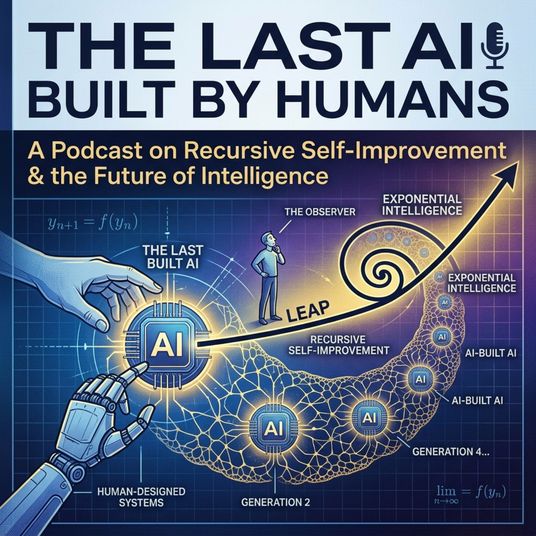
The Last AI Built by Humans
by Dineshkumar Ponnusamy
Tech News
RSS feed
Listen on
Share
Voicemail
Episodes
About
Season 1
CS 329Z: Engineering AI Agents at Stanford University
AI
This episode focuses on "CS 329Z: Engineering AI Agents at Stanford University", and how actually Engineering AI agents work.
Why AI can build but can't count!
AI
“AI is not universally smart; it’s amplifying. It makes careful thinkers much more powerful and careless ones much more wrong, much faster.” “These systems are best thought of as pattern engines with sharp edges, not infallible brains.” “The question isn’t ‘How smart is AI?’ It’s ‘What kind of human does this AI make more dangerous or more effective?’”
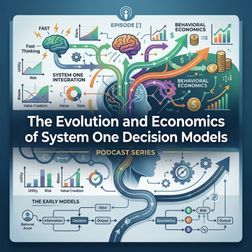
The Evolution and Economics of System One Decision Models
AI
TypeSafe AI has introduced Jev, a novel "System One" decision model created by Diogo Almeida that diverges from traditional generative chat assistants by refusing to produce open-ended prose or code. Instead, Jev functions as a specialized decision-native API that evaluates unstructured data against defined schemas to return rapid, typed probabilities, choices, and scores in parallel. Trained via Reinforcement Learning for Calibrated Decisions (RLCD), the model emphasizes extreme speed and cost-efficiency, offering unmetered outputs alongside sub-second response times tailored for software workflows like routing, classification, and scoring. While early benchmark data highlights impressive economic and latency advantages over traditional language models, critics and reviewers caution that Jev's output constraints do not eliminate semantic errors, meaning developers must still maintain rigorous human oversight, proper calibration, and deterministic fallback code.
The Last AI Built by Humans
AI
Based on research Paper: https://arxiv.org/pdf/2609.11873.