History With Kelso

History With Kelso

by Joshua Kelso
Season 2

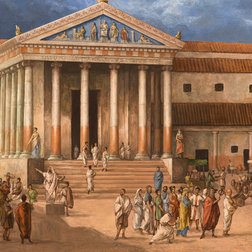
The Second Secession of The Plebeians 449 B.C

this show will dive into the extended and challenging struggle of the plebeians, or common people, in ancient Rome to establish the rule of law, a principle where everyone is subject to the same laws. Their determined efforts ultimately culminated in the creation of the Twelve Tables. This was a significant collection of laws inscribed on tablets, displayed publicly for all citizens to see and, more importantly, to obey. These laws served as a fundamental cornerstone for civil law. Its influence still profoundly impacts how justice is administered, setting standards for fairness and equity, and how societies are governed, it was big step on the journey of the common people not only in rome, but around the world throughout history.
Season 1

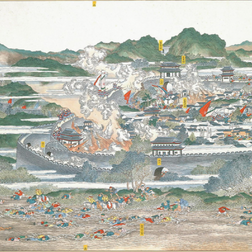
The Taiping Heavenly Kingdom Comes Crashing Down - The Taiping Rebellion part 2
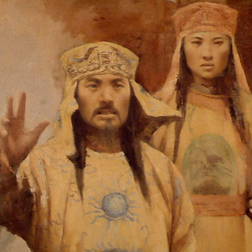
The Taiping Rebellion a massive and brutal civil war that tore through China from 1850 to 1864 was a truly devastating event. It pitted the established Qing Dynasty against the newly formed Taiping Heavenly Kingdom a group led by Hong Xiuquan a man who claimed to be the younger brother of Jesus Christ. The war lasted fourteen long years and resulted in a staggering loss of life somewhere between twenty and thirty million people perished This immense death toll had a lasting effect on China fundamentally weakening the Qing Dynasty and leaving its mark on the country's social economic and political life for many years to come. https://rss.com/podcasts/the-kelso-show/1970727/

The Chinese Brother of Jesus Who Started A War Deadlier Than WW1- The Taiping Rebellion part 1

The Taiping Rebellion a massive and brutal civil war that tore through China from 1850 to 1864 was a truly devastating event. It pitted the established Qing Dynasty against the newly formed Taiping Heavenly Kingdom a group led by Hong Xiuquan a man who claimed to be the younger brother of Jesus Christ. The war lasted fourteen long years and resulted in a staggering loss of life somewhere between twenty and thirty million people perished This immense death toll had a lasting effect on China fundamentally weakening the Qing Dynasty and leaving its mark on the country's social economic and political life for many years to come.

The Island Before Rome.

This is my novel summary of steven saylors Roma

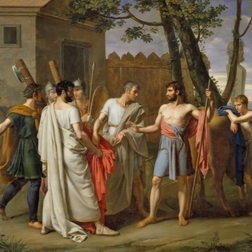
The First Secession of of the Plebeians 494 BC
The First Secession of the Plebs was a pivotal moment in early Roman history, it took place between 495 and 493 BC. This event was a serious social and political crisis It showed the deep divide between the wealthy patricians and the common people the plebeians The plebeians were struggling under heavy debt and had no say in how the government was run They felt ignored and treated unfairly by the powerful patricians who controlled the Roman Senate and held all the important positions of power. The plebeians main problems were crushing debt and a complete lack of political power They were forced to work the land for wealthy landowners often falling deeply into debt There was no way for them to voice their concerns or have any influence on the laws that governed their lives This led to growing anger and resentment The patricians the ruling class initially tried to deal with the plebeians concerns but they were disorganized and couldn't agree on a solution Some wanted to help while others ignored the problem completely The Senate and the consuls the main leaders of Rome did not act decisively making the situation worse Adding to the complexity were ongoing wars with other groups While Rome was winning these wars the underlying tensions among its citizens continued to build Eventually the plebeians reached their breaking point In a bold move they left Rome and went to Mons Sacer a sacred hill outside the city This was a powerful act of protest showing their determination to fight for their rights This dramatic secession was the final event in a series of growing tensions and the failure of the Senate to address the plebeians debt problems After a period of negotiations the patricians finally agreed to make some concessions to the plebeians A new position was created the office of tribune of the plebs These tribunes were elected by the plebeians and their job was to protect plebeian interests Their safety and authority were ensured by making their persons sacrosanct meaning harming a tribune was a grave offense Even after the creation of the office of tribune things didn't immediately improve for the plebeians Rome faced a terrible famine making life even harder for the people A famous Roman general Coriolanus who had sided with the patricians was eventually exiled further showing the instability of Roman politics at this time The First Secession was a major turning point in Roman history marking a crucial step in the struggle for greater equality and representation for the common people

The Great Samnite War Part 2 - Romes Revenge
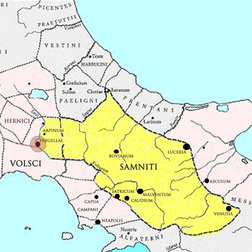
The Second Samnite War (326–304 BC) was a significant conflict between the Roman Republic and the Samnites, a group of ancient tribes in central Italy. Tensions escalated as Rome sought to expand its influence over the Italian Peninsula. The war began when Rome intervened in a dispute between the Samnites and the city of Capua. The conflict featured several notable battles, including the Battle of the Caudine Forks, where the Romans faced a humiliating defeat and were forced to surrender. Despite early setbacks, Rome ultimately emerged victorious, leading to the conquest of Samnium and greater Roman control in the region. The Second Samnite War was marked by several key events and battles that significantly shaped the trajectory of Roman expansion. One of the most notable battles was the Battle of the Caudine Forks in 321 BC, where the Roman army was ambushed and forced to surrender to the Samnites. This defeat was a severe blow to Roman pride and military reputation but served as a catalyst for reforms in their military tactics and organization. Following this, Rome regrouped and went on to achieve significant victories, including the capture of important Samnite cities. The war concluded in 304 BC with the establishment of Roman dominance over Samnium, further solidifying Rome's control over central Italy.

The Bar Kokhba Revolt - Third Roman Jewish war 132-135 CE
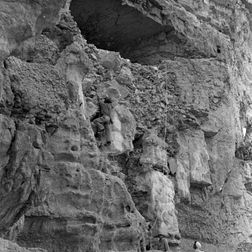
The Bar Kokhba revolt (132-135 CE) was a significant Jewish uprising against Roman rule, leading to devastating consequences for the Jewish population and lasting impacts on Jewish identity and governance.

The Kitos War - The second Roman Jewish War - 116-118 CE
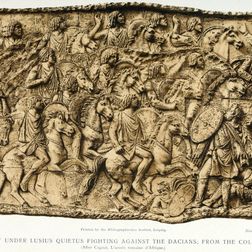
The Kitos War which took place between 116 and 118 CE was a significant uprising by the Jewish people in a region called Judaea. This uprising grew out of growing ethnic tensions and a strong desire for change among the Jewish population. It was part of a larger series of Jewish revolts known as the Diaspora Revolt. The conflict ultimately resulted in harsh and severe responses from the Roman authorities, who were determined to maintain control.

The First Roman Jewish War - The Great Jewish Revolt - 66-74 CE
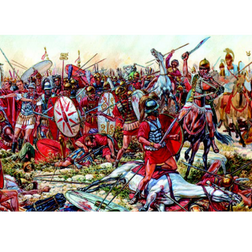
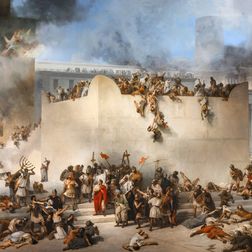
The First Jewish-Roman War which took place from 66 to 74 CE was an important and large-scale revolt against the Roman Empire. This uprising resulted in the significant destruction of Jerusalem and its sacred Temple. The war had lasting effects on the Jewish people, deeply altering their identity and contributing to the emergence of Rabbinic Judaism during this tumultuous time.

A Forgotten Roman Civil War- The Sertorian War 80-72 bc

The Sertorian War was a significant and impactful civil conflict that unfolded in the Roman Republic between the years 80 and 72 BC. This war took place on the Iberian Peninsula, a region referred to as Hispania by the Romans. The conflict was primarily between two rival factions: one faction was led by Quintus Sertorius, while the opposing side was aligned with the Roman Senate, which was restructured following Sulla's earlier civil war. Sertorius, who had a strong following among Roman exiles and native tribes including Celts, Aquitanians, and Iberians, positioned himself as a leader fighting for legitimate governance in the region. Sertorius had initially been appointed proconsul of Hispania in 83 BC by the Marian faction, but he was soon ousted by an army loyal to Sulla in 81 BC. However, he made a notable return in 80 BC, landing in Hispania Ulterior, where he quickly gathered support and began to campaign against the Sullan governors with great success. He effectively portrayed himself as the rightful leader of Hispania, gaining the trust and allegiance of various native tribes while implementing innovative guerrilla warfare tactics that proved advantageous in battle. From 80 to 77 BC, Sertorius was able to consolidate his power over both the provinces of Hispania Ulterior and Citerior. During this time, he engaged in numerous pitched battles and cleverly utilized guerrilla warfare strategies. Metellus Pius was dispatched by the Senate against Sertorius, but even after several years of hard-fought battles, he was unable to dislodge Sertorius from his position. In late 77 BC, the Senate sent Pompey to assist Metellus. However, the year 76 BC saw Pompey face a significant defeat against Sertorius at the Battle of Lauron, which hindered the efforts of the Sullan generals to regain control during that period. The year 75 BC was crucial, as it featured several notable clashes that began to weaken Sertorius' hold on power. During this year, battles were fought where prominent leaders in Sertorius’ camp, such as Marcus Perperna Veiento and Gaius Herennius, faced defeat at the hands of Pompey at the Battle of Valentia. Likewise, Metellus achieved victory against Sertorius’ legate, Hirtuleius, at the Battle of Italica. Sertorius himself engaged Pompey in a battle that resulted in no clear winner at the Battle of Sucro, followed by another indecisive skirmish between the combined forces of Pompey and Metellus at Saguntum. Ultimately, the war drew to a close with the forces of the Senate prevailing over the Sertorian faction, marking the end of Sertorius' rebellion and solidifying Roman control over Hispania once again. This series of events highlighted the complexity and turmoil within the Roman Republic during this period, showcasing the significant struggles for power that characterized the era of Roman civil wars.
2 of 3