The Greg SCHREFFLER Show™

The Greg SCHREFFLER Show™

by Greg SCHREFFLER
Season 2
America 250 e13 Truth, Faith, Freedom - Cape Cod
AI
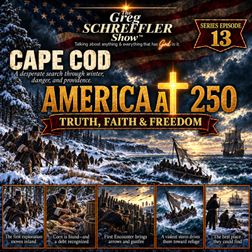
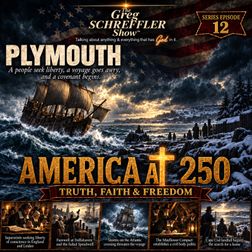
And before their search is over, the dangers they face crossing the Atlantic will be replaced by dangers of an entirely different kind. Before there could be a Plymouth Colony, they first had to find a place to plant it. And finding it may prove far more complicated than simply stepping off the Mayflower. SOURCES & REFERENCES — EPISODE 65: “PLYMOUTH” Principal Primary Sources: • Mourt’s Relation (1622) — contemporary account of the Mayflower’s exploring expeditions, First Encounter, Clark’s Island and the discovery of Plymouth Harbor: https://mayflowerhistory.com/s/MourtsRelation.pdf • William Bradford, Of Plymouth Plantation — Bradford’s firsthand retrospective history: https://www.gutenberg.org/files/69871/69871-h/69871-h.htm • John Smith, A Description of New England (1616) — Smith’s exploration of New England and account of Thomas Hunt’s misconduct: https://digitalcommons.unl.edu/cgi/viewcontent.cgi?article=1003&context=etas Supporting Historical References: • Pilgrim Hall Museum — The Pilgrims’ Landing: https://www.pilgrimhall.org/the-pilgrims-landing-in-america/ • Pilgrim Hall Museum — William and Dorothy Bradford: https://www.pilgrimhall.org/william-bradford-in-17th-century-documents/ https://www.pilgrimhall.org/dorothy-may-bradford/ • MayflowerHistory.com — Mayflower crew and primary-source collection: https://mayflowerhistory.com/crew https://mayflowerhistory.com/primary-sources-and-books • General Society of Mayflower Descendants — The Mayflower Compact: https://themayflowersociety.org/history/the-mayflower-compact/ Scripture: Exodus 20:15; Leviticus 6:4–5; Numbers 13; Psalm 145:15–16; Matthew 7:12; Isaiah 43:2; Nehemiah 4:9; Psalm 91:5; Proverbs 16:9; Nahum 1:7; and Deuteronomy 5:12. Scripture translations used: ASV, BSB, CSB, KJV, NASB 2020 and AMP. Historical dates are presented according to the English Old Style calendar used in 1620. Original quotations may contain lightly modernized spelling and punctuation for clarity
America 250 Truth, Faith, Freedom e12 - Plymouth
AI
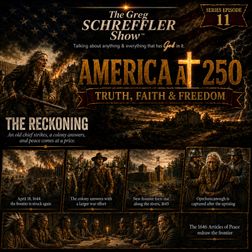
And when they finally reached the coast of North America, almost nothing went according to plan. Before they could establish a colony… before they could build homes… before they could even know whether they would survive what was coming… they faced a question that would become far more important than they could possibly have understood at the time. Plymouth References PRIMARY & CONTEMPORARY HISTORICAL SOURCES William Bradford — Of Plimoth Plantation Principal firsthand source for the Scrooby/Leiden congregation Reasons for leaving Holland “Manifold temptations” “All great & honourable actions…” Departure from Delfshaven “They knew they were pilgrims” Speedwell difficulties Mayflower voyage Cracked beam and iron screw John Howland rescue William Butten’s death Cape Cod arrival “Discontented and mutinous speeches” Mayflower Compact text Confirmation of John Carver as governor Original manuscript preserved by the Commonwealth of Massachusetts Edward Winslow / William Bradford — Mourt’s Relation (1622) Earliest published account of the Plymouth settlement Cape Cod arrival Need for unity and civil government Government formed by “common consent” Early surviving text of the Mayflower Compact Agreement of the Merchant Adventurers and Planters — July 1, 1620 £10 share structure Labor counted toward investment Seven-year joint-stock partnership Common profits from trade, fishing, labor, and other activities Division of property and profits at the end of the agreement Captain John Smith — contemporary description of the Merchant Adventurers Approximately seventy investors Gentlemen, merchants, and craftsmen Primarily located around London Voluntary association rather than a single incorporated company HISTORICAL INSTITUTIONS & SCHOLARLY VERIFICATION Massachusetts State Library Bradford manuscript history and provenance Mayflower passenger count September 6, 1620 departure Cape Cod arrival chronology Survival of Bradford’s handwritten Compact text Pilgrim Hall Museum — Plymouth, Massachusetts Scrooby Separatists William Brewster John Robinson Leiden exile Mayflower and Speedwell chronology Passenger records John Howland Stephen and Elizabeth Hopkins Samuel Fuller William Butten Bradford quotations and manuscript context Not all sources listed
America 250 e11 Truth, Faith, Freedom - Reckoning
AI
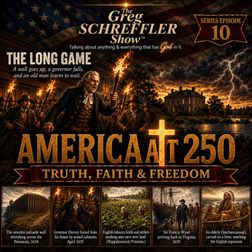
Opechancanough [oh-peh-KAN-kuh-noh] barely seemed to notice. Because none of that was ever the real story. The real story was patience — the kind that outlasts governments, outlasts a body giving out, outlasts everyone’s guard going down. Today, that patience finally meets its moment. References Verified Historical & Scriptural References 1. William Waller Hening, ed., The Statutes at Large; Being a Collection of All the Laws of Virginia, Vol. I. Primary compilation of Virginia’s surviving colonial laws. Essential for the October 1644 and February 1644/45 wartime legislation: military expenditures, requirements for dangerous settlements, the tobacco levy supporting Berkeley’s voyage and the purchase of powder, compensation for wounded soldiers, Pamunkey and Chickahominy campaign costs, monthly fasting and prayer, annual April 18 thanksgiving, the one-soldier-per-fifteen-tithables provision, construction of Fort Royal, Fort Charles and Fort James, employment of Accomac and Rappahannock Native assistance, and procurement of powder, shot and lead. Also contains the March 1646 peace/campaign legislation and the October 1646 Articles of Peace. Hening’s Statutes at Large, Volume I (USGenWebSites) 2. General Assembly of Virginia, “Treaty Ending the Third Anglo-Powhatan War” — October 1646. Primary text of the agreement with Necotowance. Verifies acknowledgment of the English Crown, appointment or confirmation of future Native rulers, Virginia’s promise of protection, annual tribute of twenty beaver skins, territory north of the York River, English settlement between the James and York, restrictions on movement by both English and Native people, designated messenger routes and striped-cloth identification. Transcription source: Hening, Vol. I, pp. 323–326. 1646 Treaty — Encyclopedia Virginia primary document (Encyclopedia Virginia) 3. Library of Virginia, “Treaty Between the English and the Powhatan Indians, October 1646.” Independent institutional transcription and historical background for the treaty and its reciprocal obligations, territorial provisions and political consequences. Library of Virginia — 1646 Treaty (Library of Virginia) 4. Danielle Moretti-Langholtz et al., National Park Service, A Study of Virginia Indians and Jamestown: The First Century, Chapter 4. Major secondary study grounded heavily in colonial records. Verifies the 1644 war, hardest-hit frontier regions, English countercampaigns, Richard Kemp’s February 27, 1645 report, English reliance on mounted soldiers and Native intelligence, the ammunition shortage, efforts involving Rappahannock and Accomac assistance, the capture tradition, Pamunkey prisoners and their removal to Western/Tangier Island, and the construction of frontier forts. NPS Jamestown Study — Chapter 4 (NPS History) 5. National Park Service, A Study of Virginia Indians and Jamestown: The First Century, Chapter 7. Chronological treatment placing Opechancanough’s capture, imprisonment and death in 1646 and documenting the March 1646 Assembly’s attempt to obtain peace before further campaigning. Important because its chronology differs from material associating the capture with 1645. NPS Jamestown Study — Chapter 7 (NPS History) 6. Helen C. Rountree, “Opechancanough (d. 1646),” Encyclopedia Virginia. Key modern scholarly biography. Verifies the early-1640s expansion of English settlement, Opechancanough’s 1644 coalition—including some Nansemond, Chickahominy, Weyanock and possibly others—the approximately 400 English deaths, withdrawal following the assault, Berkeley’s eventual expedition, capture at a fortified position far up the Pamunkey River, removal to Jamestown, the later Beverley spectacle tradition and Opechancanough’s death. Encyclopedia Virginia — Opechancanough (Encyclopedia Virginia) Ot enough space to list all references.
America 250 e10 Truth, Faith, Freedom - The Long Game
AI
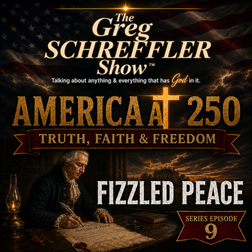
We won’t rush past it. Today is about everything that happened in between — and about a question worth contemplating as we continue: an agreement nobody wrote down, between two exhausted sides who trusted it for very different reasons — what actually holds a peace like that together? References Primary/Period Sources •Wyatt’s April 1622 letter to the Virginia Company (referenced for continuity; primary text of the 1635 petition against Harvey citing his Powhatan peace as a grievance) •1649 estimate of Opechancanough’s age (“nearly 100”), as preserved via Encyclopedia Virginia’s timeline •Martha McCartney, Virginia Immigrants and Adventurers, 1607–1635 — source for the 1634 population figure (~4,900) •Mary Tucker Magill, History of Virginia for the Use of Schools (1873) — earliest located source for Opechancanough being carried on a litter during the 1644 attack Major Historical Sources •Encyclopedia Virginia — timeline entries for the 1632 truce, 1634 palisade, 1641 incident (single-sourced, flagged), Opechancanough’s age/condition •EBSCO Research Starters — Powhatan Wars overview; 1644 population figure (~8,000 settlers) •Virginia Places (virginiaplaces.org) — 1634 palisade wall details, Harvey’s “thrusting out,” Wyatt succession •Wikipedia — Sir John Harvey, George Calvert/Lord Baltimore, Sir Francis Wyatt, Province of Maryland founding •J. Mills Thornton, “The Thrusting Out of Governor Harvey: A Seventeenth-Century Rebellion,” Virginia Magazine of History and Biography (1978) — definitive academic study of the 1635 Harvey removal •Virginia Historical Magazine (via land patent abstracts) — contemporary “unprincipled, avaricious and tyrannical” characterization of Harvey (flagged as a contested accusation from political opponents, not proven fact) •AmericanHistoryCentral.com — source for the Maryland-Catholic-alliance and English-Civil-War claims (both explicitly flagged in-script as single-sourced and unverified) •Reinhardt Publications demographic table — checked for 1630/1640 Virginia population figures, ultimately rejected as unreliable (internally inconsistent, conflated 1620 Virginia/Plymouth figures) Recommended Further Reading •Helen C. Rountree’s work on Opechancanough and the Powhatan (cited via Encyclopedia Virginia) for deeper background on his final years and 1646 capture/death
America 250 e9 - Truth, Faith, Freedom - Fizzled Peace
AI
So rather than walk you through every raid and every season in painstaking detail — telling you the same kind of story five or six times over — we're going to FF if you will. We'll hit the highlights that matter: a gunpowder shortage that stalls the English for a couple of years without the Powhatan ever knowing it, a false peace in 1628 that falls apart within months, and we're going to slow back down when we get to something you haven't heard yet — who, on the English side, actually started profiting from this war continuing. That's a part of the story that deserves its own real space. References Primary/period sources: Edward Waterhouse’s 1622 account and colonial-era records (background continuity from Episode 60) Major historical sources used this episode: Encyclopedia Virginia — Second Anglo-Powhatan War overview (1622-1632); “feede fights” raiding strategy; elite opposition to the 1632 peace; September 30, 1632 truce terms and lack of humiliating provisions Jamestown-Yorktown Foundation — “fizzled” characterization of the war’s end; elite profiteering from raided corn tied to indentured/enslaved labor demands VirginiaPlaces.org — 1628 temporary truce; lack of surviving full treaty documentation for 1632; 1634 peninsula palisade wall as a distinct post-treaty event Multiple cross-referenced sources (World History Encyclopedia, Britannica, Biography.com, FamilySearch) — Opitchapam’s 1629 death and Opechancanough’s formal succession as paramount chief; Governor Harvey’s tenure and 1635 ouster; 1619 White Lion arrival at Point Comfort Editorial note — sources checked but not used: One source (Lela Markham, “Powhatan Wars,” Aurora Watcher Alaska) describes Opitchapam as Opechancanough’s “younger brother” — this contradicts the succession order established and cross-verified in Episode 59 (Opitchapam as elder, nominal paramount chief 1618-1629) and was not used. One source (World History Encyclopedia) states the war “officially ended in 1626” — this is an outlier not supported by other sources and contradicted by the well-documented September 30, 1632 peace date used throughout. Not used.
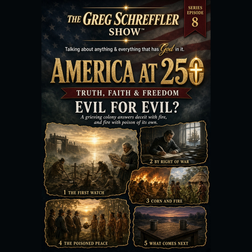
America 250 e8 “Evil for Evil”?
AI
Outlying plantations abandoned overnight. Survivors streaming into Jamestown on foot. A governor with no real map, crossing off names of settlements he no longer controlled, burying the dead in the same breath he was mustering what defense he could. References "Francis Wyatt." Wikipedia. https://en.wikipedia.org/wiki/Francis_Wyatt Jamestown-Yorktown Foundation. "The Tragedy of 1622: The Powhatan Paramount Chiefdom Military Offensive Against English Settlers in Virginia." Blog. https://www.jyfmuseums.org/Home/Components/News/News/86/148 "Samuel Jordan, Charles City, Virginia ca 1577-1623." Source of the verbatim Francis Wyatt quote (April 1622 letter to the Virginia Company). https://sites.rootsweb.com/~tmetrvlr/bio18.html "1622 Massacre." Jordan Family Tree. http://www.anamericanquilt.com/1622-massacre.html Hatch, Charles E., Jr. The First Seventeen Years, Virginia 1607-1624. Project Gutenberg. https://www.gutenberg.org/files/30780/30780-h/30780-h.htm "Indian Massacre of 1622." World History Encyclopedia. Source for the ~700 post-massacre winter deaths figure. https://www.worldhistory.org/Indian_Massacre_of_1622/ "The Powhatan Indian Attack of March 22, 1622." Virtual Jamestown. Source for the ~400 post-massacre winter deaths figure (used to establish the disputed range). https://www.virtualjamestown.org/phatmass.html "Jamestown: Legacy of the Massacre of 1622." Encyclopedia.com. Source for the Edward Waterhouse "right of war" quote and the "right of conquest" framing. https://www.encyclopedia.com/defense/energy-government-and-defense-magazines/jamestown-legacy-massacre-1622 "The Powhatan Indian Attack of March 22, 1622." Virtual Jamestown. Source for John Smith's offer to lead 100 soldiers and his "sought no revenge till their corn was ripe" line. https://www.virtualjamestown.org/phatmass.html Jamestown-Yorktown Foundation. "1622 Powhatan Offensive at Jamestown." Blog. Source for "fieringe and wastinge" tactics, targeted tribes, and continued Eastern Shore/Potomac alliances. https://www.jyfmuseums.org/Home/Components/News/News/112/148 Not all references can be listed…
America 250 e7
AI
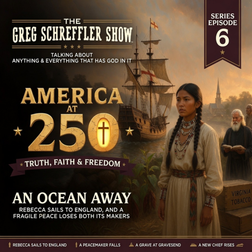
But by March of 1617, Rolfe is standing at another grave, this one at Gravesend, England, burying Rebecca far from the land she'd been taken from. And his and Rebecca's boy, little Thomas — is too sick to make the voyage home with him. So Rolfe does something almost unthinkable to a modern parent: he leaves his son behind, in the care of relatives, and sails back to Virginia alone. Not because he stopped loving his boy. But because he believed, deeply, that the colony's survival depended on him being there. Opening Remarks / John Rolfe background Encyclopedia Virginia — John Rolfe entry (Bermuda shipwreck, first wife/infant daughter, Gravesend death, Thomas) Historic Jamestowne — Rolfe biography and timeline Grokipedia / Wikipedia — cross-check on first wife's name (disputed: "Sarah Hacker" per some sources, unknown per Encyclopedia Virginia) Segment 1 — The Return Encyclopedia Virginia — Rolfe's June 8, 1617 letter to Sir Edwin Sandys (primary-source quote: "lyving ashes of his deceased Mother") Rolfe's 1614 letter to Sir Thomas Dale (primary source for the "glory of God" marriage justification) Historic Jamestowne — land grants (Hog Island, Mulberry Island), Council seat, House of Burgesses, tobacco export figures (1617/1618) Encyclopedia Virginia / Wikipedia / Biography.com / World History Encyclopedia / FamilySearch — Wahunsenacawh's April 1618 death and succession Segment 2 — The Patient Enemy Encyclopedia Virginia — Opechancanough entry (succession, temperament, Thorpe's house) Sources on George Thorpe and the Henricus College plans Cross-referenced planning timeline (1–3 years) for the coming attack Segment 3 — The Spark Wikipedia — Nemattanew ("Jack of the Feather") entry Wikipedia — Indian Massacre of 1622 entry (Esmy Shichans poison-plot detail) Encyclopedia Virginia — George Yeardley, Samuel Argall, Thomas Dale entries (governor succession) The History of the Americans podcast — Edward Waterhouse's 1622 "Declaration of the State of the Colony," source for the "Skye should sooner falle" quote and its delivery to Governor Yeardley Britannica / Encyclopedia.com / Geni — Rolfe's remarriage to Jane Pierce, daughter Elizabeth (b. 1620), March 10, 1622 will Segment 4 — The Reckoning Jamestowne Society — debunking of the "Good Friday" myth (actual 1622 Good Friday fell in mid-April, Julian calendar) Wikipedia / Encyclopedia Virginia / Grokipedia / Find a Grave / Pace Society — Richard Pace and Chanco's warning (noting Chanco is unnamed in the original 1622 Waterhouse account, named only in an April 1623 letter) George Thorpe's death confirmed in massacre accounts Casualty figure: 347 dead, roughly a quarter of the colony
America 250 e6 Truth, Faith, Freedom
AI
John Rolfe did not take this decision lightly. Before vows were ever exchanged, he wrestled with questions of conscience, duty, faith, and the will of God. To understand where Virginia was headed next, we first need to understand the struggle that came before the wedding. https://en.wikipedia.org/wiki/The_Vision_of_Delighthttps://www.nps.gov/jame/learn/historyculture/pocahontas-her-life-and-legend.htm https://medium.com/@jakeherson1983/what-really-happened-between-pocahontas-and-john-smith-c3ac5ef96992 MAJOR HISTORICAL SOURCES 1. Encyclopedia Virginia. "Powhatan (d. 1618)." o Relocations (Werowocomoco → Orapax → Matchut), death April 1618, birth-year estimate (~1550, from John Smith's 1607 guess) 2. Encyclopedia Virginia. "John Rolfe (d. 1622)." o 1616 voyage to England, purpose of the trip, Rolfe's own writing while abroad, Pocahontas's death at Gravesend 3. Wikipedia. "Pocahontas." o Birth-year estimate for Pocahontas, death/burial details, general chronology cross-check 4. Wikipedia. "Powhatan (Native American leader)." o Birth-year estimate for Wahunsenacawh (~1547), succession, brothers 5. Wikipedia. "Tsenacommacah." o Powhatan Confederacy political structure, succession customs 6. Wikipedia. "Opechancanough." o Role as war chief prior to formal succession 7. National Archives (UK) blog. "Pocahontas in London, 1616-17." o Confirms June 12, 1616 Plymouth arrival via contemporary letter (John Chamberlain to Sir Dudley Carleton, dated June 22, 1616) 8. Biography.com. "Pocahontas." o Confirms June 12, 1616 arrival date; death/burial corroboration; 1616 court engraving inscription 9. Telling Our Stories, Finding Our Roots (Devon multicultural history archive). "Pocahontas in Exeter?" o Independent corroboration of June 12, 1616 Plymouth arrival 10. Noiser History Podcasts. "Who was Pocahontas?" o Independent corroboration of June 12, 1616 arrival date 11. Virtual Jamestown. "Pocahontas" (virtualjamestown.org). o 1616 voyage timeline, court reception, Smith reunion, death account 12. Virginia Museum of History & Culture. "Pocahontas Remembered... An Ocean Away." o Court reception framing, Brentford stay, general narrative of the England trip 13. St. George's Church, Gravesend — parish history page (stgeorgesgravesend.org). o Burial register detail, location of her grave (lost to a later fire) 14. Henrico County, VA — "Pocahontas & John Rolfe" (historical page). o Thomas Rolfe's birth timing relative to his mother's death 15. National Park Service. "Powhatan" (nps.gov/people/powhatan.htm). o Corrected mechanism for marriage-as-alliance-tool: Powhatan primarily married daughters of other chiefs himself, so his own children would become the next generation of weroances in those tribes 16. EBSCO Research Starters. "Powhatan Confederacy Is Founded." o Corroborates NPS on the marriage-alliance mechanism; broader family intermarriage pattern RECOMMENDED SCHOLARLY WORKS 17. Rountree, Helen C. Powhatan Foreign Relations, 1500-1722. University Press of Virginia, 1993. o Marriage as a tool of Powhatan statecraft (mechanism corrected per NPS/EBSCO — see note below); matrilineal succession customs — named in the narration per your in-passing sourcing preference 18. Townsend, Camilla. Pocahontas and the Powhatan Dilemma. Hill and Wang, 2004. o Alliance-diplomacy reading
America 250 e5 - Truth, Faith, Freedom
AI
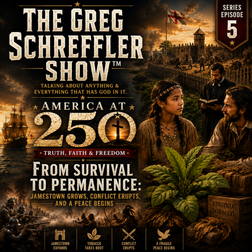
A settlement can survive one winter and still have no future. Jamestown had endured its darkest hour. Now it had to learn how to live, grow, produce, govern, and survive in a land already inhabited by people with their own communities, leaders, interests, and histories. Research: The Bible, Internet, A.I. BTW I’ve noticed that when you look up a particular individual you sometimes come across images of someone else. REFERENCES PRIMARY SOURCES 1. Hamor, Ralph. A True Discourse of the Present Estate of Virginia, and the Success of the Affairs There Till the 18th of June 1614. London, 1615. o Major primary source for:  Pocahontas’s capture  Negotiations with Powhatan  Her baptism as Rebecca  John Rolfe’s letter requesting permission to marry her  The marriage and peace 2. Rolfe, John. “Letter to Sir Thomas Dale,” 1614. o Important primary source for Rolfe’s own explanation of his decision to marry Pocahontas. 3. Whitaker, Alexander. Letter included in Ralph Hamor’s 1615 account. o Important primary source concerning Christian instruction and Pocahontas’s baptism. 4. Smith, John. The Generall Historie of Virginia, New-England, and the Summer Isles. 1624. o Used carefully because it was published years after many events and contains accounts that historians debate. MAJOR HISTORICAL SOURCES 5. National Park Service — Historic Jamestowne. “A Short History of Jamestown.” o Starving Time o Jamestown’s attempted abandonment o Conflict with the Powhatan o Pocahontas and John Rolfe o The development of the colony 6. National Park Service — Historic Jamestowne. “John Rolfe.” o Tobacco experimentation o Pocahontas’s captivity o Henricus o Christian instruction o Baptism as Rebecca o Marriage and later journey to England 7. National Park Service — Historic Jamestowne. “How to Govern, and How to Obey.” o De La Warr o Gates o Dale o The development of military discipline and the Laws Divine, Moral and Martial 8. National Park Service — Historic Jamestowne. “Chronology of Jamestown Events.” o Timeline verification for the major events of the episode. 9. Encyclopedia Virginia. “First Anglo-Powhatan War (1609–1614).” o Excellent chronological overview of the war, leadership changes, Henricus, Argall, Pocahontas’s capture, and the 1614 marriage. 10. Encyclopedia Virginia. “Early Jamestown Settlement.” o Jamestown’s expansion beyond the original settlement o Henricus o Dale’s leadership o Argall’s capture of Pocahontas o Rolfe’s tobacco experiments 11. Library of Congress. “1610 to 1619: Virginia Records Timeline.” o Useful timeline verification, including Argall’s capture of Pocahontas and the expansion of settlements. 12. National Park Service. “From Contact to Present: Indigenous Chesapeake.” o Context for the Powhatan political world and the escalating conflict from 1609–1614. RECOMMENDED SCHOLARLY WORKS 13. Rountree, Helen C. The Powhatan Indians of Virginia: Their Traditional Culture. University of Oklahoma Press, 1989. 14. Rountree, Helen C. Pocahontas’s People: The Powhatan Indians of Virginia Through Four Centuries. University of Oklahoma Press, 1989. 15. Rountree, Helen C. Powhatan Foreign Relations, 1500–1722. University Press of Virginia, 1993. 16. Townsend, Camilla. Pocahontas and the Powhatan Dilemma. Hill and Wang, 2004. 17. Kupperman, Karen Ordahl. The Jamestown Project. Harvard University Press, 2007. 18. Horn, James. A Land as God Made It: Jamestown and the Birth of America. Basic Books, 2005. REFERENCE FOR THE ORIGINAL 1615 ACCOUNT The Library of Congress has a digitized copy of Ralph Hamor’s A True Discourse, which includes the letters of Sir Thomas Dale, Reverend Alexander Whitaker, and John Rolfe. My recommendation: keep this as the official reference list for Episode 5, but before final script lock, I would do one final fact-check specifically on Argall’s 1610–1612 movements, Iopassus/Japazaws, the exact capture account, and the sequence of Pocahontas’s captivity at Jamestown and Henricus.
America 250 e4 - Truth, Faith Freedom
AI
Day by day, hunger strips away the comforts and routine of civilized life. Horses were eaten first. Then dogs and cats. Rats became prized food. Snakes, vermin (mice & cockroaches) roots, berries and anything that might sustain life for another day is consumed. When even those were gone, some colonists boiled leather to soften it enough to chew. Primary Sources George Percy — A True Relation of the Proceedings and Occurrences of Moment Which Have Happened in Virginia John Smith — The Generall Historie of Virginia, New-England, and the Summer Isles (1624) William Strachey — A True Reportory of the Wracke, and Redemption of Sir Thomas Gates, Knight First and Second Virginia Charters * Virginia Company of London records Historical Verification Historic Jamestowne Jamestown-Yorktown Foundation National Park Service — Historic Jamestowne Library of Congress * Encyclopedia Virginia / Virginia Humanities Archaeology * Historic Jamestowne — the “Jane” discovery confirming evidence of survival cannibalism during the Starving Time
1 of 7