
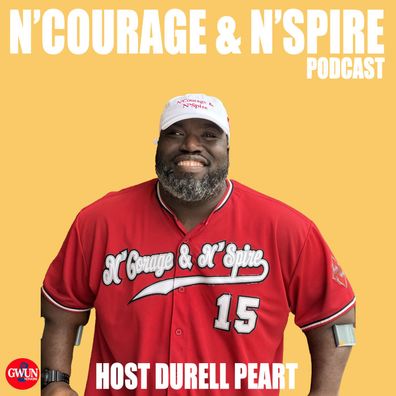
The N'Courage & N'Spire Podcast Ep 42 A Hip-Hop Canadian Creative & Difference Maker Feat Arlo Maverick
The N'Courage & N'Spire Podcast by Durell Peart
S2
Mar 9, 2022
01:39:31
Episode notes
In this episode Durell is joined by Canadian hip-hop MC, music business enthusiast and grant writer Arlo Maverick. Durell and Arlo begin the episode talking about their love of sharing information to help indie creatives navigate the music space professionally.. Durell shares that there is a difference between the music industry, the music business and the business of music. Arlo shares that people like he and Durell have experiences along their journey that can be valuable to new creatives entering into the marketplace and learning how to navigate the ecosystem.
Durell and Arlo talk about how the pandemic has affected the way that creatives had to maneuver and still impact communities and touch the people. Durell shares that his home state of Florida has been open for quite some time and that the governor wasn’t going to force people to be on lockdown and wear masks. Durell talks about the fact that he didn’t like the way that former President Trump was shut down from having the ability to speak on his social platforms. and Arlo both agree that there is a slippery slope in shutting down important public figures like the president because it sets a bad precedent moving forward for the ability to have free speech which ultimately can affect creatives who want to get their message across and be a voice for those who have something to say.
Durell and Arlo share about them both being rooted in Jamaican heritage. Durell shares that he’s never had the opportunity to visit Jamaica because his father says that the parts of Jamaica where he is from wouldn’t be the easiest to get around because of his disability and Arlo definitely agreed that if you want to visit the real part of Jamaica you have to get off of the resort and that most of the land in Jamaica is very hilly. Durell asks Arlo about his earliest memories of music and Arlo shares how he was first introduced to hip-hop music. He talked about his cousin playing a tape of UTFO’s “Roxanne Roxanne” and he said from that day on his life was changed as he began his love affair with hip-hop music. Durell asks Arlo when he knew that he wanted to pursue music as a career and he said that for him that was high school. Arlo shares that he had a friend who had a family member that worked for BMG and really put them on game about what needed to be done on the business side if they wanted to be successful in music.
Durell asks Arlo to explain the difference of what it means to be a indie hip hop creative from Canada vs. being from the United States Of America. Arlo shares that a few of the differences is the fact that creatives from the states have many more outlets to get heard as well as being a much bigger population which creates the opportunity for funding to come from record labels. He shares the reason why the Canadian government invests so much in the arts is because they aren’t as many places to go and get music heard by the masses. Arlo shares that the grants are put in place so that Canadian artists are able to create the foundation for them to be able to make a living off of their creativity. Durell and Arlo talk about how expensive it is to be a professional creative and what it really takes to be successful. Durell and Arlo talk about the lack of education that many indie creatives have when they enter into the ecosystem and how most don’t belong because they don’t respect the grind aspect of it all. Arlo shares that he was listening to an interview from one of the founders of CD Baby and they talked about how most creatives’ careers are usually broken down into two parts; the first part is where you pay to be in the music industry and the other part is now when you are bringing in more money then you are spending and that’s when things are really moving to build up longevity. Arlo shares that most people only see certain export artists like Drake and some of the other well known artists and forget that there has been quality hip-hop musi
Durell and Arlo talk about how the pandemic has affected the way that creatives had to maneuver and still impact communities and touch the people. Durell shares that his home state of Florida has been open for quite some time and that the governor wasn’t going to force people to be on lockdown and wear masks. Durell talks about the fact that he didn’t like the way that former President Trump was shut down from having the ability to speak on his social platforms. and Arlo both agree that there is a slippery slope in shutting down important public figures like the president because it sets a bad precedent moving forward for the ability to have free speech which ultimately can affect creatives who want to get their message across and be a voice for those who have something to say.
Durell and Arlo share about them both being rooted in Jamaican heritage. Durell shares that he’s never had the opportunity to visit Jamaica because his father says that the parts of Jamaica where he is from wouldn’t be the easiest to get around because of his disability and Arlo definitely agreed that if you want to visit the real part of Jamaica you have to get off of the resort and that most of the land in Jamaica is very hilly. Durell asks Arlo about his earliest memories of music and Arlo shares how he was first introduced to hip-hop music. He talked about his cousin playing a tape of UTFO’s “Roxanne Roxanne” and he said from that day on his life was changed as he began his love affair with hip-hop music. Durell asks Arlo when he knew that he wanted to pursue music as a career and he said that for him that was high school. Arlo shares that he had a friend who had a family member that worked for BMG and really put them on game about what needed to be done on the business side if they wanted to be successful in music.
Durell asks Arlo to explain the difference of what it means to be a indie hip hop creative from Canada vs. being from the United States Of America. Arlo shares that a few of the differences is the fact that creatives from the states have many more outlets to get heard as well as being a much bigger population which creates the opportunity for funding to come from record labels. He shares the reason why the Canadian government invests so much in the arts is because they aren’t as many places to go and get music heard by the masses. Arlo shares that the grants are put in place so that Canadian artists are able to create the foundation for them to be able to make a living off of their creativity. Durell and Arlo talk about how expensive it is to be a professional creative and what it really takes to be successful. Durell and Arlo talk about the lack of education that many indie creatives have when they enter into the ecosystem and how most don’t belong because they don’t respect the grind aspect of it all. Arlo shares that he was listening to an interview from one of the founders of CD Baby and they talked about how most creatives’ careers are usually broken down into two parts; the first part is where you pay to be in the music industry and the other part is now when you are bringing in more money then you are spending and that’s when things are really moving to build up longevity. Arlo shares that most people only see certain export artists like Drake and some of the other well known artists and forget that there has been quality hip-hop musi