The Bone Health Basement Tapes

The Bone Health Basement Tapes

by Bone Health Media
Season 2

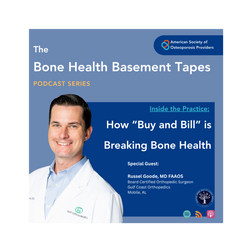
How Buy-and-Bill is Breaking Bone Health

“When you get a hip fracture, there is a 30% chance that you die within the next year. Let’s say you have renal disease or something like that—the risk jumps to 50%. These patients not being able to be on the right medication because it’s financially hard to make these clinics work - is going to kill people because they aren’t going to get the care they need.” – Dr. Russell Goode In today’s episode, we’re taking a close look at how the buy-and-bill reimbursement model is breaking bone health in the United States. Our guest, Dr. Russell Goode, is a board-certified orthopaedic surgeon specializing in hip and knee replacement, including the anterior approach and robotic-assisted, muscle-sparing techniques. He has performed more than 8,000 fracture-related procedures and co-directs the Gulf Orthopaedics Bone Health Clinic in Mobile, Alabama, alongside his wife, Sarah. Dr. Goode also serves on the board and executive committee of the American Society of Osteoporosis Providers, where he helps shape national efforts to close the fracture prevention gap. Drawing from his surgical expertise, leadership in bone health, and firsthand experience navigating complex reimbursement systems, he explains how buy and bill creates barriers to osteoporosis therapy, discourages prevention, and traps care in a reactive cycle. Together, we explore the unintended consequences of this model, discuss practical alternatives, and consider why orthopaedic surgeons—already on the front lines of fragility fractures—are uniquely positioned to realign incentives, expand access, and improve outcomes. Biography: Russell D. Goode, MD, FAAOS, is a board-certified orthopedic surgeon specializing in orthopedic trauma and adult reconstruction, practicing in Mobile, Alabama. He earned his Bachelor of Science degree in Chemistry with a minor in Biology from the University of South Alabama, where he also completed his medical degree at the Frederick P. Whiddon College of Medicine in 2010. Dr. Goode continued his training at the University of South Alabama Health System, completing his orthopedic surgery residency in 2015. He further specialized through a fellowship in orthopedic trauma at the University of Missouri School of Medicine in 2016. Dr. Goode is highly skilled in managing complex and simple fractures, from wrist to shoulder and pelvis to toes, having performed over 8,000 fracture-related procedures. His expertise extends to adult reconstruction, with a focus on anterior total hip replacement and robot-assisted total knee arthroplasty, including muscle-sparing approaches, under the mentorship of Dr. Michael Granberry. He is also deeply committed to osteoporosis prevention and treatment, co-directing the Gulf Orthopaedics Bone Health Clinic alongside his wife, Sarah Goode, DNP, where they provide comprehensive care, including DEXA scans and advanced medication management for primary and secondary osteoporosis. Affiliated with Mobile Infirmary Medical Center, Providence Hospital, and Springhill Medical Center, Dr. Goode is an active member of the American Board of Orthopaedic Surgery, the American Association of Hip and Knee Surgeons (AAHKS), the Orthopaedic Trauma Association, and the American Association of Orthopaedic Surgeons (AAOS). He serves as adjunct faculty at the Alabama College of Osteopathic Medicine and the University of South Alabama Department of Orthopaedics, where he trains residents in advanced orthopedic principles. Additionally, Dr. Goode is involved in innovation and product development, holding consulting agreements with Johnson & Johnson and Arthrex Medical, and serves as the primary investigator for clinical research with Precision Clinical Research in Mobile. He also oversees the Frederick N. Meyer Orthopaedic Residents Fund, a 501(c)(3) nonprofit supporting educational scholarships for orthopedic residents.

A European View of Orthopedic Centered Bone Health Innovation

In this international edition of The Bone Health Basement Tapes, we welcome Dr. Jo De Schepper, a leading voice in musculoskeletal health from St. Niklaas, Belgium. As an orthopedic surgeon with a sub-practice focus on treating osteoporosis, Dr. De Schepper brings a uniquely integrated European perspective to the evolving role of bone health in surgical care. Together, we explore three major themes shaping the future of osteoporosis management in his practice: 1. The Orthopedic Surgeon as a Bone Health Leader – Why Europe places orthopedic surgeons at the center of prevention and treatment, and how U.S. systems might evolve similarly. 2. Osteoporosis as a Chronic Disease, Not a Life Stage – A reframing of bone fragility as a long-term, manageable condition—akin to diabetes—that affects more than just the elderly. 3. A Total Innovation Package: Surgery + Digital Tools – As Principal Investigator of an injectable bone-strengthening agent currently in use in Europe, to emerging digital health platforms for longitudinal care, Dr. De Schepper discusses how comprehensive solutions—not isolated technologies—are the key to progress. This cross-continental conversation offers new insights for U.S. providers looking to expand the scope of osteoporosis care, integrate new technologies, and align surgical practice with proactive skeletal health. Jo De Schepper, MD is a distinguished orthopedic surgeon based in Sint-Niklaas, Belgium, with a specialization in hip and knee pathology, hip arthroscopy, and osteoporosis management. He earned his medical degree from KU Leuven in 2003 and subsequently completed fellowships at renowned institutions, including the Hospital for Special Surgery in New York, focusing on pelvic surgery, hip arthroscopy, and complex hip procedures. In his clinical practice at Orthokliniek and AZ Nikolaas, Dr. De Schepper emphasizes joint replacement surgeries and bone-preserving techniques. Since 2021, he has been certified in robotic-assisted surgeries, utilizing the MAKO system for hip and knee prostheses Dr. De Schepper is also actively involved in clinical research, serving as the principal investigator at AZ Nikolaas for AgNovos Healthcare's CONFIRM study. This study evaluates the AGN1 Local Osteo-Enhancement Procedure (LOEP), a minimally invasive treatment aimed at strengthening osteoporotic bones. His is the highest enrolling center for this study. Beyond his clinical and research endeavors, Dr. De Schepper contributes to academic literature, with publications addressing topics such as vitamin D levels in orthopedic patients and surgical techniques in joint arthroplasty. He is an active member of professional societies, including the Belgian Hip Society, the European Hip Society, and the Belgian Association for Orthopedics and Traumatology, and the Belgian Bone Club, reflecting his commitment to advancing orthopedic care both nationally and internationally.

The Originals Series--Histology, Discovery, and the Architecture of Bone

The inaugural episode of the Bone Health Basement Tapes: Originals Series delves into the rich history of bone health research through the lens of one of its most influential figures: Dr. David W. Dempster, Professor Emeritus of Clinical Pathology and Cell Biology at Columbia University and Senior Research Fellow at the Regional Bone Center of Helen Hayes Hospital, where Dr. Dempster has been at the forefront of bone biology research for over four decades. Dr. Dempster's journey began with a First-Class Honors degree and PhD from the University of Glasgow, followed by postdoctoral studies in Switzerland and France. His pioneering work in bone histomorphometry has provided critical insights into the pathophysiology and treatment of bone diseases, particularly osteoporosis. With over 200 research publications and continuous support from the National Institutes of Health for the past 30 years, his contributions have shaped our understanding of bone remodeling and the effects of various therapies on bone structure. Beyond his research, Dr. Dempster has held prominent positions such as Past President of the International Society of Bone Morphometry and has served on the Scientific Advisory Council of the National Osteoporosis Foundation. His iconic micrographs of osteoporotic bone have been widely recognized, including permanent display at the Smithsonian Institution. As Editor-in-Chief of the fifth edition of the authoritative textbook Osteoporosis (affectionately known as “Big Red”), he continues to influence the field's direction. This episode offers listeners an intimate exploration of Dr. Dempster's career, highlighting the evolution of bone health research and the enduring impact of his work on current and future generations in the field.
From Vision to Platform: A Blueprint for Virtual Bone Health

In this episode of The Bone Health Basement Tapes, we’re joined by the team from MiCare Path, ASOP’s strategic partner in building the Bone Health Optimization Platform (BHOP). Together, we dive into the real-world creation and performance of Bone Health Virtual Care Service Lines— separating fact from fiction and addressing common misconceptions around how virtual care codes actually work. MiCare Path brings a proven track record from other healthcare verticals like cardiology and chronic care management, where their platform has demonstrated strong patient engagement and outcomes and successful reimbursement strategies. Now, they’re bringing that playbook to bone health and orthopedics — helping providers harness Remote Therapeutic Monitoring (RTM) and Principal Care Management (PCM) to extend care beyond the clinic walls and support patient chronic care management between visits. We'll explore: Why RTM and PCM are more than just a billing tool — and how it's transforming musculoskeletal care. What orthopedic and osteoporosis providers can learn from virtual care service line success stories in other specialties. How to navigate RTM and PCM codes effectively and avoid the pitfalls of misaligned expectations. The vision behind the Bone Health Optimization Platform and where this collaboration is headed next. Whether you're a clinician, health system leader, or digital health skeptic, this episode offers practical insights into how virtual care service lines — when done right — can power better bone health outcomes.
Season 1

The Foundation Matters — Preoperative Bone Health Optimization with Dr. Paul Anderson

We all know that surgical success depends on precision, skill, and planning—but what about the quality of the bone itself? For too long, the role of bone health in surgical outcomes has been under appreciated. Yet, poor bone quality can lead to hardware failure, delayed healing, and avoidable complications—especially in spine and orthopedic surgeries. The good news? We can do something about it before the first incision is made. Our guest today is someone who’s been leading that charge. Dr. Paul Anderson is a Professor of Orthopedic Surgery at the University of Wisconsin School of Medicine and Public Health, and a globally recognized expert in spinal surgery and musculoskeletal care. He’s also one of the early champions of integrating bone health assessments into surgical planning—helping develop dedicated Bone Health Optimization (BHO) clinics that are reshaping the standard of care for surgical patients. In today’s conversation, we’ll explore how to identify at-risk patients, what pre-surgical interventions can make a difference, and why surgeons and healthcare teams need to optimize before heading to the OR.

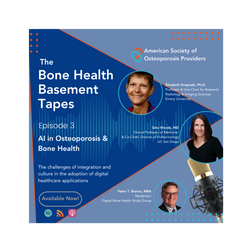
AI in Osteoporosis & Bone Health: The Challenges of Integration and Culture in the Adoption of Digital Healthcare Applications

In this special episode of The Bone Health Basement Tapes, we bring together two leading experts to explore how artificial intelligence (AI) and digital health applications are reshaping osteoporosis care. Our guests are Elizabeth Krupinski, PhD, Professor and Vice Chair for Research in the Department of Radiology and Imaging Sciences at Emory University, and Gina Woods, MD, Clinical Professor of Medicine and Co-Chief, Division of Endocrinology, UC San Diego, Osteoporosis Clinic Director, UCSD Health; Associate Program Director, UCSD Endocrinology Fellowship. We will discuss insights from Dr Krupinski’s extensive research on integrating telemedicine and digital healthcare tools into clinical practice, highlighting challenges in adoption, workflow integration, and cultural acceptance. Dr. Woods will help frame these insights within the bone health provider community, drawing from her expertise in osteoporosis management, densitometry, and clinical decision-making in endocrinology. She also is engaged in imaging research specific to applying MRI in bone density measurements. Together, we will explore the opportunities and hurdles in bringing AI and digital technologies into the world of osteoporosis diagnosis and treatment. As osteoporosis remains significantly underdiagnosed and undertreated, AI-and digital health driven solutions will play a critical role in improving screening, monitoring, and patient outcomes. But technology alone is not the answer—success depends on how well digital tools are integrated into existing clinical workflows, the cultural acceptance among providers, and the trust patients place in these innovations. Concept discussed during episode: Your Medical Mind: How to Decide What Is Right for You: by Jerome Groopman (Author), Pamela Hartzband MD (Author) https://a.co/d/eEzcR5E Links to key research publications from Dr. Krupinski, Ph.D.: https://pmc.ncbi.nlm.nih.gov/articles/PMC7671820/ https://www.mdpi.com/2227-9032/2/1/115 https://pmc.ncbi.nlm.nih.gov/articles/PMC4934470/ https://pubmed.ncbi.nlm.nih.gov/33084506/ https://www.spiedigitallibrary.org/conference-proceedings-of-spie/12035/0000/In-between-are-the-doors-of-perception/10.1117/12.2620369.full

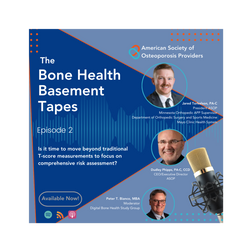
Is it time to move beyond the traditional T-score measurements and instead focus on comprehensive risk assessment?

Bone Health Basement Tapes Podcast – Episode 2 Is it time to move beyond traditional T-score measurements and instead focus on comprehensive risk assessment, value-based care, and sustainable bone health outcomes? We have a fantastic discussion lined up featuring Jared Torkelson, PA-C, Minnesota Orthopedic APP Supervisor at Mayo Clinic Health Systems, Instructor of Orthopedics at the Mayo Clinic Alix School of Medicine. Jared is also President of the American Society of Osteoporosis Providers (ASOP). Also joining us is Dudley Phips, PA-C, CEO and Executive Director of ASOP. Despite decades of effort, osteoporosis care has remained stagnant in many ways. Is it time to move beyond traditional T-score measurements and instead focus on comprehensive risk assessment, value-based care, and sustainable patient outcomes? Today, we’ll try to answer that question and discuss the coming transformation bone health from a reactive approach to a proactive, system-wide healthcare model.

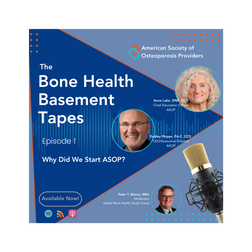
Why Did We Start ASOP?

In this episode, we discuss the critical gaps in osteoporosis diagnosis and treatment, the need for a dedicated society like ASOP, and how advocacy, education, and technology can reshape the future of bone health. Whether you're a clinician, researcher, or someone passionate about improving patient outcomes, this conversation is for you. Guests: Dr. Anne F. Lake is a board-certified nurse practitioner specializing in osteoporosis management at Atrium Health Wake Forest Baptist Medical Center. As the director of the Fracture Liaison Service, she leads efforts to improve care for patients at high risk for fractures. A recognized expert in bone health, she serves as an advisor for national organizations and speaks nationally on best practices for osteoporosis care. Passionate about early intervention and quality improvement, Dr. Lake is dedicated to advancing bone health initiatives and patient-centered care. Dudley Phipps is a nationally recognized bone health expert and Certified Clinical Densitometrist (ISCD), specializing in Fracture Liaison Service (FLS) implementation. With a career spanning from paramedicine to hospital and insurance roles since 1980, he is driven by a passion for improving lives through better bone health—both locally and nationwide. Moderator: Peter Bianco
2 of 2