Sign up free
Features
Resources
Pricing
Podcasts
Sign up free
Sign In
The Better Mental Health Briefing
by Mental Health Research Canada
Non-Profit
Mental Health
RSS feed
Listen on
Share
Voicemail
Episodes
About
Season 1
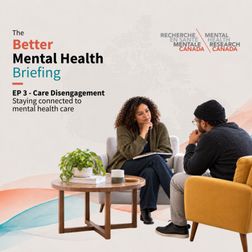
Care Disengagement
Presented by Mental Health Research Canada, the episode brings together Akela Peoples and Claire Hlavacek of MHRC with Dr. Patricia Lingley-Pottie of Strongest Families Institute for a panel on what the evidence shows and what disengagement looks like in practice. A one-on-one conversation with Dr. AnnMarie Churchill of Stepped Care Solutions looks at how care pathways can adapt when needs change. The goal is not to keep people in treatment for its own sake, but to understand how people can remain connected to the right support when they still need it.
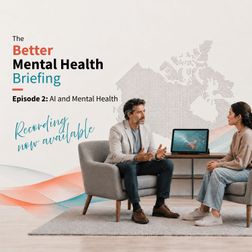
AI and Mental Health
*Note from Podcaster: Irregular Audio Quality AI is already becoming part of how people seek mental health support, but trust has not kept pace. Recent findings estimate that about six million people in Canada used, or may have used, AI-enabled tools for mental health support in the past year, while only 14% of the broader public trusts AI to provide safe and helpful support. What is drawing people to these tools? What’s keeping them away? Where might AI tools add value, and what safeguards are needed when privacy, informed consent, equity and professional judgment are at stake? In this episode, presented by Mental Health Research Canada, we bring together perspectives from research, system leadership and provider practice to explore what the newest research shows, what it can’t yet tell us and what responsible, human-centred use of AI should look like. The conversation focus not on replacing professional mental health care with AI, but on ensuring that innovation is guided by evidence, accountability and the needs of the people it is meant to serve.
Screen Use
Screen use is part of daily life. But MHRC’s latest report, Understanding the Mental Health of Canadians, includes a finding that deserves a closer look: people who spend four or more hours a day scrolling social media, watching entertainment or gaming were about twice as likely to report severe anxiety or depression symptoms. In the first edition of The Better Mental Health Briefing, MHRC looks at what the data show, what they do not prove and how screen habits may connect to coping, distress, connection and the supports people may need. This English-language webcast features a roundtable with Michael Cooper and Claire Hlavacek from MHRC, joined by Dr. Kara Brisson-Boivin of MediaSmarts, followed by a focused one-on-one discussion with Dr. Andrée-Anne Légaré, psychologist and associate professor at Université de Sherbrooke.