Flexify2: Your Job Search Evolved!

Flexify2: Your Job Search Evolved!

by Trina Smith
Season 1
Remote Ready: Cracking the Code on AI vs. Human Recruiters
In this episode, we are pulling back the curtain on the modern remote hiring process. Because remote jobs attract thousands of global applicants, companies are increasingly using AI algorithms for first-round screens. Today, we break down why interviewing with an AI recruiter requires a completely different game plan than interviewing with a human recruiter. If you treat the machine like a person, you fail the algorithm. If you treat the person like a machine, you miss the vibe check. Tune in to get the unspoken code to crush the bots, wow the humans, and advance straight to the final offer! What You’ll Learn In This Episode: The massive shift in remote hiring and what to expect post-application. How asynchronous video platforms (HireVue, Kira) score your keywords, tone, and pacing. Understanding emotional intelligence (EQ), storytelling, and cultural fit. How to map job description keywords for the AI. The STAR Method framework for flawless, metrics-driven data points. The "Smiley Face" webcam trick to instantly look more confident. The 10-minute LinkedIn detective routine to build an instant human connection. Your competitive advantage in a crowded market. Key Takeaways The STAR Method: Always structure your situational answers using Situation, Task, Action, and Result. Don't forget to include concrete metrics for the AI to scan! The Golden Rule: AI wants structured data, metrics, and direct keyword alignment. Humans want connection, narrative, and empathy for their company's pain points. Have you ever faced an AI interview? Don't forget to subscribe on your favorite podcast platform, leave a 5-star review if you're listening on Spotify/Apple, and keep hunting for that freedom!
Corporate Survival: The Unspoken Rules of the Game
We’ve all been fed the classic corporate mythos: put your head down, over-deliver on your metrics, and the system will naturally reward you. But if you've been in the professional world for more than a minute, you know that merit isn't always king. In this episode, we pull back the curtain on the real machine running silently underneath the floorboards of your 9-to-5. We break down the brutal, unwritten rules of corporate survival that HR and upper management hope you never quite figure out—from the dangerous trap of invisible indispensability to understanding how corporate praise is often used as a mechanism for free extraction. If you’re feeling burnt out, overlooked, or stuck in a cycle of perpetual hope and anxiety, this episode is your reality check. It's time to see the system clearly so you can finally stop playing the wrong game. Key Takeaways from This Episode The Explainability Trap: Why your job security doesn't come from being essential, but from being essential in a way that can be explained in a single sentence to a distant executive. Value that cannot be narrated cannot be defended. Praise as Extraction: How companies use verbal accolades, shiny internal awards, and the "reliable worker" label as a substitute for actual compensation and career advancement. Visibility vs. Raw Effort: Why the person doing 20% of the work but spending 80% of their time presenting it will almost always outpace the silent high-performer. The Ultimate Career Advantage: How stripping away the emotional baggage of wanting corporate approval allows you to see the matrix, protect your boundaries, and view your job purely as a business transaction. If this episode gave you a needed reality check, please drop a 5-star review on Apple Podcasts or Spotify, and share it with that one coworker who is currently burning themselves out. Subscribe! Never miss an unwritten rule. Hit subscribe on Podlink or your favorite podcast platform to join the community. Music Produced by DreamLife Beat By DreamLife Original Music By DreamLife
Illusion of Wealth: The Silent Financial Crisis Next Door
We’ve all seen them: the people driving pristine luxury SUVs, wearing high-end designer gear, and posting a non-stop highlight reel of glamorous vacations. To the outside world, they are absolutely killing it. But what if it’s all a beautifully constructed house of cards? In this comeback episode, we pull back the curtain on the modern "Fake Rich" epidemic. We dive deep into the psychology of why our brains fall for the comparison trap, explain why looking rich has become so cheap while becoming genuinely wealthy is expensive, and expose the 9 subtle, everyday signs that identify when someone is secretly drowning in debt behind closed doors. The 9 Signs Someone is Secretly Broke: The Bill Forensic Accountant: Craving the prestige of luxury dining but panicking and over-analyzing the receipt line-by-line when the bill arrives. The Eleventh-Hour Flake: Enthusiastically committing to group travel or events, only to back out at the last second with a vague, ghost emergency to hide a cash crisis. The Micro-Debt Addict: Normalizing debt by financing everyday, low-cost consumer items into split monthly payments. Subscription Creep: Allowing a massive, unmonitored leak of automatic streaming, gym, and app renewals to drain hundreds of dollars monthly. The Annual Upgrade Cycle: Relying on portable electronics (like a brand-new phone every year) to project high disposable income, even if it's just financed on a cellular bill. Brand over Asset: Being fully fluent in luxury consumer labels but completely illiterate in basic financial wealth concepts like high-yield savings accounts or index funds. The Minor Inconvenience Panic Attack: Lacking a financial runway, causing a routine life hiccup (like a flat tire or broken appliance) to trigger a full-scale emotional crisis. Robbing Peter to Pay Paul: Playing a constant game of financial musical chairs by borrowing small increments or shuffling credit card balances to purchase breathing room. Aggressive Defensiveness: Reacting with anger, sarcasm, or extreme sensitivity whenever the topics of budgeting, long-term saving, or frugal alternatives are raised. True wealth is not measured in things. It is not measured in luxury brands, engine displacement, or zip codes. True wealth is measured in time and peace of mind. If this episode gave you a bit of perspective or helped you stop playing the comparison game, please take 5 seconds to support this independent, one-person show: Subscribe or Follow on your favorite podcast app so you never miss a weekly episode. Leave a 5-star review on Apple Podcasts or Spotify, it helps a solo creator grow immensely! Share this episode with a friend who needs a quick reminder that they aren't falling behind just because they aren't putting on a financial show.
Tough Love Economics: When Your Safety Net Becomes a Hammock
The Generational Divide Gen Z/Millennials: Thinking about next weekend, immediate experiences, short-term comfort Parents: Thinking generationally about long-term capability, financial independence, life after they're gone Understanding this disconnect is crucial to resolving family financial conflicts The Boomerang Generation Crisis Over 50% of young adults 18-29 living with parents When temporary support becomes permanent lifestyle subsidy Main Topics Covered 1. The Real Cost of Financial Default (Timestamp: ~8:00) Career Impact: Employer credit checks in finance, government, healthcare, management Professional license complications Wage garnishment visibility to employers Financial Impact: Credit score damage lasting 7-10 years. Inability to qualify for mortgages, car loans, rentals. Automatic wage garnishment (10-25%). Tax refund seizures Collection lawsuits and judgments Forced cash-only lifestyle The Lifetime Cost: Potential loss of $200,000-$500,000 in lifetime wealth Delayed retirement savings and lost compound growth Career opportunities lost due to credit issues The Real Math: $1,200/month rent-free = $14,400/year 3 years = $43,200 in subsidy 5 years = $72,000 in subsidy 4. The Control Paradox (Timestamp: ~35:00) Enabling = Control: Constant rescue prevents authentic development Accountability = Freedom: Stepping back allows real growth You can't demand adult autonomy while living a parent-subsidized lifestyle Key Questions for Listeners For Adult Children Living Subsidized: If your parent died tomorrow, could you maintain your current lifestyle? What are you actually afraid of? For Parents Considering Tough Love: What happens to them when I'm gone? Am I prioritizing their comfort over their capability? Action Plan Framework Step 1: Complete Financial Transparency List every debt (amount, rate, status) Document all monthly expenses Record all income sources Step 2: Calculate Real Cost of Living Market-rate rent Utilities, food, transportation Insurance and necessities Minimum debt payments This is your baseline reality Step 3: Income vs. Reality Check Does income cover real expenses + debt repayment? If yes: Create aggressive payoff timeline If no: Income must increase OR expenses must decrease Step 4: Create Specific Timeline with Milestones Set move-out target date No vague intentions—only measurable commitments Step 5: Build Accountability Structure Weekly or bi-weekly check-ins Step 6: Execute and Adjust The key is to START The Two Futures Future A: Success 5-10 years later: Independent, stable, credit rebuilt Managing finances effectively Future B: Failure to Launch Parent gone, adult child 45-50 years old Never learned the lessons when there was still time"Original Music By DreamLife""Beat By DreamLife""Produced by DreamLife"
The 2026 401(k) Wake-Up Call: What Everyone Needs to Know
Key Topics Covered The Big Change Starting January 1, 2026, workers earning over $145,000 must make catch-up contributions to Roth 401(k) accounts only No more pre-tax catch-up contributions for high earners This applies to anyone 50+ who earned more than $145,000 from their employer in the previous year Understanding Catch-Up Contributions Standard 401(k) contribution limit in 2025: $23,500 Catch-up contributions for age 50+: Additional $7,500 Enhanced catch-up for ages 60-63: Additional $11,250 These limits will continue to increase with inflation Traditional vs. Roth 401(k) Explained Traditional 401(k): Pre-tax contributions, immediate tax break, taxed upon withdrawal in retirement Roth 401(k): After-tax contributions, no immediate tax break, tax-free withdrawals in retirement The key difference: timing of when you pay taxes Impact on Your Paycheck Real dollar example: $7,500 catch-up contribution at 30% tax bracketTraditional 401(k): Take-home pay decreases by ~$5,250 (with $2,250 tax savings) Roth 401(k): Take-home pay decreases by full $7,500 (no immediate tax savings) Monthly impact: Approximately $625 less per month in take-home pay Who's Affected? High earners: Anyone over 50 earning $145,000+ per employer Income threshold is per employer, not combined if working multiple jobs Threshold will adjust for inflation in future years Millions of American workers will be impacted Good News for Earners under $145,000 Workers earning $145,000 or less: Nothing changes Full flexibility to choose between traditional and Roth contributions Still get immediate tax deduction with traditional contributions Complete control over retirement savings strategy Special Section: Entrepreneurs & Small Business Owners Solo 401(k) options available for self-employed individuals Same 2026 Roth catch-up rule applies if earning over $145,000 in W-2 wages SEP IRA option: Up to $70,000 contribution limit in 2025 SIMPLE IRA for businesses with employees The Silver Lining Enhanced catch-up limits for ages 60-63 (up to $11,250 in 2025) Roth accounts provide tax-free retirement income No required minimum distributions during lifetime for Roth accounts Tax-free inheritance for heirs Key Numbers to Remember $145,000 - Income threshold for mandatory Roth catch-up contributions $23,500 - Standard 401(k) contribution limit (2025) $7,500 - Catch-up contribution limit for age 50+ (2025) $11,250 - Enhanced catch-up limit for ages 60-63 (2025) $70,000 - SEP IRA contribution limit (2025) $5,000 - Maximum annual startup cost tax credit for small businesses (3 years) $1,000 - Maximum employer match tax credit per employee Disclaimer This podcast is for informational and educational purposes only. The host is not a licensed financial advisor, CPA, tax professional, or attorney. All content is based on publicly available information and should not be considered personalized financial, investment, tax, or legal advice. "PRODUCED BY ALLROUNDA" "BEAT BY ALLROUNDA" "ORIGINAL MUSIC BY ALLROUNDA"
Rising Above The Critics: How to Handle Negative Colleagues
Episode Description You've just delivered an outstanding presentation—your research was thorough, your data compelling, and your delivery was flawless. But instead of recognition, you're facing a wall of negativity from colleagues. Sound familiar? In this episode, we dive deep into how to professionally handle chronic negativity in the workplace when you know you've delivered excellence. Learn why some colleagues respond negatively to great work, and discover practical strategies to maintain your professionalism and credibility. What You'll Learn The psychology behind workplace negativity – Understanding why colleagues criticize excellent work The GRACE Framework – A five-step approach to responding professionally to negative feedback Tactical response strategies – Specific phrases for different types of negative colleagues Long-term reputation building – How to position yourself as a consummate professional When to escalate – Red flags that indicate you need to involve management or HR The power of strategic follow-up – Using post-presentation communication to your advantage Key Takeaways Understanding the "Why" Behind Negativity The Threat Response – Your excellence highlights gaps in their performance The Perfectionist Trap – Can't see the forest for the trees The Culture Carriers – Confuse criticism with intelligence The Change Resistors – Uncomfortable with what your ideas represent The GRACE Framework G - Ground Yourself – Don't let their reaction make you question quality work R - Reframe the Conversation – Transform criticism into constructive input A - Acknowledge Without Agreement – Validate perspective while holding your ground C - Channel Energy Constructively – Use negativity as fuel for clarification E - Elevate the Focus – Return to shared goals and outcomes Response Strategies for Different Personalities The Nitpicker – Acknowledge details while redirecting to strategic direction The Skeptic – Ask what specific conditions would build confidence The Silent Resister – Draw out their perspective directly The Public Challenger – Offer to address concerns in a dedicated follow-up Action Items After listening to this episode, try these: Document your wins – Keep a record of positive feedback and outcomes Identify your negative colleague type – Recognize patterns so you can prepare appropriate responses Practice the GRACE Framework – Role-play responses before your next presentation Build your alliance network – Cultivate relationships with colleagues who appreciate quality work Draft your follow-up template – Prepare a professional post-presentation email framework Resources Mentioned The GRACE Framework for professional responses Strategic follow-up email template Red flags for when to escalate to management Connect With Flexify2 Spotify Apple Podcasts Pandora Social Media: Flexify2
The Rate Cut Reality Check. What Powell's Pivot Means for Your Paycheck and Portfolio
Disclaimer: This content is for educational and informational purposes only. This is not financial advice. Always consult with a qualified financial advisor before making major financial decisions. Key Topics Covered 🎯 What Powell Actually Said (And Why It Matters) Powell's Jackson Hole signals: "downside risks to employment are rising" Market reaction: Rate cut probability jumped from 67% to 88% Fed Governor Waller's recent statement supporting cuts 📊 The Shocking Job Market Data July jobs: Only 73,000 added (expected 110,000) Massive revisions: May cut from 144,000 to 19,000, June from 147,000 to 14,000 3-month average plummeted to 35,000/month (down from 168,000 earlier in 2025) 🔍 For Active Job Seekers Reality check: Market cooled but not dead Entry-level positions hit hardest Focus areas: Healthcare, essential services, government Strategy: Network aggressively, consider smaller companies 💼 For Currently Employed Professionals Companies shifting to internal development over external hiring Perfect time to push for promotions and skill development Rate-sensitive industries (construction, real estate, fintech, tech) may see quick relief 📈 Investment Implications Interest-rate sensitive sectors rallying (REITs, utilities) Growth stocks benefiting from lower discount rates Much good news already priced into markets International investments may become more attractive ⚠️ Risks to Watch Risk #1: Rate cuts could reignite inflation Risk #2: Cuts might not stimulate spending if consumers/businesses remain cautious Risk #3: Global complications (currency swings, trade tensions) Your Action Plan 📋 If You're Job Hunting: Expand search to smaller companies that benefit from rate cuts Prepare for longer search times Focus on networking and personal connections Consider temporary/contract work to stay active 📈 If You're Currently Employed: Focus on skill development over job hopping Discuss growth opportunities with your manager Review variable rate debt situation Build emergency fund 💰 For Everyone: Watch key data: job reports, consumer spending, business investment Don't make major commitments based on rate assumptions Keep options open and skills sharp Rate-sensitive industry workers: Position for potential upturn Key Takeaways ✨ The Bottom Line: Fed likely to cut rates modestly on September 17th, providing economic support without creating new problems. Job market should stabilize rather than collapse, but competition remains intense through early 2026. 🎯 Success Strategy: Preparation and adaptability matter more than dramatic reactions to headlines. Focus on fundamentals: relevant skills, strong relationships, clear value proposition, and smart financial management. 🚀 The Opportunity: If rate cuts work as intended, renewed business investment and hiring could emerge by early 2026. Success goes to those prepared when that window opens. Connect With Us Subscribe to "Flexify2 Your Job Search Evolved!" for more career-focused economic insights and job market analysis.

Workload Shuffle: “The Confidence Paradox”
Episode Summary Ever notice how some managers treat you like you can't handle basic tasks, but then ask you to tackle their most complex responsibilities? This week we dive into the workplace contradiction that leaves employees feeling simultaneously underestimated and overburdened. We explore why this dynamic exists, how it affects workplace culture across all generations, and practical strategies for navigating these mixed messages professionally. Key Topics Discussed The psychology behind contradictory management behavior How responsibility-shifting disguises itself as mentorship The difference between genuine delegation and work avoidance Documentation strategies for protecting your professional interests Questions that clarify expectations and accountability Maintaining boundaries while advancing your career Notable Quotes "It's not about competence. It's about accountability." "Good managers invest in your growth and take responsibility for outcomes. Poor managers create elaborate performances where they're simultaneously indispensable and uninvolved." "You know more than they pretend you do, and you're worth more than they act like you are." Listener Stories Sarah from Denver shares her experience with a manager who explained basic meeting scheduling, then immediately assigned her a major client presentation Follow-up on the infamous "Brad" and his latest organizational contradictions Practical Takeaways Create Documentation: Always confirm task assignments in writing, especially when they fall outside your role. Ask Clarifying Questions: Frame inquiries to highlight responsibility gaps without being confrontational. Protect Your Core Role: Reference your primary responsibilities when additional tasks might compromise your performance. Recognize the Pattern: Understanding the dynamic helps you respond strategically rather than emotionally.
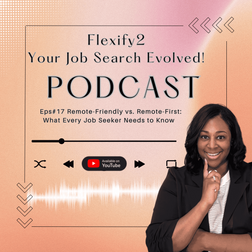
Remote-Friendly vs. Remote-First: What Every Job Seeker Needs to Know!
Key Insight Not all remote jobs are equal. The company type determines your career success and work experience. Remote-Friendly Companies (The Trap) What they are: Office-based companies allowing some remote work. Office remains central, remote workers are secondary. How they operate: Leadership works from office daily Real decisions happen in-person (break rooms, hallways) Remote workers miss informal conversations and networking The problem: Career invisibility. You get flexibility but sacrifice advancement opportunities. Reality check: Fight for visibility daily Overcompensate with 24/7 availability Higher burnout from proving worth Remote-First Companies (The Advantage) What they are: Built for distributed teams. No central office, leadership works from anywhere. How they operate: All communication documented and accessible Decisions made in shared spaces (Notion, Confluence) Meeting recordings standard Virtual team building The benefit: Level playing field. Work quality matters, not physical presence. Reality check: Promotion based on results Equal access to information Better mental health How to Identify During Job Search Job Posting Language Remote-Friendly: "Remote option," "work from home possible" Remote-First: "Distributed team," "remote-first culture," "location-independent" Website Clues Remote-Friendly: Showcases office spaces, emphasizes in-person culture Remote-First: Discusses async communication, digital tools, cross-timezone culture Leadership Location Remote-Friendly: Executives in same city as HQ Remote-First: Leadership distributed globally Interview Questions "How does your team handle project planning?" "Where is leadership based?" "How do typical meetings work?" "How do remote employees get promoted?" Red Flags Some people dial in while others meet in conference room Hesitation about remote promotion paths Preference for candidates near office Green Flags Everyone joins calls individually Clear performance-based advancement Global hiring practices Action Plan Search Strategy: Look for "remote-first" companies, not just "remote jobs" Research: Check blogs, Glassdoor reviews for remote culture mentions Interview Prep: Ask HOW they make remote work successful Trust Instincts: If you're the only remote person in interviews, that's telling Why It Matters Career Impact: Remote-friendly = constant visibility battles vs Remote-first = merit-based advancement Mental Health: Remote-friendly = anxiety about missing out vs Remote-first = normalized remote work Choose companies designed for your work style, not those that merely tolerate it.
The Quiet Connector: Networking For Introverts
Networking doesn't have to be an extrovert's game! In this episode, we explore how introverts can leverage their natural strengths to build meaningful professional relationships without draining their social batteries. Host Trina shares practical strategies, personal experiences, and actionable tips for networking authentically as an introvert. 📝 KEY TAKEAWAYS ✨ The Introvert's Secret Networking Advantages: Deep listening skills over surface-level conversations Quality connections over quantity collecting Thoughtful responses that people remember Detail retention that builds stronger relationships 🎯 Power Preparation Strategies: Pre-Event Research Template:3 industry topics you're comfortable discussing 5 questions to ask others about their work 2 current projects you can share 1 clear goal for the event Craft authentic introductions (not elevator pitches) Schedule strategic recovery time 🏢 Introvert-Friendly Networking Environments: Smaller, focused industry meetups Online communities and professional forums Structured volunteer roles at events Self-hosted intimate gatherings (4-6 people) Pro Tip: Arrive early to events to ease into conversations 💬 Communication Strategies: Master the art of thoughtful questions Practice comfortable pauses ("Let me think about that") Plan graceful conversation exits Leverage your listening superpower 💻 Digital Networking & Sustainability: Content creation as networking (podcasts, articles, posts) Strategic visibility in 2-3 online communities Energy management with recovery time scheduling Networking Survival Kit: Noise-canceling earbuds, tea, notebook 📚 RESOURCES & LINKS 🌟 FEATURED RESOURCE: 📖 "Top 100 Interview Questions - Ask Better, Shine Brighter!" Available on Etsy - Perfect companion to your networking skills! 🛒 [SHOP NOW ON ETSY] ➜ https://www.etsy.com/shop/Flexify2Downloads?ref=profile_header Master both networking AND interviewing as an introvert with strategies designed specifically for your strengths! 🎯 ACTION STEPS This Week's Challenge: Create your networking preparation template using the format shared in this episode Identify 2-3 online communities where your target connections gather Schedule recovery time after your next networking opportunity Practice your authentic introduction (not an elevator pitch!) Coming Up Next Week: "Self-Advocacy Strategies for Introverts" - Learn how to speak up for yourself at work without draining your energy. 🎯 ABOUT FLEXIFY2 PODCAST Flexify2 - Your Job Search Evolved is your go-to resource for career strategies that work with your natural personality, not against it. The host combines practical advice with real-world experience to help you build a career that truly fits who you are. Don't forget to subscribe and hit the notification bell so you never miss an episode! © 2025 Flexify2 Podcast. All rights reserved.
1 of 3