Talking Healthspan

Talking Healthspan

by David Propst
Season 1

Outsmarting Age-Related Muscle Loss: Combating Anabolic Resistance

In this episode, we dive into one of the key challenges of aging: muscle loss and the growing phenomenon of anabolic resistance. As we get older, our bodies become less efficient at building and maintaining muscle, a process central to sarcopenia, or the loss of muscle mass and strength that often accompanies aging. Our discussion is based on the research paper "Age-related muscle anabolic resistance: inevitable or preventable?" by Aragon, Tipton, and Schoenfeld. This study breaks down the biological mechanisms that cause muscles to become resistant to the anabolic signals from protein intake and exercise. We explore how molecular changes, impaired amino acid delivery, and conditions like obesity and insulin resistance all contribute to this process. But there’s hope. This episode isn’t just about the science—it’s also about practical solutions. We cover the interventions highlighted in the study that can help combat anabolic resistance: Resistance training: Why lifting weights or engaging in resistance exercises (squats, lunges, push-ups) is critical to maintaining muscle mass. Protein strategies: How consuming higher doses of protein, especially leucine-rich foods, and spreading protein intake throughout the day can help older adults keep their muscles strong. We also discuss the lifestyle factors that can make anabolic resistance worse, including sedentary behavior and obesity, and how making simple changes can lead to significant improvements in muscle health. Whether you're an academic, fitness professional, or just someone looking to stay strong and healthy as you age, this episode is packed with insights. Tune in to learn how you can fight back against muscle loss and live healthier, longer. Highlights of this episode: What is anabolic resistance, and why does it matter as we age? Key biological mechanisms driving muscle loss. How to use resistance training and protein intake to combat anabolic resistance. Why obesity and sedentary lifestyles worsen anabolic resistance. Actionable tips to preserve muscle mass and strength in later years. Links and Resources: Full paper by Aragon, Tipton, and Schoenfeld: https://academic.oup.com/nutritionreviews/article-abstract/81/4/441/6677259 Listen to other episodes: https://rss.com/podcasts/talking-healthspan/ Stay tuned for more episodes focused on the latest research in health, aging, and fitness science! #AgingWell #MuscleHealth #AnabolicResistance #Sarcopenia #FitnessScience #ProteinPower #ResistanceTraining

Deciphering Osteosarcopenia: Aging, Muscle Loss, and Bone Fragility

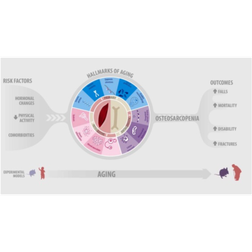
In this episode of Talking Healthspan, we dive deep into osteosarcopenia, a condition that combines muscle loss (sarcopenia) and bone loss (osteopenia/osteoporosis), which significantly impacts the health of older adults. As we continue to understand aging and its effects on the body, the rise of osteosarcopenia as a critical factor in functional decline, falls, and fractures requires urgent attention. This episode explores how aging mechanisms drive this condition and what science is doing to combat it. We use the Hallmarks of Aging framework—an insightful way to break down the biological processes behind aging—to explain how bone and muscle deteriorate together. You’ll hear about the key mechanisms like genomic instability, telomere attrition, and chronic inflammation, which, although initially protective, ultimately lead to the breakdown of tissues over time. Our discussion also touches on why integrated research is crucial. Traditionally, studies look at muscle and bone separately, but to tackle osteosarcopenia effectively, we need models that examine these tissues in unison. We explore some exciting preclinical findings that are opening up new ways to understand and treat this syndrome, but highlight the challenge of translating these findings into real-world clinical solutions. The podcast also covers therapeutic approaches—both pharmacological and non-pharmacological—that aim to treat or slow down the progression of osteosarcopenia. You’ll learn about: Senolytics: Drugs that target senescent cells, potentially reversing some of the damage to muscle and bone. mTOR Modulation: A promising but complex approach that needs refinement to avoid harming muscle while benefiting bone. Denosumab: A therapy already used for osteoporosis, showing potential for improving muscle strength as well. Resistance Exercise: Proven to benefit both muscle mass and bone density, resistance training is a crucial intervention for older adults with osteosarcopenia, especially when combined with proper nutrition. Finally, we look at the future of osteosarcopenia research and treatment through the lens of geroscience. By targeting the biological hallmarks of aging, new avenues are emerging to not only treat but possibly prevent osteosarcopenia in the first place. From pharmaceuticals to exercise protocols, we’re getting closer to interventions that will enhance both longevity and quality of life. Tune in to this episode to learn more about how aging affects muscle and bone simultaneously, and how we can combat osteosarcopenia with cutting-edge science and practical, everyday strategies. Key Takeaways: Osteosarcopenia is a growing health concern among older adults, contributing to falls, fractures, and loss of independence. The Hallmarks of Aging provide a framework for understanding how osteosarcopenia develops. Current therapies like resistance exercise are effective, but future research on senolytics and mTOR modulation shows promise. An integrated approach targeting both muscle and bone is essential for improving outcomes. Stay connected with Talking Healthspan for more insights into the science of aging and practical tips to live a healthier, longer life. Recommended reading: "Deciphering Osteosarcopenia through the hallmarks of aging" https://www.sciencedirect.com/science/article/pii/S0047637424000976
Pharmacotherapy and Exercise Management of Obesity

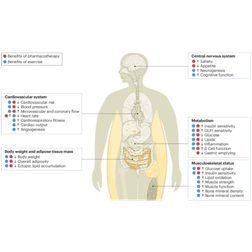
In this episode, we explore the powerful combination of exercise and pharmacotherapy in managing obesity. While weight loss is a central goal, this podcast goes beyond the surface, diving into how both interventions impact cardiovascular health, metabolism, mental well-being, and muscle and bone integrity. We also highlight the synergy between exercise and medications like GLP-1 receptor agonists, which can amplify positive health outcomes when used together. Takeaway Message: By combining the right medications with regular exercise, individuals can achieve comprehensive health improvements that extend far beyond weight loss. This integrated approach not only tackles obesity but also enhances heart health, metabolic function, mental clarity, and musculoskeletal health. Talk to your healthcare provider about personalizing your obesity management plan to get the most out of these interventions. Episode Highlights: Cardiovascular benefits of exercise and pharmacotherapy How both interventions reduce harmful visceral fat Mental health improvements through mood-boosting effects and appetite control The role of exercise in preserving muscle and bone health during weight loss How combining exercise and pharmacotherapy leads to superior outcomes Don't forget to talk to your healthcare provider to see how this knowledge can be applied to your own health journey. Recommended reading: Metabolic alliance: pharmacotherapy and exercise management of obesity By: Javier Butragueño and Jonatan R. Ruiz https://www.nature.com/articles/s41574-024-01006-7

Creatine Unveiled: Why Vegans and Vegetarians Should Supplement

In this episode, we dive into the world of creatine—one of the most well-researched and widely used supplements in the fitness world. Whether you're looking to boost your workouts, enhance your mental clarity, or support your overall health, creatine could be the game-changer you’re looking for. But did you know that creatine isn’t just for bodybuilders? It has wide-reaching benefits, from improving cognitive function to supporting bone health in older adults. We’ll unpack what creatine is, how it works in your body, and its powerful role in producing ATP, the energy your cells need to keep you going. Plus, we explore why creatine supplementation might be especially beneficial for vegans and vegetarians, who naturally have lower baseline levels due to the absence of creatine-rich foods like red meat and fish in their diets. Key Topics Covered: What creatine is and its role in the body How the phosphocreatine system helps fuel high-intensity exercise Cognitive benefits: enhancing memory, reasoning, and mental clarity Creatine’s potential for supporting bone health, especially as we age Why vegans and vegetarians may see more pronounced benefits from creatine supplementation The debate over the loading phase: Is it really necessary? Practical advice for safely incorporating creatine into your routine Whether you’re an athlete looking to boost performance or someone curious about the broader health benefits, this episode will give you a well-rounded understanding of why creatine monohydrate is considered a powerhouse supplement for both body and mind. Tune in to learn how you can unlock your full potential with this natural, safe, and effective supplement!

Protecting Your Brain: Concussion Prevention and Recovery in Sports

In this episode of Talking Healthspan, we dive into the latest findings on concussions in sports, drawn from the 6th International Consensus Statement on Concussion in Sport. Whether you're an athlete, coach, parent, or healthcare professional, this episode brings essential updates on how to prevent and manage sport-related concussions. What You’ll Learn: What is a Concussion? Discover how concussions occur at the microscopic level in the brain and why they’re so hard to spot on scans. New Assessment Tools: We explain the latest updates to concussion diagnosis, including SCAT-6 and SCOAT-6, designed for sideline and clinical evaluation. Preventing Concussions: Learn about effective strategies like neuromuscular training, policy changes, and protective equipment that can significantly reduce concussion risks. Recovery Approaches: The myth of strict rest is debunked—find out why light physical activity soon after a concussion can actually aid recovery. Safe Return to Play and School: Get the latest guidance on safely returning to school and sports through gradual, step-by-step protocols. Long-Term Risks: We explore the ongoing research into the possible links between repeated concussions and neurological diseases, like CTE and ALS. Key Takeaways: How relative rest (not total rest) promotes recovery. The role of sub-symptom threshold exercise in early recovery. Why youth sports are banning body checking and limiting contact to prevent concussions. How a multidisciplinary approach can aid in recovery and decision-making for athletes facing repeated head injuries. Resources: Learn more about SCAT-6 and SCOAT-6 tools for concussion assessment. Access tips for implementing neuromuscular training to reduce injury risk. If you or someone you know is involved in sports, this episode provides essential information for protecting brain health and making informed decisions about concussion management. Suggested reading: Consensus statement on concussion in sport: the 6th International Conference on Concussion in Sport–Amsterdam, October 2022 https://bjsm.bmj.com/content/57/11/695

Strength for Longevity: Resistance Exercise and Sarcopenia

In this episode of Talking Healthspan, we explore a critical topic: how resistance exercise can combat sarcopenia, the age-related decline in muscle mass and strength. Drawing from a recent study, we discuss the practical application of resistance training as a first-line treatment for sarcopenia. You'll learn how specific, targeted exercises can not only slow down muscle loss but, in some cases, even improve strength and resilience in older adults. We break down the study's key principles—specificity, overload, and progression—and explain how these concepts guide effective exercise programming. You'll hear practical advice on starting a strength routine, managing intensity, and finding ways to stay motivated. Whether you're new to resistance training or looking for ways to optimize your current routine, this episode offers actionable insights for making strength training a lifelong habit. We also touch on how these findings translate to everyday life, with examples of functional movements that keep older adults independent, such as getting out of a chair or climbing stairs. Importantly, we delve into the mental barriers to starting and maintaining a workout routine and offer strategies to overcome them. Join us as we unpack the science behind resistance training and offer tools for turning knowledge into action. It’s never too late to build strength and improve your quality of life. Recommended reading: Resistance Exercise as a Treatment for Sarcopenia: Prescription and Delivery https://www.ncbi.nlm.nih.gov/pmc/articles/PMC8840798/

Does Taking a Break Really Matter? Strength Training and Muscle Memory for Beginners

Bonus
In this episode of Talking Healthspan, we dive into a fascinating 2024 study that explores the effects of taking breaks during resistance training. If you're new to strength training or working with beginners, you might wonder: what happens when life gets in the way, and you have to take an unscheduled break? Will you lose all the progress you've made? The study, published in the Scandinavian Journal of Medicine & Science in Sports, investigated this very question. Researchers followed 55 untrained participants who were split into two groups. One group trained continuously for 20 weeks, while the other trained for 10 weeks, took a 10-week break, and then resumed training for another 10 weeks. The results were surprisingly reassuring. Despite the 10-week break, participants in the break group regained strength and muscle size quickly once they resumed training. By the end of the study, both groups achieved similar improvements in muscle mass and strength. This episode covers: The design and results of the study How muscle memory plays a role in regaining strength and size after a break Why these findings matter for beginners and those supporting them on their fitness journey How this research can help alleviate the anxiety of missing workouts due to life’s unpredictability Practical insights on how to approach strength training when interruptions are inevitable While taking a long break isn't ideal for those with specific short-term goals, the study shows that if your focus is on long-term strength and fitness, you're not starting over from scratch after a break. Your body remembers the hard work you've put in, and regaining what you've lost can happen faster than you might expect. Whether you're just thinking about starting resistance training or working with people who are, this episode provides valuable insight and encouragement. Consistency is key, but life happens—and when it does, you can return to training without feeling like you're back at square one. Tune in to hear us break down the study and explore its implications for anyone embarking on a new strength training journey! Suggested Reading: Study Title: "Does Taking a Break Matter? Adaptations in Muscle Strength and Size Between Continuous and Periodic Resistance Training" https://onlinelibrary.wiley.com/doi/10.1111/sms.14739

Sarcopenia Morbidity Update 2023-2024

Welcome back to Talking Healthspan! In this episode, we delve into sarcopenia—a condition affecting muscle mass and strength that’s becoming a major topic of concern in the medical community. Sarcopenia often flies under the radar compared to conditions like osteoporosis, but its impact on health, especially in aging populations, is profound. This episode unpacks the latest research and explores how sarcopenia intersects with chronic disease, surgery outcomes, and overall health. What is Sarcopenia? Sarcopenia is the age-related loss of muscle mass and strength, which can severely affect mobility and quality of life. But it’s not just an aging issue. This condition affects diverse populations, including patients with chronic diseases such as kidney disease and liver disorders, as well as individuals undergoing major surgeries. Key Takeaways: Prevalence in Different Populations: Sarcopenia is not just an “old age” problem. For example, 40.7% of liver transplant recipients and nearly 25% of chronic kidney disease patients are affected. In those undergoing heart procedures like TAVI (transcatheter aortic valve implantation), the rate jumps to almost 50%. Impact on Surgery Outcomes: Sarcopenia increases the risk of complications and mortality after surgery, particularly in oncological, cardiovascular, and liver surgeries. Research involving 97,000+ patients shows that those with sarcopenia are more likely to face longer hospital stays, higher complication rates, and poorer long-term outcomes. Systemic Health Risks: Beyond muscle weakness, sarcopenia is linked to systemic inflammation, impaired immune function, slower wound healing, and even cognitive decline. Inflammation markers such as the systemic immune-inflammation index (SII) have been shown to be elevated in sarcopenic individuals, contributing to worse health outcomes. Chronic Disease and Sarcopenia: Conditions like metabolic-associated steatotic liver disease (MASLD) and chronic kidney disease are significantly impacted by sarcopenia, with research showing it increases mortality risks. Studies also suggest that sarcopenia is more common in males and in certain ethnic groups, highlighting the importance of tailored approaches to treatment. Fall Risk and Quality of Life: Sarcopenia accelerates the loss of mobility and balance, leading to a higher risk of falls and fractures. The fear of falling can reduce physical activity, further worsening the condition. This vicious cycle often leads to social isolation and loss of independence in older adults. Solutions and Hope: There’s good news! Sarcopenia is not an inevitable part of aging, and interventions can help. Resistance training is key—exercises like weight lifting, bodyweight movements, and resistance bands help build and preserve muscle mass. Coupled with a protein-rich diet, even small steps can have a big impact. Multi-domain interventions that include exercise, nutrition, and cognitive training are showing promising results in slowing or reversing sarcopenia's effects. Final Thoughts: This episode underscores the importance of early screening for sarcopenia, especially before surgery or in individuals with chronic diseases. By adopting a proactive approach, involving resistance training, balanced nutrition, and lifestyle changes, we can mitigate the risks and improve quality of life for those at risk. Sarcopenia may be common, but it doesn’t have to dictate the future of health as we age.

Long-Term Strength Adaptations to Minimal Dose Resistance Training

Key Themes: Minimal Dose Resistance Training Effectiveness: The study aimed to assess the long-term effectiveness of minimal dose resistance training, which is a key component of public health guidelines, promoting long-term engagement. Longitudinal Strength Adaptations: Few studies have investigated long-term strength changes with resistance training. This study aimed to address this gap by examining strength development over a longer period than typically explored in intervention studies. Plateau Phenomenon: Previous research, primarily in athletic populations, has suggested a "plateau" in strength gains after several years of training. This study examined this phenomenon in a large cohort engaged in a standardized minimal dose program. Generalizability of Findings: The study explored the generalizability of its findings by applying similar models to publicly available datasets of powerlifters and recreational weightlifters. Important Ideas and Facts: Study Design: Retrospective longitudinal growth modeling analysis of training records from 14,690 participants (60% female, aged 48±11 years). Training Protocol: Highly standardized minimal dose resistance training protocol (once weekly, 6 exercises, 1 set per exercise, repetitions to momentary failure with slow repetition durations). Strength Outcome: Training load used during exercise sessions served as the proxy for strength, justified by the relationship between maximal strength and load lifted to momentary failure. Statistical Analysis: Mixed effects growth modeling with time (natural logarithmic transformation of weeks) as the predictor. Main Findings:Strength increased rapidly in the first year, reaching approximately 30-50% gains. Gains plateaued after approximately 1-2 years, with strength stabilizing at around 50-60% above baseline even after 6 years. Support for Minimal Dose: "Considering this, our results support public health recommendations for minimal dose resistance training for strength adaptations in adults." Plateau as a Robust Phenomenon: Analysis of powerlifting and recreational weightlifting datasets showed similar linear-log relationships between strength and time, suggesting that the plateau phenomenon is not unique to the specific minimal dose protocol used in the study. Implications for Aging: The maintenance of strength gains over 6 years is particularly relevant for older adults who experience age-related strength declines. The findings support the concept of "bending the aging curve" through long-term resistance training. Suggested reading: Long-Term Time-Course of Strength Adaptation to Minimal Dose Resistance Training Through Retrospective Longitudinal Growth Modeling https://pubmed.ncbi.nlm.nih.gov/35591809/

Know the Gold Standard: Creatine Monohydrate vs. Novel Creatine Forms—A Skeptical Look

Demystifying Creatine Supplementation - Stick to the Gold Standard Main Theme: This document critically analyzes the claims of novel creatine forms against the established efficacy and cost-effectiveness of creatine monohydrate (CrM). Key Takeaways: Creatine monohydrate (CrM) remains the gold standard for creatine supplementation due to decades of research supporting its bioavailability, efficacy, and safety. Novel forms like creatine HCl, liposomal creatine, and gummies lack sufficient scientific backing for their claims of superior absorption, faster gains, or reduced side effects. Marketing often prioritizes hype over evidence. Consumers should be wary of unverified claims and focus on products with proven track records and third-party certifications. CrM offers the best cost-to-benefit ratio. While novel forms may boast enhanced features, their significantly higher prices are not justified by substantial evidence of superior performance. Important Facts and Evidence: CrM's efficacy is well-documented. "Over 30 years of research supports creatine monohydrate’s bioavailability and efficacy." Studies using muscle biopsies confirm CrM's ability to significantly increase intramuscular creatine stores, leading to enhanced strength and performance. CrM boasts high bioavailability. "Creatine monohydrate is nearly 100% bioavailable," effectively absorbed in the small intestine, leading to a proven increase in muscle creatine levels. Delivery methods are secondary to effective absorption. The key is ensuring the creatine molecule reaches the intestines for optimal absorption, a feat CrM achieves reliably. Novel forms lack comparative studies. Claims of superior absorption and faster results with forms like creatine HCl and liposomal creatine lack rigorous scientific evidence compared to CrM. Solubility does not guarantee absorption. While creatine HCl boasts increased solubility, this does not automatically translate to improved muscle absorption or better performance outcomes. Side effects are manageable with proper CrM dosage. Claims by novel forms to minimize side effects like bloating are often exaggerated, as these can be mitigated by adhering to recommended CrM dosages. Recommendations: Prioritize proven products. Opt for creatine monohydrate from reputable brands with third-party certifications for purity and safety, such as Creapure®. Be a critical consumer. Scrutinize marketing claims, especially for novel forms, and demand evidence from peer-reviewed studies and independent testing. Choose cost-effectiveness. CrM consistently outperforms more expensive alternatives in terms of proven results and remains the most economically viable option. Conclusion: Until compelling scientific evidence supports the claims of novel creatine forms, creatine monohydrate remains the most reliable, research-backed, and cost-effective choice for athletes and fitness enthusiasts seeking to enhance performance and muscle growth.
2 of 4