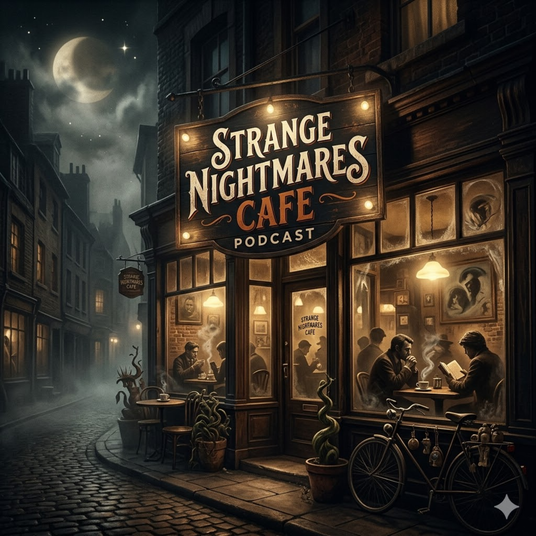
Strange Nightmares Cafe

Strange Nightmares Cafe

by Scott Cardinal
Season 1

Investigating Jack the Ripper (Vintage Article 4)

"Scientific American" is a popular science magazine that has been in publication since 1845, making it one of the oldest continuously published magazines in the United States. It covers a wide range of topics in science, technology, and health, and is known for its accessible yet thorough explanations of complex scientific concepts. The magazine is aimed at an educated, general audience and is respected for its clear reporting and its ability to provide insights into the latest scientific research and technological innovations. Over its long history, "Scientific American" has published articles by notable scientists, including Albert Einstein, and has been a platform for promoting understanding of science and its implications in everyday life and public policy.

Investigating Jack the Ripper (Vintage Article 2)

Delve deep into the heart of Victorian London with "Investigating Jack the Ripper," a captivating podcast series that brings history to life through the lens of one of the most infamous unsolved mysteries of all time. Each episode, I guide listeners through the chilling fog of 1888, reading directly from vintage articles and documents that chronicled the Jack the Ripper investigation as it unfolded. " Investigating Jack the Ripper" offers a unique, real-time experience of the Ripper's reign of terror, presenting the original testimonies of witnesses, the frightened voices of London's East End, and the feverish efforts of the police to catch a killer who seemed like a ghost in the night. Through meticulous research, I unearth the stories of those who lived through the horror, providing insights into the social context of the time, the media frenzy that surrounded the case, and the lasting impact on criminal investigation techniques. Listeners will be transported back to the gaslit streets of Whitechapel, hearing the tales of fear, courage, and mystery that gripped a city and the world. "Investigating Jack the Ripper" is not just a recount of the grisly crimes but a journey into the past, offering a glimpse into the lives of those who witnessed history in the making. Perfect for true crime aficionados, history buffs, and anyone fascinated by the enduring mystery of Jack the Ripper, this podcast peels back the layers of time to reveal the human stories behind the headlines. Join us on this historical deep dive, as we explore the shadows of 1888 and the enigma that has puzzled investigators and captivated the imagination for over a century. Subscribe to this channel and listen to "Investigating Jack the Ripper" and be part of the investigation, week by week, as we seek to understand the legend of Jack the Ripper through the voices of those who were there. Please LIKE this video, SUBSCRIBE to the channel, and turn on notifications, so you don't miss a thing. Join us on PATREON for more chilling content. See link below. 🌜CONNECT WITH US 🌛 PATREON: https://www.patreon.com/StrangeNightmaresX TWITTER: https://twitter.com/StrangeNX INSTAGRAM: https://www.instagram.com/strangenightmaresx FACEBOOK: https://www.facebook.com/profile.php?id=61554419991215 Check out our favorite channel: https://www.youtube.com/@StrangeHistoryX

Investigating Jack the Ripper (Vintage Article 1)

Delve deep into the heart of Victorian London with "Investigating Jack the Ripper," a captivating podcast series that brings history to life through the lens of one of the most infamous unsolved mysteries of all time. Each episode, I guide listeners through the chilling fog of 1888, reading directly from vintage articles and documents that chronicled the Jack the Ripper investigation as it unfolded. " Investigating Jack the Ripper" offers a unique, real-time experience of the Ripper's reign of terror, presenting the original testimonies of witnesses, the frightened voices of London's East End, and the feverish efforts of the police to catch a killer who seemed like a ghost in the night. Through meticulous research, I unearth the stories of those who lived through the horror, providing insights into the social context of the time, the media frenzy that surrounded the case, and the lasting impact on criminal investigation techniques. Listeners will be transported back to the gaslit streets of Whitechapel, hearing the tales of fear, courage, and mystery that gripped a city and the world. "Investigating Jack the Ripper" is not just a recount of the grisly crimes but a journey into the past, offering a glimpse into the lives of those who witnessed history in the making. Perfect for true crime aficionados, history buffs, and anyone fascinated by the enduring mystery of Jack the Ripper, this podcast peels back the layers of time to reveal the human stories behind the headlines. Join us on this historical deep dive, as we explore the shadows of 1888 and the enigma that has puzzled investigators and captivated the imagination for over a century. Subscribe to this channel and listen to "Investigating Jack the Ripper" and be part of the investigation, week by week, as we seek to understand the legend of Jack the Ripper through the voices of those who were there. Please LIKE this video, SUBSCRIBE to the channel, and turn on notifications, so you don't miss a thing. Join us on PATREON for more chilling content. See link below. 🌜CONNECT WITH US 🌛 PATREON: https://www.patreon.com/StrangeNightmaresX TWITTER: https://twitter.com/StrangeNX INSTAGRAM: https://www.instagram.com/strangenightmaresx FACEBOOK: https://www.facebook.com/profile.php?id=61554419991215 Check out our favorite channel: https://www.youtube.com/@StrangeHistoryX

The Execution of H.H. Holmes (1896 article) Part 01

The execution of H.H. Holmes, one of America's first well-documented serial killers, remains a significant event in criminal history. Born Herman Webster Mudgett, Holmes was executed on May 7, 1896, in Philadelphia, Pennsylvania. His life and crimes have been the subject of extensive investigation and speculation, particularly regarding the infamous "Murder Castle" he constructed in Chicago. This building was allegedly equipped with secret passages, trapdoors, and a kiln to cremate bodies, though some aspects of these tales have been considered exaggerated over time. Holmes was a master manipulator who engaged in various fraudulent schemes, including insurance fraud, and is believed to have killed numerous individuals, primarily to steal their property. His victims often included employees, who were required to take out life insurance policies naming Holmes as the beneficiary, and women he became engaged to before killing them after gaining control of their savings. The true number of his victims remains uncertain, with Holmes himself confessing to 27 killings, although only nine could be confirmed. Some estimates suggest he might have killed up to 200 people, but these numbers are speculative and often considered part of the lore that surrounds him. Following his arrest for insurance fraud, Holmes' criminal activities began to unravel, leading to his trial and eventual execution. At the time of his execution, it was requested that his body be buried in concrete, purportedly to prevent grave robbers from desecrating his body, a practice Holmes himself had engaged in during his lifetime. Holmes' life story, including his execution, has been the subject of various articles and books, shedding light on his psychological profile and modus operandi. Despite the years, interest in Holmes and his crimes continues, illustrating the enduring fascination with one of America's first serial killers and the macabre details of his reign of terror​

HH Holmes' Nightmarish Confessions of Multiple Murders. Part 02

H.H. Holmes, born Herman Webster Mudgett, was one of America's first documented serial killers, known for his infamous "Murder Castle" in Chicago during the 1893 World's Columbian Exposition. His confession, made public in 1896, is a perplexing document that has been scrutinized and debated by historians and criminologists for over a century. In his confession, Holmes claimed to have killed 27 people, although this number is often disputed, with some researchers suggesting it could be fewer and others proposing it might be more. The confession was sensationalized by the media of the time, with Holmes providing detailed accounts of his murders, methods of disposal of the bodies, and his motivations. However, the veracity of Holmes' confession has been a subject of debate. Some of the people he claimed to have murdered were found alive after his confession was published. This has led to speculation that Holmes exaggerated the number of his victims either as a form of self-aggrandizement or to confuse the authorities. His motives for the killings, as per his confession, ranged from financial gain to a simple desire to kill. Holmes was eventually convicted for the murder of his business associate, Benjamin Pitezel, and was hanged in 1896. Despite his detailed confession, the exact number of Holmes' victims remains uncertain, and the true extent of his crimes may never be fully understood.

HH Holmes' Nightmarish Confessions of Multiple Murders. Part 01

H.H. Holmes, born Herman Webster Mudgett, was one of America's first documented serial killers, known for his infamous "Murder Castle" in Chicago during the 1893 World's Columbian Exposition. His confession, made public in 1896, is a perplexing document that has been scrutinized and debated by historians and criminologists for over a century. In his confession, Holmes claimed to have killed 27 people, although this number is often disputed, with some researchers suggesting it could be fewer and others proposing it might be more. The confession was sensationalized by the media of the time, with Holmes providing detailed accounts of his murders, methods of disposal of the bodies, and his motivations. However, the veracity of Holmes' confession has been a subject of debate. Some of the people he claimed to have murdered were found alive after his confession was published. This has led to speculation that Holmes exaggerated the number of his victims either as a form of self-aggrandizement or to confuse the authorities. His motives for the killings, as per his confession, ranged from financial gain to a simple desire to kill. Holmes was eventually convicted for the murder of his business associate, Benjamin Pitezel, and was hanged in 1896. Despite his detailed confession, the exact number of Holmes' victims remains uncertain, and the true extent of his crimes may never be fully understood.

The Collyer Brothers. The Hostage and the Hoarder

The Collyer brothers, Homer and Langley, became infamous for their extreme reclusiveness and the chaotic condition of their Harlem brownstone. While both brothers lived in isolation, it was Langley who primarily amassed the clutter, turning their home into a labyrinth of newspapers, furniture, and assorted items. Contrary to some dramatic portrayals, Langley did not intentionally torment Homer; their story is more complex, rooted in mental health issues and a profound dependency on each other. Homer, once a practicing lawyer, became blind and paralyzed, relying entirely on Langley for care. Langley devised intricate systems to navigate their cluttered home and care for Homer, including hoarding items he believed could cure Homer's ailments. Their tragic end came in 1947, when Langley was accidentally crushed by their hoarded possessions while navigating their maze-like home, leaving Homer to perish from starvation. Their lives and deaths have since become a cautionary tale about isolation, mental health, and the dangers of hoarding.

Lizzie Borden's Nightmare. Were You Lied To? Part 03.

Chances are you think Lizzie Borden killed her father and step-mother with an axe. You might even think she was found guilty and went to jail. Well, what if you found out that she was actually found innocent of all charges and the reasons why is because the judge, jury, and locals were all convinced she didn't do it. And what if I told you that she did NOT do it. And I'm going to tell you how I know. Interested? Then join me for the premiere episode of the Strange Nightmares podcast, and the first in a series about Lizzie Borden. As you may know, Lizzie Borden was an American woman who became famous for her involvement in one of the most notorious murder cases in the United States. Born on July 19, 1860, in Fall River, Massachusetts, Lizzie was the youngest daughter of Andrew and Sarah Borden. On August 4, 1892, Lizzie's father and stepmother, Abby Borden, were found brutally murdered in their home, killed with a hatchet (not an axe!). Lizzie was arrested and charged with the murders, leading to a highly publicized trial. The trial against Lizzie Borden attracted national attention due to the gruesome nature of the murders and the involvement of a female suspect from a well-to-do family. Despite the circumstantial evidence, Lizzie was acquitted in June 1893, due to a lack of direct evidence and the jury's reluctance to convict a woman of such a heinous crime. The murders remain unsolved to this day. After her acquittal, Lizzie Borden remained in Fall River but lived under a cloud of suspicion and social ostracism for the rest of her life. She died on June 1, 1927. The case has since become a part of American folklore, inspiring numerous books, films, and the infamous skipping rope rhyme that begins with "Lizzie Borden took an axe..."

Lizzie Borden's Nightmare. Were You Lied To? Part 02.

Chances are you think Lizzie Borden killed her father and step-mother with an axe. You might even think she was found guilty and went to jail. Well, what if you found out that she was actually found innocent of all charges and the reasons why is because the judge, jury, and locals were all convinced she didn't do it. And what if I told you that she did NOT do it. And I'm going to tell you how I know. Interested? Then join me for the premiere episode of the Strange Nightmares podcast, and the first in a series about Lizzie Borden. As you may know, Lizzie Borden was an American woman who became famous for her involvement in one of the most notorious murder cases in the United States. Born on July 19, 1860, in Fall River, Massachusetts, Lizzie was the youngest daughter of Andrew and Sarah Borden. On August 4, 1892, Lizzie's father and stepmother, Abby Borden, were found brutally murdered in their home, killed with a hatchet (not an axe!). Lizzie was arrested and charged with the murders, leading to a highly publicized trial. The trial against Lizzie Borden attracted national attention due to the gruesome nature of the murders and the involvement of a female suspect from a well-to-do family. Despite the circumstantial evidence, Lizzie was acquitted in June 1893, due to a lack of direct evidence and the jury's reluctance to convict a woman of such a heinous crime. The murders remain unsolved to this day. After her acquittal, Lizzie Borden remained in Fall River but lived under a cloud of suspicion and social ostracism for the rest of her life. She died on June 1, 1927. The case has since become a part of American folklore, inspiring numerous books, films, and the infamous skipping rope rhyme that begins with "Lizzie Borden took an axe..."

Lizzie Borden's Nightmare. Were You Lied To? Part 01.

Chances are you think Lizzie Borden killed her father and step-mother with an axe. You might even think she was found guilty and went to jail. Well, what if you found out that she was actually found innocent of all charges and the reasons why is because the judge, jury, and locals were all convinced she didn't do it. And what if I told you that she did NOT do it. And I'm going to tell you how I know. Interested? Then join me for the premiere episode of the Strange Nightmares podcast, and the first in a series about Lizzie Borden. As you may know, Lizzie Borden was an American woman who became famous for her involvement in one of the most notorious murder cases in the United States. Born on July 19, 1860, in Fall River, Massachusetts, Lizzie was the youngest daughter of Andrew and Sarah Borden. On August 4, 1892, Lizzie's father and stepmother, Abby Borden, were found brutally murdered in their home, killed with a hatchet (not an axe!). Lizzie was arrested and charged with the murders, leading to a highly publicized trial. The trial against Lizzie Borden attracted national attention due to the gruesome nature of the murders and the involvement of a female suspect from a well-to-do family. Despite the circumstantial evidence, Lizzie was acquitted in June 1893, due to a lack of direct evidence and the jury's reluctance to convict a woman of such a heinous crime. The murders remain unsolved to this day. After her acquittal, Lizzie Borden remained in Fall River but lived under a cloud of suspicion and social ostracism for the rest of her life. She died on June 1, 1927. The case has since become a part of American folklore, inspiring numerous books, films, and the infamous skipping rope rhyme that begins with "Lizzie Borden took an axe..."
4 of 5