
The STEM Lab

The STEM Lab

by The Stem Lab

Best Screen Free Coding Board Games for Family Learning
AI
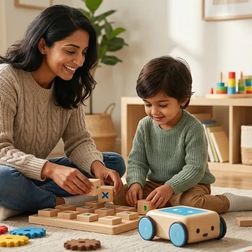
Best Screen Free Coding Board Games for Family Learning Your seven-year-old just spent another afternoon glued to a tablet, and you're feeling that familiar tug of worry. You want to nurture their growing interest in coding, but you'd also love to reclaim some screen-free family time. Screen free coding board games offer exactly that balance—tactile, engaging ways to build computational thinking while sitting together at your kitchen table. After evaluating dozens of options through the lens of developmental readiness and skill progression, I've identified six exceptional board games that teach genuine programming concepts without a single pixel. What to Look For in Screen Free Coding Board Games Choosing the right (/screen-free-coding-toys) requires more than picking something with "coding" on the box. You're investing in your child's cognitive architecture, so let's break down what actually matters. Progressive Skill Scaffolding and Clear Learning Outcomes The best screen free coding board games build sequentially on foundational concepts rather than presenting them all at once. Look for games that start with sequencing (arranging commands in order), then layer in loops (rep…

How to Choose Screen Free Programming Tools That Scale With Your Child
AI
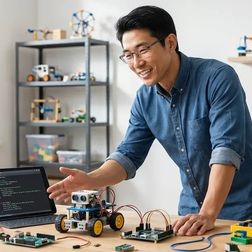
How to Choose Screen Free Programming Tools That Scale With Your Child You want your child to understand computational thinking without handing them another screen. That instinct is sound—the tactile exploration of logic, sequence, and problem-solving builds neural pathways differently than tapping glass. But here's the challenge: you need to choose screen free programming tools that won't gather dust in six months when your child outgrows them. In this guide, I'll walk you through a developmental framework for selecting tools that grow alongside your child's skills, from first exposure to genuine algorithmic thinking. You'll learn how to evaluate expandability, identify products that build toward industry-standard programming concepts, and create a progression that leads naturally to text-based coding when they're ready. This isn't about buying every new gadget—it's about investing in the right sequence at the right time. Time commitment: 30-45 minutes to read and assess your child's current skill level Skill level: For parents of children ages 3-12, no prior programming knowledge required What You'll Need - Your child's current developmental stage (ages 3-5, 6-8, or 9-12) …

STEM by Design: Complete Strategies and Activities Guide for 12 Year Olds
AI
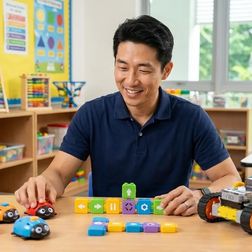
STEM by Design: Complete Strategies and Activities Guide for 12 Year Olds Twelve is the pivot year. It's when kids stop following assembly instructions and start asking "what if I changed this?" The stem by design strategies and activities for 12 year olds I'm breaking down here aren't about entertainment—they're about building real capabilities that map directly to professional tools. I've watched hundreds of sixth and seventh graders move through our fabrication lab, and the ones who get systematic design practice at this age hit the ground running with CAD software, microcontroller programming, and fabrication equipment by fourteen. This guide unpacks the complete framework: what design-based STEM learning actually means, how it differs from activity books, and which specific tools and platforms prepare twelve-year-olds for industry-standard workflows. What Is STEM by Design? STEM by design flips the traditional model. Instead of teaching science concepts first and then finding applications, you start with a design challenge—a problem that demands solutions—and pull in the science, math, coding, and engineering as necessary tools to solve it. When I say "design," I mean the…

Best Unplugged Coding Robots Under $100
AI
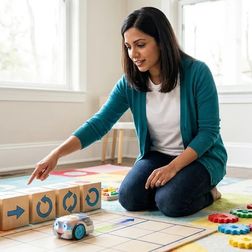
Best Unplugged Coding Robots Under $100 I've spent the past three months putting unplugged coding robots under 100 dollars through their paces in my fabrication lab, and I'm genuinely impressed by how far this category has come. These screen-free tools teach sequencing, loops, and debugging through tactile command sets—no batteries required for the programming interface, though most robots need power to execute. You'll find my favorite picks below, each tested for durability, learning progression, and real skill-building potential. Code & Go Robot Mouse Activity Set The uses directional arrow cards and a simple button interface to teach basic sequencing. I've watched dozens of kids work through the included maze boards, and this consistently delivers that crucial "aha!" moment when they realize debugging means finding the wrong step, not starting over. Lab Specs: Requires 3 AAA batteries (robot only—programming is unplugged). The maze boards are double-sided cardboard that survived six months in my community workshop before showing wear. No connectivity, no cloud dependency, completely offline. Skill Outcomes: Kids 5-8 develop sequential thinking and debugging fundamentals. B…

Understanding Sequence, Loops, and Conditionals Through Physical Play
AI
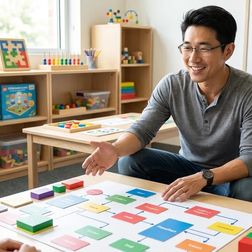
Understanding Sequence, Loops, and Conditionals Through Physical Play When you're trying to teach a seven-year-old what an "if-then" statement means, screen time isn't your only option—and often, it's not even your best one. Coding concepts physical toys create tangible, manipulable representations of algorithms that children can hold, rearrange, and test without ever opening a laptop. I've watched hundreds of students grasp nested loops within minutes using wooden blocks, after struggling for weeks with abstract on-screen syntax. These tools scaffold computational thinking beautifully because they externalize the invisible logic that makes programs work. This article walks you through the three foundational pillars of computational thinking—sequence, loops, and conditionals—and explains how physical manipulatives translate these abstractions into concrete learning experiences. You'll understand the pedagogical mechanisms at work, see how these concepts map to industry-standard programming, and learn to identify which physical tools build genuine transferable skills versus those that simply entertain. What Are Sequence, Loops, and Conditionals? These three structures form the g…

How to Teach Programming Concepts Without a Computer

AI
How to Teach Programming Concepts Without a Computer I've spent the last three years working with maker educators who've successfully taught foundational programming logic to kids as young as four—without touching a keyboard once. The ability to teach programming without computer screens isn't just possible; it's often more effective for building genuine understanding of algorithms, sequences, and logic flows. You'll learn five concrete methods I've tested across multiple fabrication labs, each building specific skill milestones that transfer directly to text-based coding later. This guide works for parents, teachers, and anyone working with learners ages 4-12. No prior programming knowledge required. Time investment: 15-30 minutes per session, 2-3 sessions weekly for visible progress. Skill outcomes you'll build: Algorithm design thinking, sequential logic, debugging mindset, pattern recognition, and conditional reasoning—the exact foundations that (/what-is-screen-free-coding) research shows transfer cleanly to Python, Scratch, and Arduino environments. What You'll Need Physical materials (choose based on method—detailed in each section): - For kinesthetic teaching: Painter'…

What Is Screen Free Coding and Why It Matters for Early Development

AI
What Is Screen Free Coding and Why It Matters for Early Development If you're watching your preschooler navigate a tablet with alarming fluency, you've probably wondered: can my child learn real programming skills without adding more screen time? The answer is yes. What is screen free coding? It's a hands-on approach to teaching computational thinking through physical objects—blocks, robots, board games, and cards—that lets children grasp sequencing, logic, and problem-solving without staring at a display. For families concerned about developmental impacts of early screen exposure, this approach offers a guilt-free path into STEM learning that builds foundational skills children will carry into text-based programming later. What Is Screen Free Coding? Screen free coding (also called unplugged programming or tangible coding) teaches the core concepts of computer science—algorithms, sequences, loops, debugging, and conditionals—using physical manipulatives instead of computers, tablets, or smartphones. Your child arranges wooden command blocks, moves a programmable robot across a mat, or plays a board game where they plan instruction sequences to reach a goal. The magic lies in t…

Best Screen Free Coding Toys for Preschoolers

AI
Best Screen Free Coding Toys for Preschoolers You watch your three-year-old stack blocks with laser focus, creating intricate patterns without a second glance at the tablet collecting dust on the shelf. She's already thinking like a programmer—she just doesn't know it yet. If you're looking for screen free coding toys preschool children can use to build computational thinking without adding more screen time, you're making a choice rooted in developmental science. The quick verdict: the best options transform sequencing, pattern recognition, and cause-and-effect logic into physical experiences your child can touch, manipulate, and master through repetition—no wi-fi required. As a developmental psychologist who's studied how young children internalize abstract concepts through tactile play, I've seen the profound difference between passive screen interaction and active manipulation. The preschool years are when your child's brain craves sensory feedback loops: press this button, watch that happen, adjust, try again. Screen-free coding toys deliver exactly that feedback while building the foundational logic skills that will eventually make (/teach-programming-without-computer) feel …

How to Choose the Most Fun STEM Projects for Kids That Build Real Skills
AI
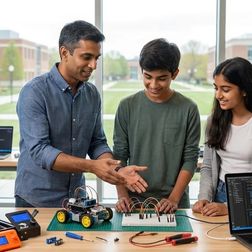
How to Choose the Most Fun STEM Projects for Kids That Build Real Skills You want your child to love learning, not tolerate it. The most fun STEM projects aren't the ones that *look* impressive on Instagram—they're the ones your child chooses to return to again and again, where curiosity compounds into genuine capability. In this guide, you'll learn how to evaluate projects for developmental fit, identify which skills they actually build, and create a selection framework that honors both your child's interests and your investment in their future. We'll walk through concrete assessment criteria, progressive complexity markers, and how to spot projects that transition smoothly into industry-standard tools. Expect about 20 minutes to work through this framework, then a lifetime of watching your child choose challenge over entertainment. What You'll Need Before you can choose the most fun STEM projects, gather these assessment tools: - Your child's current skill inventory – What can they already do independently? List concrete capabilities, not just grade level - Age-appropriate milestone charts – See (/article/stem-skill-milestones-for-10-year-olds) for developmental benchmarks - …

Understanding STEM Career Pathways: What Teen Activities Build Industry Skills

AI
Understanding STEM Career Pathways: What Teen Activities Build Industry Skills The teen years represent the final window for building industry-aligned technical capabilities before college or workforce entry. Most households invest in STEM activities without understanding which ones map to actual hiring requirements in 2026's AI-driven economy. This analysis connects specific teen learning activities to measurable career preparation outcomes for STEM careers for teenagers, based on current enterprise hiring patterns and technical skill demand. What Is STEM Career Pathway Development? STEM career pathway development structures learning activities to build sequentially complex technical capabilities that align with entry-level requirements in science, technology, engineering, and mathematics professions. Unlike generic enrichment, pathway-based development maps each activity to specific industry competencies—Python automation, CAD workflows, sensor calibration protocols, or statistical analysis—that employers actually assess during technical interviews. The Bureau of Labor Statistics projects 10.8% growth in STEM occupations through 2031, significantly outpacing the 4.9% average …
3 of 15