Sounds Good.

Sounds Good.

by Anna Nadeina
Season 1

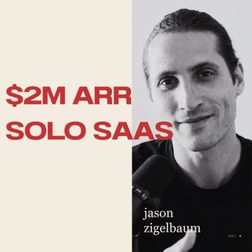
The $2M ARR one-person SaaS — Jason Zigelbaum @ Zigpoll

A year ago, Jason Zigelbaum was running a SaaS business at roughly $1M ARR completely alone. A year later, he's approaching $2M — and he's still alone. So, how? Jason is one of the clearest real-world examples of what running an extremely lean SaaS with AI actually looks like. He uses AI to build product, analyze customer behavior, understand churn, identify his ICP, create marketing campaigns, build landing pages, analyze ad performance, and automate much of the work that would traditionally require a team. But this isn't a story about handing your company over to a bunch of autonomous agents. Jason is still very much in the driver's seat. We talk about how he structures AI workflows, why domain expertise makes AI dramatically more useful, and why the best tasks to delegate are often the ones you already know how to do — but simply don't have enough time to do yourself. And despite automating almost everything, there's one thing Jason still refuses to hand over to AI: customer support. Because when you're the person answering every frustrated email, your customers are effectively writing your roadmap for you. Finally, we talk about the strange side effect of all this new leverage. AI was supposed to give us our time back. Instead, Jason is working harder, doing more, and moving the goalposts again. The next target? $4M ARR. Still solo. Timestamps: 00:00 — From $1M to nearly $2M ARR — still solo 02:04 — What actually drove the growth? 03:23 — What Jason automated with AI 05:16 — Using customer data to find your real ICP 06:06 — Where should AI stop? 08:08 — Jason's actual AI stack 10:34 — Is this finally the one-person AI company? 11:29 — What happens when AI stops working? 13:07 — Why domain expertise makes AI better 14:35 — Learning how to actually talk to AI 16:28 — Can AI replace expertise? 17:48 — Using AI for marketing without creating slop 20:11 — Does building a founder brand actually drive growth? 22:20 — The one thing Jason refuses to automate 24:11 — “Anyone could build this in a weekend” 25:08 — How to make a SaaS defensible in the AI era 27:56 — What happens if AI changes e-commerce completely? 31:39 — Where should a bootstrapped founder spend the money? 32:26 — The surprisingly hard problem of cash flow 35:25 — Letting AI manage ad campaigns 37:41 — Everything changed. Everything stayed the same. 38:24 — Why Jason is finally building a personal brand 40:07 — Automating your own content strategy 42:32 — Why AI gets harder when teams get involved 44:17 — What actually performs on LinkedIn? 47:21 — What Jason is excited about outside AI 49:13 — Is AI actually giving us more free time? 50:43 — The goal: $4M ARR https://www.linkedin.com/in/jason-zigelbaum/ Zigpoll - https://www.zigpoll.com/ sounds good. — a podcast with Anna Nadeina https://soundsgoodpod.com sounds good. is sponsored by saas.group — serial acquirer of profitable SaaS businesses. If you're thinking about an exit, they're worth a conversation. https://saas.group/
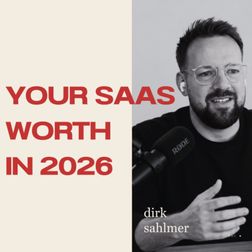
What is your SaaS worth in 2026? — Dirk Sahlmer @ FE International

Is SaaS dead? Dirk Sahlmer spends his days looking at SaaS businesses through the eyes of buyers — and his answer is no. But the things that make a SaaS company valuable are changing fast. In this episode, we get into what the SaaS M&A market actually looks like in 2026: which businesses buyers still want, what kind of multiples founders can realistically expect, why vertical SaaS is getting more attention, and why a business growing hundreds of percent a year can still be difficult for an acquirer to underwrite. We talk about AI-native companies with incredible top-line growth but brutal churn, whether buyers actually care how much AI you're using internally, and why the dream of running a multi-million-dollar SaaS with three people and a small army of agents is still much more common on LinkedIn than behind the scenes. Then there's vibe coding. If you can build a product in a weekend, can you sell it? Dirk explains why a little revenue isn't necessarily enough to make a vibe-coded product attractive to an acquirer — and why distribution, brand, customers and market access are becoming increasingly valuable as the underlying technology gets easier to replicate. We also talk about the increasingly weird world of LinkedIn, why Dirk gets fewer impressions but more actual leads, and why reach might be one of the least interesting metrics for a niche expert. Finally, we get into something founders often think about far too late: preparing for an exit. Increasing growth and profitability isn't the whole story. Customer concentration, geography, pricing, platform dependencies, hiring and product decisions can all influence what a buyer sees — which is why Dirk would rather start talking to a founder one or two years before they want to sell. Timestamps: 00:00 — Is SaaS actually dead? 03:19 — What makes a SaaS business durable now? 06:41 — What happened to the “prompt engineer”? 08:08 — What are SaaS companies actually worth? 11:16 — SaaS multiples in 2026 13:24 — Can you really run a SaaS with three people and AI agents? 16:40 — AI growth vs sustainable growth 18:51 — Why great growth can't hide terrible churn 20:05 — Can you sell a vibe-coded SaaS? 21:39 — Is distribution becoming more valuable than product? 23:02 — Why strategic buyers increasingly care about distribution 24:54 — What happened to LinkedIn? 31:16 — Why reach is a vanity metric 32:49 — When personal posts outperform useful content 34:33 — What founders should ask an M&A advisor 35:08 — Why you should prepare for an exit years in advance 38:00 — What actually makes your company more attractive to buyers 40:42 — Don't let the AI bubble drive you insane Dirk - https://www.linkedin.com/in/dirksahlmer/ sounds good. — a podcast with Anna Nadeina https://soundsgoodpod.com sounds good. is sponsored by saas.group — serial acquirer of profitable SaaS businesses. If you're thinking about an exit, they're worth a conversation. https://saas.group/
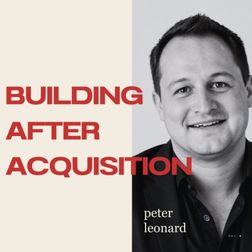
Building SaaS after an acquisition — Peter Leonard @ MyWorks

What happens after you sell your SaaS? Peter Leonard founded MyWorks, built it into a successful SaaS business, and eventually joined saas.group through an acquisition. The original plan was simple: sell the company and move on. But Peter stayed. In this episode, we talk about what happens when a founder moves from building and running their own SaaS to becoming part of a larger group — and how that changes your relationship with the company, the product, and your role as CEO. We also get into what Peter is building next with Stockroom, a new product focused on B2B purchase orders and inventory management for Shopify. As Shopify continues pushing further into higher-volume B2B commerce, there are still plenty of operational problems that existing software doesn't solve particularly well. From purchase orders and inventory workflows to the reality of competing with spreadsheets and manual processes, Peter explains where he sees the opportunities — and why “boring” software can still be incredibly valuable. And then there's AI. We talk about what AI actually changes for established SaaS products, where it creates leverage for small teams, and where it doesn't magically eliminate the need for deep product knowledge, reliable infrastructure, and software that businesses genuinely depend on. Peter also shares what has changed for him personally since the acquisition: moving from founder to CEO, growing into a different kind of leadership role, and figuring out what it means to build the next chapter rather than simply starting another company. Timestamps: 00:53 Introduction and Journey to Leadership 03:55 Navigating Change in a New Structure 06:40 The Role of AI in Business Growth 10:01 Building Relationships and Product Focus 12:43 Adopting AI: Challenges and Strategies 15:49 AI in Product Development and User Experience 19:03 Introducing Stock Room: A New Venture 21:59 Partnerships and the Future of E-commerce 26:12 The Role of Expertise in SaaS Development 30:42 The Future of Retail and AI Integration 35:46 Building Partnerships for Success 40:37 Finding Balance Beyond AI Peter Leonard - https://www.linkedin.com/in/peter-leonard-tx/ MyWorks - https://myworks.software/ sounds good. — a podcast with Anna Nadeina https://soundsgoodpod.com sounds good. is sponsored by saas.group — serial acquirer of profitable SaaS businesses. If you're thinking about an exit, they're worth a conversation. https://saas.group/
How to make B2B content people want — Renée Shaw @ tl;dv

B2B marketing doesn't have to be boring. Renée Shaw from tl;dv has turned humor, personality, and relentless experimentation into one of the company's most recognizable growth channels. Instead of treating social content as something marketing teams have to “do,” tl;dv built a culture where creators are given the freedom to experiment, fail, and figure out what makes people pay attention. We talked about why a B2B company decided to put creators and comedy at the center of its marketing, how to measure something as messy as brand attention, and why trying to attribute every view to revenue can actually make your content worse. Renée breaks down how their team comes up with ideas, why TikTok, LinkedIn, and Instagram require different instincts, how trends become original skits, and why volume matters when you're still figuring out what works. And then there's the AI question. Renée explains why she's skeptical of AI-generated creative at scale, why she thinks human-made work is becoming more interesting, and why sometimes the best creative strategy is simply to stop optimizing everything. Plus: the mistakes that taught her the most, the dangers of over-engineering content, creative burnout, why your ideas aren't as precious as you think, and what happens when you stop performing for an imaginary audience. Timestamps: 00:00 — Welcome to Sounds Good 01:20 — How Renée became “CEO” of tl;dv 03:33 — Why tl;dv hired creators before it was cool 04:58 — Taking a risk on unconventional B2B marketing 07:00 — Can you actually measure brand-driven growth? 09:48 — LinkedIn vs TikTok vs Instagram 12:50 — Why TikTok became a place to experiment 14:28 — Where do viral content ideas actually come from? 15:55 — Why volume beats perfection when you're learning 17:21 — The philosophy behind tl;dv's content 19:32 — How a remote team maintains culture 21:43 — Trust, ownership and psychological safety 24:09 — How to hire a creator for your company 25:57 — Why you might find your next creator in comedy 27:24 — Do creators need to understand your product? 30:33 — The actual process behind making a video 34:47 — Taking content seriously as a growth strategy 36:45 — Why tl;dv survived a crowded market 38:38 — Culture, optimism and surviving competition 42:01 — How to avoid creative burnout 44:46 — The content experiments that completely flopped 47:07 — Why trying to be someone else doesn't work 48:32 — What exciting things are happening outside AI? 50:46 — Stop optimizing everything 52:40 — Why old sitcoms are surprisingly good for your brain 54:43 — Why human creativity might matter more than ever Renée - https://www.linkedin.com/in/reneeeshaw/ tl;dv - https://tldv.io/ sounds good. — a podcast with Anna Nadeina https://soundsgoodpod.com anna@soundsgoodpod.com sounds good. is sponsored by saas.group — serial acquirer of profitable SaaS businesses. If you're thinking about an exit, they're worth a conversation. https://saas.group/
AI can write code, but only you know what to build — Juan Germano @ Jams

AI has made building software dramatically faster—but it hasn't made building the right software any easier. Juan Germano, founder and CEO of Jams, builds custom web and mobile products with founders and operators. And after years of building software, he's seeing a fundamental shift in how products get designed, built, and launched. We talked about what happens when founders can turn an idea into a working prototype in hours, why AI-generated roadmaps can be dangerously convincing, and why having unlimited building capacity can actually make products worse. Juan also explains why the fundamentals of product development haven't changed: you still need to understand the problem, make the right trade-offs, launch, get feedback, and figure out how you're going to get your first users. We get into why distribution needs to be designed into a product from day one, what AI means for software agencies and developers, why small senior teams may have an even bigger advantage now, and why Argentina could have a lot of SaaS opportunity hiding in plain sight. And we talk about something that gets surprisingly little attention in the AI conversation: why human expertise, real-world experiences, communities, and authentic content may become more valuable—not less—as AI-generated everything takes over the internet. One of the biggest takeaways: AI gives you more building capacity. It doesn't give you better judgment. Timestamps: 00:00 - Is software development becoming a dying craft? 01:41 - Why product strategy matters more than ever 02:52 - Are we building for humans or AI agents? 04:46 - The rise of MCPs and APIs 07:02 - Why AI prototypes can be dangerous 07:17 - A prototype isn't a product 09:14 - What is the actual "product"? 11:29 - When AI creates the product roadmap 17:13 - AI lets teams ship 10x more iterations 21:28 - The danger of unlimited building capacity 23:07 - Why you need constraints 30:31 - The new distribution problem 33:41 - Designing distribution into the product 35:39 - Why distribution fundamentals haven't changed 37:25 - What's happening in Argentina's SaaS market? 39:40 - The opportunity in legacy software 42:15 - What happens to WordPress in five years? 46:16 - How should founders work with software experts now? 50:03 - Why you still need the expert 53:05 - How to use AI to write better prompts 54:47 - Juan's AI workflow 57:13 - AI is teaching us how bad we are at communicating 59:19 - What's exciting that isn't AI? 01:02:33 - Escaping AI FOMO 01:03:40 - Will AI make communities more valuable? 01:05:59 - Are we actually going to work less? 01:08:14 - Why humans will still want human things 01:10:05 - Why people hate AI-generated art 01:11:09 - The value of authentic work ─── Juan Germano — https://www.linkedin.com/in/thejuangermano/ sounds good. — a podcast with Anna Nadeina https://soundsgoodpod.com sounds good. is sponsored by saas.group — serial acquirer of profitable SaaS businesses. If you're thinking about an exit, they're worth a conversation. https://saas.group/
The future of SaaS GTM is human (but not all the way) — Roman Hipp @ BetterContact

AI is making software easier to build—and that could be a serious problem for SaaS. Roman, founder of BetterContact, believes SaaS companies increasingly need a real “right to exist” as AI-native companies start rebuilding existing software and aggregating multiple tools into simpler interfaces. We talked about why tool sprawl is becoming a problem, whether SaaS will become increasingly API-first, why founders need to decide whether they're building for humans or AI agents, and why PLG alone may no longer be enough. We also got into outbound, AI-generated content, founder-led sales, personalization, and why Roman thinks human-centric GTM could become even more important as AI takes over more of the sales process. Timestamps: 00:00 - How Roman came up with BetterContact 01:44 - Why BetterContact chose a niche 05:02 - Does SaaS have a “right to exist”? 07:32 - Is AI going to replace SaaS? 10:04 - Choosing the right ICP 12:17 - Can AI giants replace data SaaS? 13:14 - Why PLG is getting harder 14:09 - The return of human-centric SaaS 16:26 - Will AI agents start buying software? 17:44 - UI vs API: what should SaaS build for? 19:35 - Are we building for humans or bots? 20:45 - Which parts of outbound AI can replace 23:05 - Why AI cold calling isn't taking over 25:07 - Founder-led sales and AI content 27:27 - Why generic AI content doesn't work 29:31 - The danger of founder-dependent brands 33:42 - Why outbound is still a powerful channel 35:33 - Why outbound is a numbers game 37:57 - Why personalization is now table stakes 40:40 - What “90% hit rate” actually means 43:26 - How much growth comes from outbound 45:58 - Why GTM events matter 48:22 - Will AI agents replace GTM? 50:44 - Why human-centric GTM could win 51:46 - Is there a perfect cold-call script? 53:49 - Why Roman is excited about air conditioners Roman - https://www.linkedin.com/in/roman-hipp/ BetterContact - https://bettercontact.rocks/ sounds good. — a podcast with Anna Nadeina https://soundsgoodpod.com anna@soundsgoodpod.com sounds good. is sponsored by saas.group — serial acquirer of profitable SaaS businesses. If you're thinking about an exit, they're worth a conversation. https://saas.group/

The SaaS companies that will survive AI — Martin Gourdeau @Vacation Tracker

AI is coming for SaaS—but probably not in the way most founders think. Martin Gourdeau, CEO of Vacation Tracker, has spent years operating SaaS businesses at very different scales, from a 15-person company to Workleap, where he helped grow the business from roughly 275 to 450 people. Now he's back in a small SaaS company, deliberately testing how far AI can take a business without massively increasing headcount. And his view on the future of SaaS is refreshingly nuanced. We talk about why AI could actually supercharge SaaS, why “shallow SaaS” is much more vulnerable to vibe coding, and why companies that own important data and become systems of record may be harder to replace than ever. We also get into AI adoption inside a real SaaS company, the productivity trap of generating more and more without actually moving the business forward, pricing, trials, distribution, LLM discovery, YouTube as an AI visibility channel, and where Vacation Tracker is going next. One of the biggest takeaways: AI has made building software dramatically easier—but that doesn't mean building the right software has become easier. Timestamps: 00:00 - Is SaaS dead in Quebec? 01:26 - Why nuance disappeared from the AI conversation 02:10 - Is AI actually supercharging SaaS? 03:24 - The SaaS AI can't easily replace 06:00 - When building your own software makes sense 07:12 - The hidden cost of building SaaS yourself 09:54 - Did SaaS remove too much friction? 11:00 - The new opportunity: building on top of systems of record 12:45 - Why AI hype always goes too far 14:11 - How Vacation Tracker uses AI internally 16:19 - The AI experimentation playbook 18:07 - Is AI making people work more? 19:48 - The dangerous side of AI productivity 21:20 - Producing more vs actually growing the business 23:07 - Why bigger companies may be more vulnerable 24:30 - How AI can make SaaS products worse 29:39 - From 450-person SaaS to a 15-person company 33:00 - Getting back into technology 34:41 - Avoiding AI shiny object syndrome 37:46 - Vacation Tracker's pricing strategy 38:26 - Why they doubled their trial period 40:24 - Did AI influence their pricing? 42:00 - The right way to raise SaaS prices 43:34 - Is SaaS distribution getting harder? 43:43 - LLMs are driving 30–50% of inbound 45:41 - How to rank in ChatGPT and other LLMs 46:00 - Why content matters for AI visibility 47:47 - Why YouTube matters for LLM discovery 51:47 - What's next for Vacation Tracker? 52:45 - MCP and the future of headless SaaS 53:37 - Could SaaS move to value-based pricing? 54:40 - Is SaaS actually dying? 55:35 - The technology Martin is excited about 57:04 - What kids think about AI 58:32 - Will we revisit these predictions? Martin Gourdeau — https://www.linkedin.com/in/mgourdeau/ Vacation Tracker — https://vacationtracker.io/ ─── sounds good. — a podcast with Anna Nadeina https://soundsgoodpod.com sounds good. is sponsored by saas.group — serial acquirer of profitable SaaS businesses. If you're thinking about an exit, they're worth a conversation. https://saas.group/
Stop chasing traffic, fix your SaaS funnel first — Simonida Jovanovic

Simonida has made a career out of figuring out why SaaS users don't pay—and she doesn't think throwing more AI, more emails, or more traffic at the problem is the answer. She focuses on one of the most valuable parts of the SaaS funnel: the gap between someone starting a trial and deciding the product is worth paying for. Sometimes moving that conversion rate by just a few percentage points can create more revenue than another expensive push at the top of the funnel. We talked about what actually makes trial users convert, why "best practices" can be dangerously misleading, how behavioral segmentation can go too far, and why copy should be one of the last things you work on—not the first. Plus: founder voice, no-reply emails, suppression rules, and why product, sales, support, and marketing need to actually talk to each other before anyone writes another lifecycle sequence. And, inevitably, AI. Why Simonida thinks outsourcing strategy to an LLM is a terrible idea, why AI-generated content increasingly feels like "plastic fruit," what she does use AI for, and why firing your marketing team because ChatGPT can do the job might be an experiment you regret six months later. Timestamps: 00:00 - Can AI actually replace people? 03:07 - Why AI is dangerous for strategy 05:20 - AI won't kill work—it'll change it 06:23 - LinkedIn's AI bubble 08:52 - Why tech companies are humanizing AI 12:57 - Are we overhyping AI? 15:03 - Turning SaaS trials into paying customers 17:35 - The revenue hiding inside your existing funnel 19:40 - The problem with marketing best practices 21:09 - Why human judgment still matters 23:39 - Can AI run your marketing without humans? 28:04 - Why AI strategy still falls short 32:38 - The car wash test for AI 34:09 - Fire your marketing team for AI? Go ahead. 35:36 - What makes a great SaaS email? 38:13 - Every email needs one job 40:13 - Why emails should come from a real person 42:14 - Why no-reply emails need to die 44:48 - Stop emailing people who don't care 47:03 - Behavioral emails and knowing when to stop 49:37 - How Simonida audits a SaaS funnel 52:05 - What product, sales, and support know that marketing doesn't 55:14 - Why copy comes last 56:14 - Can you segment too much? 58:13 - When better onboarding hurts conversion 59:51 - Who should send your SaaS emails? 62:31 - Founder voice as a competitive advantage 67:17 - Cyberdecks, hedgehogs, and the internet beyond AI Simonida - https://www.linkedin.com/in/simonida-jovanovic-29778244/ ─── sounds good. — a podcast with Anna Nadeina https://soundsgoodpod.com sounds good. is sponsored by saas.group — serial acquirer of profitable SaaS businesses. If you're thinking about an exit, they're worth a conversation. https://saas.group/

The real cost of building an AI startup — Ricardo Ghekiere @ Patricia

Ricardo Ghekiere bought BetterPic for $1 when the product was still rough, the AI struggled with consistency, and very few people believed AI headshots could become a real business. Less than three years later, BetterPic had grown into a multimillion-dollar company. But while everyone else was celebrating AI image generation, Ricardo was already thinking about what comes next. That thinking led to BetterStudio, a $2.2M venture-backed bet on AI fashion photography that ultimately failed—and to Runflow and Patricia, the companies that emerged from everything the team learned along the way. We talked about growing BetterPic through affiliate marketing, why they moved from closed-source to open-source AI models, what actually happens after you raise venture capital, why product-market fit can't be bought with headcount, and how a non-technical founder learned enough about AI infrastructure to build products at scale. Plus: whether designers disappear before developers, why software itself may eventually become free, and what companies outside the AI bubble are really doing with artificial intelligence. In this episode: Buying BetterPic for $1 and growing it into a multimillion-dollar business Why redesigning the product was critical to building customer trust How affiliate marketing became one of BetterPic's biggest growth channels The AI workflow behind consistent image generation Why BetterPic moved from closed-source to open-source AI models How open source helped dramatically improve margins Raising $2.2M before finding product-market fit Why BetterStudio ultimately failed The biggest mistake founders make after raising venture capital Building Runflow for enterprise AI image workflows Why Ricardo believes designers will change faster than developers How AI is reshaping internal teams Building Patricia—an AI teammate that lives inside Slack Why software itself may eventually become free What founders outside the AI bubble still misunderstand about AI Ricardo - https://www.linkedin.com/in/ricardoghekiere/ BetterPic - https://betterpic.io Runflow - https://runflow.io ─── sounds good. — a podcast with Anna Nadeina https://soundsgoodpod.com sounds good. is sponsored by saas.group — serial acquirer of profitable SaaS businesses. If you're thinking about an exit, they're worth a conversation. https://saas.group/

Don't add features: how to simplify your SaaS — Jeremy Chatelaine @ MonsterOps

Jeremy has been bootstrapping SaaS products for more than a decade. After building QuickMail into one of the most respected outbound platforms, he's now betting on a much bigger idea: AI won't replace companies — it'll replace the way companies operate. We talked about where AI actually delivers value (and where it absolutely doesn't), why founders are creating technical debt faster than ever, how to build products without drowning users in features, and why becoming a real CEO means giving up control. Plus: AI search, pricing AI features, distribution in 2026, bootstrapping a second company, and raising kids while building SaaS from hotel rooms. In this episode: - Why AI is incredible at customer support but terrible at strategy - The biggest mistake founders make when building internal AI tools - Why coding with AI creates tomorrow's technical debt - Should AI features cost extra? - Building MonsterOps while still running QuickMail - The real reason distribution is still harder than building - How to simplify products instead of endlessly adding features - Bootstrapping a second SaaS company from scratch - Raising entrepreneurial kids while traveling the world Timestamps 00:00 - Why AI isn't replacing SaaS yet 01:56 - What MonsterOps actually replaces inside companies 06:31 - Finding AI use cases that actually work 10:24 - AI customer support that's surprisingly good 14:15 - Does AI replace jobs or change them? 18:42 - Feature bloat and knowing when to stop building 25:22 - AI coding and the coming technical debt problem 27:54 - Pricing AI features the right way 30:20 - Bootstrapping MonsterOps differently than QuickMail 33:15 - Distribution in the age of AI search 39:17 - Becoming a CEO instead of just a founder 45:29 - Running two SaaS companies while traveling 50:23 - Teaching the next generation to build with AI 51:52 - The one business book Jeremy keeps rereading Jeremy: https://www.linkedin.com/in/jeremychatelaine/ QuickMail: https://quickmail.com MonsterOps: https://monsterops.io ─── sounds good. — a podcast with Anna Nadeina https://soundsgoodpod.com anna@soundsgoodpod.com sounds good. is sponsored by saas.group — serial acquirer of profitable SaaS businesses. If you're thinking about an exit, they're worth a conversation. https://saas.group/

1 of 2