The Smart Home Setup Podcast

The Smart Home Setup Podcast

by My Smart Home Setup

Smart Home Interoperability Checklist: Ensuring Device Compatibility

AI
Smart Home Interoperability Checklist: Ensuring Device Compatibility Before you buy another smart home device, you need to know it'll actually work with what you already own. This smart home interoperability checklist walks you through the compatibility factors that matter—protocols, hubs, automation logic, and fallback behaviors—so you can avoid the frustration of devices that refuse to communicate. I've watched too many homeowners return perfectly good hardware simply because they didn't check one critical compatibility requirement before purchasing. Whether you're just starting out or expanding an existing system, this checklist will save you from expensive mistakes. Does Your Hub Support the Device Protocol? The first barrier to interoperability isn't the device itself—it's whether your hub can speak its language. In my experience, this is where 90% of compatibility issues start. 1. Identify which protocol each device uses Every smart device communicates via Wi-Fi, Zigbee, Z-Wave, Thread, or Matter. You'll find this information on the product packaging, in the specifications section, or listed as "wireless connectivity" in the manual. If a product only says "wireless" with…

Thread vs Zigbee: Which Protocol Will Last Longer?
AI
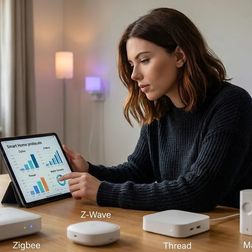
Thread vs Zigbee: Which Protocol Will Last Longer? Thread will likely outlast Zigbee thanks to Matter adoption and industry backing, though Zigbee's decade-long installed base ensures relevance through at least 2030. This thread vs zigbee comparison explores longevity, ecosystem health, migration paths, and which protocol deserves your investment when invisibility and reliability matter more than early adoption hype. I've watched clients agonize over protocol choices—not because they care about mesh topology, but because they're committing to invisible infrastructure that's expensive to replace. Conduit runs, in-wall sensors, concealed modules behind plaster—these aren't weekend projects. The wrong protocol choice means tearing into finished walls years later. For anyone (/how-to-choose-smart-home-protocol), the thread vs zigbee comparison boils down to one question: which investment won't require demolition in five years? Quick Comparison | Criterion | Thread | Zigbee | |-----------|--------|--------| | Matter Integration | Native application layer; full interoperability across platforms | Requires Matter bridge; limited native support | | Hub Requirements | Most require hub …

How to Choose Between Zigbee, Z-Wave, Thread, and Matter Protocols

AI
How to Choose Between Zigbee, Z-Wave, Thread, and Matter Protocols I spent three years running a mixed-protocol smart home before I learned the hard way that how to choose smart home protocol isn't just about technical specs—it's about control, longevity, and whether you're building a system you truly own. After my Wi-Fi bulbs started refusing local commands and phoning home with usage patterns, I rebuilt everything from scratch. Now I run a completely local setup, and the protocol decisions I made determine whether my automations work when the internet goes down. You're here because you're tired of marketing fluff that tells you "everything works with everything." It doesn't. In this guide, you'll learn exactly how to choose smart home protocol based on privacy, local control, interoperability limits, and real-world reliability—not vendor promises. I'll walk you through the decision framework I use when adding any device to my network, including the automation logic, latency expectations, and honest compatibility gaps between ecosystems. Skill level: Intermediate (requires basic networking knowledge) Time to read and apply: 45-60 minutes What You'll Need Before you start ev…

What Is Matter Protocol and Why It Makes Your Smart Home Future-Proof

AI
What Is Matter Protocol and Why It Makes Your Smart Home Future-Proof I've spent the last six years dismantling smart home devices to see what data they're really sending. Most protocols—Zigbee, Z-Wave, Wi-Fi—operate in silos, forcing you to choose ecosystems that inevitably become obsolete or get acquired by companies with questionable privacy practices. What is Matter protocol smart home technology trying to solve? It's an attempt to create a universal language for smart devices that works locally, crosses brand boundaries, and doesn't lock you into a single vendor's cloud infrastructure. The key question: does it actually deliver on those promises, or is it another marketing term destined to disappoint privacy-conscious users? What Is Matter Protocol? Matter is an IP-based connectivity standard designed to let smart home devices from different manufacturers communicate directly with each other over your local network. The Connectivity Standards Alliance (formerly Zigbee Alliance) released Matter 1.0 in late 2022, with ongoing updates through 2026 adding device categories and security improvements. Unlike proprietary protocols that require brand-specific hubs, what is Matter…

Best Matter-Compatible Smart Home Hubs
AI
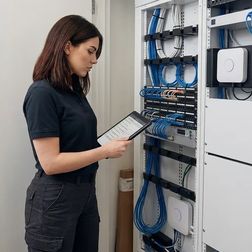
Best Matter-Compatible Smart Home Hubs Matter has changed how we think about smart home compatibility, and choosing the right hub matters more now than ever. If you're building a system around this new standard, you need a hub that doesn't just support Matter but implements it well—with fast response times, reliable Thread border routing, and fallback options when things go wrong. These are the best matter compatible hubs I've tested extensively in real installations, ranked by their actual performance in homes, not manufacturer promises. You'll find hubs here that work for first-time installers and experienced builders alike, with honest assessments of where each one excels and where it falls short. Apple HomePod mini (2nd Generation) The delivers the most seamless Matter experience I've encountered, particularly if you're already in the Apple ecosystem. This compact speaker functions as both a Thread border router and a Matter controller, handling device commissioning and local automation with minimal latency. Why it belongs here: In my testing, Matter device response times averaged 180-220ms for light commands—faster than most dedicated hubs. The HomePod mini connects Matt…

Home Automation Wiring and Network Requirements Checklist

AI
Home Automation Wiring and Network Requirements Checklist Before you buy a single smart switch or motion sensor, you need to understand the infrastructure that makes local-only automation possible. This home automation network requirements checklist covers the physical wiring, network architecture, power backup, and protocol-specific requirements you'll need to run a privacy-first smart home—one that doesn't phone home every time you turn on a light. I learned this the hard way. My first automation setup failed spectral-style because I assumed my existing network could handle 50+ Zigbee devices. It couldn't. The mesh collapsed during simple automations, devices dropped offline randomly, and I had no fallback when the power went out. This checklist is what I wish I'd followed before spending hundreds on incompatible hardware. Network Infrastructure Requirements Your network is the foundation. Get this wrong, and even the best local-only devices will behave like cloud-dependent garbage. - Dedicated 2.4GHz SSID for Wi-Fi devices: Most locally-controlled Wi-Fi devices (like ESP32-based sensors running ESPHome) only support 2.4GHz. If your router auto-selects bands or uses a unifie…

Understanding Smart Home Protocols and Compatibility
AI
Understanding Smart Home Protocols and Compatibility The difference between a home that quietly anticipates your needs and one cluttered with incompatible gadgets often comes down to understanding smart home protocols compatibility. Before mounting a single switch or concealing a sensor behind crown molding, the invisible infrastructure—Zigbee, Z-Wave, Thread, Matter, Wi-Fi—determines whether your automation will hum along seamlessly or fragment into a collection of devices that refuse to speak to one another. These protocols are the languages your devices use to communicate, and choosing the wrong combination means waking at 3 a.m. to manually adjust the thermostat because your motion sensor and HVAC controller live in separate, incompatible worlds. What Is Smart Home Protocol Compatibility? Protocol compatibility refers to whether your smart home devices can communicate with each other and your central hub or controller using the same wireless language. Each protocol—Zigbee, Z-Wave, Thread, Matter, and Wi-Fi—operates on specific radio frequencies, follows distinct communication standards, and requires particular hub hardware to translate commands. When a Zigbee motion sensor d…

How to Install Your First Smart Home Devices

AI
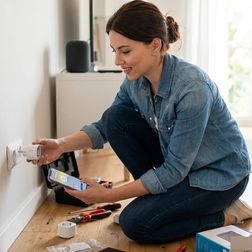
How to Install Your First Smart Home Devices Installing your first smart home devices doesn't have to mean surrendering your privacy to cloud servers. Whether you're adding a smart bulb, motion sensor, or smart plug, knowing how to install first smart home devices the right way—with an eye toward local control and protocol compatibility—can save you from ecosystem lock-in and unwanted data harvesting. In this guide, you'll learn the exact steps to install common smart home devices while maintaining control over your data. I'll walk you through protocol selection, hub requirements, network setup, and automation logic—plus the privacy pitfalls most beginner guides conveniently ignore. Expect to spend 2-4 hours for your first installation, depending on whether you choose cloud-dependent or local-only hardware. Skill level: Beginner-friendly, but we won't dumb down the technical details that actually matter. What You'll Need Before you touch a single device, gather these essentials: - A compatible hub or controller (Zigbee coordinator like Home Assistant Yellow, Z-Wave stick, or Matter-compatible Thread border router—avoid relying solely on cloud hubs like Amazon Echo or Google N…

Smart Home Setup Checklist: Everything You Need Before You Start
AI
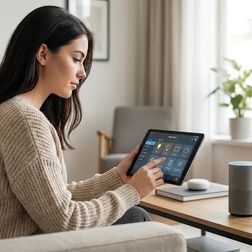
Smart Home Setup Checklist: Everything You Need Before You Start You're ready to automate your home, but walking into this without a proper smart home setup checklist is like starting construction without a blueprint. I've watched countless homeowners buy incompatible devices, struggle with protocol mismatches, and abandon perfectly good hardware because they skipped the planning phase. This checklist walks you through every essential consideration—from network infrastructure to protocol selection—before you buy your first device. Whether you're installing five devices or fifty, you'll need to verify compatibility, understand your home's technical requirements, and plan for the inevitable moments when automation doesn't behave as expected. Network Infrastructure Requirements Your smart home is only as reliable as the network it runs on. Most device failures I troubleshoot trace back to inadequate Wi-Fi coverage or insufficient router capacity—not faulty hardware. - Dual-band Wi-Fi router with 2.4GHz support: Most smart home devices (especially Zigbee, Z-Wave, and Matter-over-Wi-Fi devices) require 2.4GHz connectivity. The 5GHz band won't work for 90% of smart home products, an…

What Is a Smart Home Hub and Do You Need One?

AI
What Is a Smart Home Hub and Do You Need One? You've bought a smart bulb, a Wi-Fi thermostat, maybe a video doorbell. Now you're staring at three separate apps wondering why this is supposed to be convenient. What is a smart home hub? It's the central controller that connects disparate smart devices—often using different wireless protocols—so they can work together without requiring seventeen apps and a cloud account for every light switch. But here's what manufacturers won't tell you upfront: not every hub respects your privacy, and not every smart home actually needs one. I rebuilt my entire automation system after discovering my "smart" setup was phoning home 4,200 times daily. That investigation taught me which hubs enable true local control and which are just data collection points with prettier interfaces. What Is a Smart Home Hub? A smart home hub is a hardware device or software platform that acts as a central controller and translator for smart home devices, letting products that speak different wireless protocols communicate with each other and respond to unified automation rules. Think of it as a multilingual coordinator: your Zigbee motion sensor can trigger your Z-…
3 of 15