Sew:YKnot?

Sew:YKnot?

by Chris Parker
Season 1

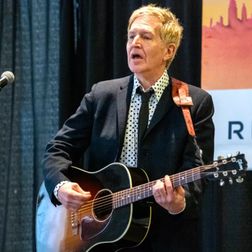
SewYKnot? Interview musician Steve Wynn (Dream Syndicate, Baseball Project) discusses Los Angeles post-punk scene, Paisley Underground, his memoir, Bob Dylan stories, staying passionate

We discus how the early eighties Los Angeles scene really designed the template for what became underground music culture and the careers and outside-the-lines existence is due to he and his peers. We talk about how Dream Syndicate ripped off the Stooges and other acts besides the Velvets. How there is no real due for artists, as much as you might feel they deserved more accolades. We discuss how much fun he has with the Baseball Project and Gutterball and his desert isle discs and what a fascinating mysterious weirdo Dylan was and how he feared writing his memoir but now that he has he's excitedly working on the second book. And we spoke about how you stay passionate and don't sell out by not resting on your laurels and always challenging yourself with new potentialities or re-exploring old ones and how much he loves playing solo.

SewYKnot Podcast interview with Will Kaufman on American Songs of Protest & Struggle
American Cultural; Critic living in England, Will Kaufman jumped the pond from New Jersey in the eighties for post-grad and liked it so much, he didn’t come back. He made fine use of that early education though, when he became a professor on American Lit and an expert on Woody Guthrie. He’s just released his second volume in a series on American songs of protest and struggle, this running from the post-war to the current day. Kaufman’s a sharp, expansive thinker (as well as a guitarist) and the conversation wanders freely around subjects of music, literature and politics. We discuss how Will became an expert on Woody Guthrie, Woody's aesthetic, the difference between struggle vs. protest songs, and the Mermaid Avenue/Man in the Sand sessions with Wilco, notably, Jeff Tweedy, and Billy Bragg, We talk a bit about Tom Paxton, Phil Ochs and Pete Seegar, as well as the emergence of bee-bop, Ella Fitzgerald and Sara Vaughn. We also discuss hip-hop, punk and the Paul Simon/Martin Carthy row over “Scarborough Fair,” and how that illustrates many of the contradictions of the cultural appropriations argument, which at its core is just about acknowledgment in the first place. We discuss the challenges of describing music no one has ever heard and how one collapses 80 years of modern music history into a single volume. We dig into the challenge of satire and its role as a vehicle of speech and how it dovetails with protest, the question of whether it’s legal to sing your testimony to the court, how protest and satire function to diminish the perceived power of the oppressors and the lessons this might hold for this moment in time.

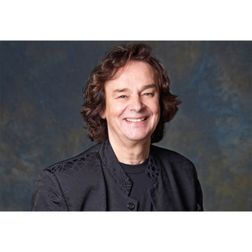
SewYKnot? Interview with musician Colin Blunstone (solo artist / The Zombies)

The Zombies have one of the most extraordinary stories in all of Rock'n'Roll. They won a battle of the bands to earn a recording contract, and during that first session recorded the iconic "She's Not There" with its slinky bass line, cool organ sound and sweet 3-part harmonies. As it turns out, the first engineer passed out drunk, and had to be replaced. The band were a huge sensation, and washed up a few years later. However, months after they had broken up, with the insistence of Blood Sweat & Tears' Al Kooper, their song, "Time of the Season," became a slow-burn hit. It allowed Blunstone to leave his 9-5, and become a musician again, creating the gorgeous baroque pop solo album, One Year, that would be an enormous influence on many nineties indie pop artists even beyond the obvious once like The Delgados and Belle & Sebastien. He continued to release solo albums and now has over a dozen. Around the millennium, he and Rod Argent reformed the Zombies, whose music was now held in higher regard than at any time in their career, and launched a second run showcasing their still abundant skills to those still curious. Meanwhile, Blunstone has continued to build and grow, as he puts the finishing touches on his first album of entirely original content -- only his own songs -- at the age of 81. It's never too late to try something new. We talk about the many fortuitous incidents that led to their creation, the slow slippery slide when you stop atop the pole, and the many mitzvahs that have allowed him to not just endure but grow, and make music with the same set of childhood chums his entire life.

SewYKnot Interview with Tim Fite, discussing his values, sampling, hip- hop and his recent emphasis on visual art
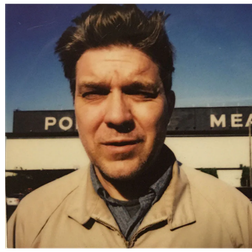
We discuss Fite's course as an artist, how viral music success took him off the visual art path he was initially on and he followed that for a dozen years. We don't talk so much directly about his music as the ideas that generated the music. (On some level doesn't the music speak for itself?) We also spend a lot of time unpacking the idea of identity and good and evil, which can be a way for people to avoid their own responsibility and culpability when bad things happen, And we talk a lot about making art and his process and how one communicates whether on the more broad shallow pool of mass popularity or in sinkholes, and how he's kind of merged the two in his video for Resist. It's very much a conversation more than a lot of questions.

Musician David Dondero traverses his nearly 40-year career, discusses the troubadour lifestyle, and his new novel, Chaos the Cat.

David Dondero has been making music for 40 years, starting out as a drummer in the indie rock act Sunbrain, where he first started writing songs and singing. He played in This Bike is a Pipe Bomb while working in a little punk rock club and inspired by Simon Joyner began making music as a solo artist. His keening tenor was an inspiration to Conor Oberst, and he developed a friendship with the entire Saddle Creek crew. He's released 15 albums, traveled the country and worked in a pot farm for a while which inspired his new book, Chaos the Cat. He speaks to us from Jersey City, NJ. We discuss the Midwestern vibe, moving, Dave's wandering nature, his early DIY punk underpinnings, sobriety and stepping back from music for a moment to better appreciate life, which now includes painting and short story writing. We discuss his book Chaos the Cat inspired by his job doing carpentry on a pot farm, and we discuss his last album, 2023's Immersion Therapy, about the culture and the "orange goblin." The opening comment refers to this song ("When the Pendulum Swings").

Sports Economist Dr. David Berri discusses WNBA contract, MiLB, & Sports Stadiums

Dr. David Berri is a professor of economics at Southern Utah University and a past president of the North American Association of Sports Economists, He's written a half-dozen books (and authored or co-authored over 90 scholarly pieces) including most famously, The Wages of Wins: Taking Measure of the Many Myths in Modern Sport, which looked at how player contribute to wins in the different sports. He drew controversy at the time for denigrating the contribution of NBA scorers, which further analysis (or eye-tests) have essentially borne out. He's contributed his writing to numerous entities including New York Times, the Atlantic.com, Time.com, Vice Sports, Huffington Post, and Forbes. We discuss the WNBA's historic new collective bargaining agreement, put that in context, and discuss minor league baseball, volleyball, how deeply participatory most sports are in relation to basketball and end talking about the economics of public stadium financing.