Set and Drift

Set and Drift

by Patrick Boyd
Season 1

Why the Escort Follows the Tanker

AI
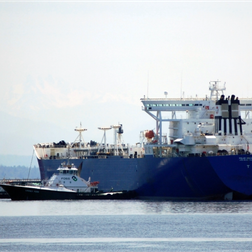
That tug trailing the tanker down Rosario Strait isn't being polite. It's a legal requirement measured in shaft horsepower, and the number of hulls you count tells you something specific about what's in the tanks. This episode traces a rule Washington has spent fifty years writing, from the 1975 tonnage threshold through the 2019 law named after the Southern Resident killer whales, to the permanent rules that took effect in December 2025. Along the way: why an empty barge needs no escort, why 43 percent of laden barge transits were carved out by an interpretive statement, and why a barge of canola oil is legally an oil barge. Go look at: the next laden vessel outbound from March Point. Count hulls, and note the ones running without an escort — the absence tells you either she's empty or she's exempt.

The Ship That Needed an Act of Congress.

AI
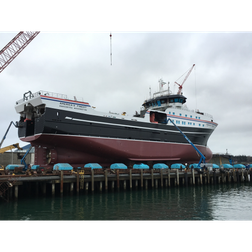
In 2017 a shipyard on Guemes Channel finished a $75 million factory trawler and then discovered she couldn't legally be used. Roughly ten percent of her steel had been cold-formed in the Netherlands, against a tolerance of one and a half percent — a number that appears in no statute, because the Coast Guard chose it to make an ambiguous word enforceable. The ship sat at a dock while the yard laid off half its workforce, and the only remaining remedy was to get Congress to pass a law about one hull. Go look at: what's on the hard at Dakota Creek. A yard that size doesn't choose its work in the abstract — it's a readout of what the regional fleet needs this year.

Why the Notch Exists

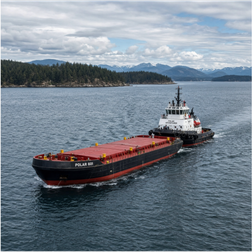
An articulated tug barge is a genuinely clever piece of engineering, and it exists because of a manning rule. A Jones Act tanker carries 22 to 32 crew. An ATB moving comparable cargo can run with seven. This episode is about what happens when a vessel class is defined by what it legally isn't — including why Washington had to name these things explicitly in 2019 to close a gap that had been open for 45 years, and why California fought the same fight over air quality. Go look at: The joint. Tug buried in a notch with no wire between the hulls is an articulated unit. A long cable sagging into the water is a conventional tow, and it's worth noticing how much more sea room that operator wants.

The Channel That Only Exists Because Someone Pays For It

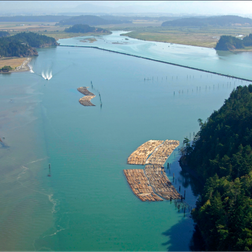
The Skagit River delivers about 2.8 million tons of sediment into Skagit Bay every year, the largest load of any Puget Sound tributary. Eleven miles of navigation channel run straight through that delivery, and the channel is actively trying to close. What you can float through the Swinomish this season isn't a fact about the landscape — it's the output of a funding cycle, a contractor's schedule, and a century-old set of rock structures that are quietly failing. Go look at: the most recent condition survey rather than the chart, and do the tide arithmetic out loud before you transit.
The Most Dangerous Ninety Seconds

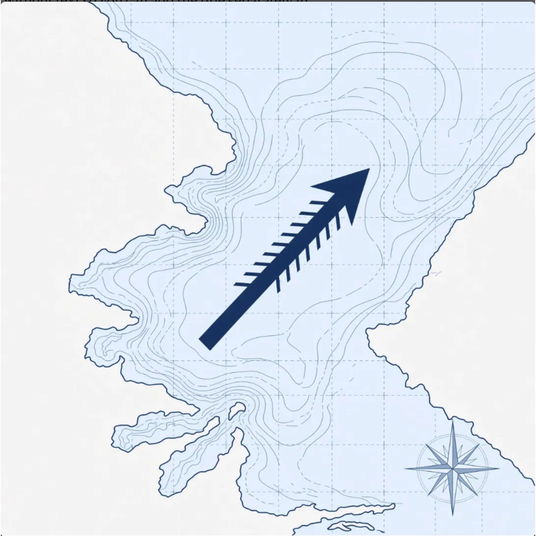
Every foreign-flag ship in these waters starts with one person climbing a rope ladder up a moving hull. It's the most accident-prone thing pilots do, and fall arrest can't be used because both vessels are moving independently. But that's the Port Angeles version, and it isn't how most pilot transfers around here actually happen. This episode follows the tariff to a second system nobody writes about: the commercial launches running out of Cap Sante to ships lying at anchor. Go look at: the Arrows leaving Cap Sante. How often that happens is the real measure of how much of this district's pilotage runs on hired boats.

The Southern End of Alaska

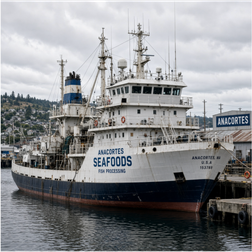
The Alaska fishing industry has a southern end, and a surprising amount of it is within sight of Fidalgo Island. Catching fish and turning fish into a product someone will pay for are different problems with different geographic requirements, so the industry splits itself: speed and cold up north, form and uniformity and time down here. The most important piece is the least photogenic — a freezer isn't a building, it's the ability to wait. Go look at: northbound traffic in spring and southbound in fall, and stop thinking of it as boats going fishing. It's a manufacturing system with two campuses 1,800 miles apart.

Bakken by Rail

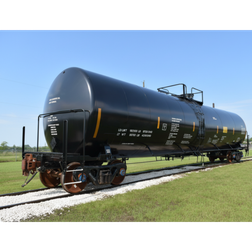
Unit trains of 110 cars came down the BNSF main line to March Point carrying North Dakota crude, and they were never a response to demand for fuel. In 2012, Alaska North Slope crude ran more than $20 a barrel above Bakken, and moving a barrel by rail cost about $15. That $5 gap built a $60 million unloading facility. Then the gap closed, the economics reversed, and the trains kept running anyway — which is the more interesting half of the story. Go look at: the cars themselves. What's rolling out to March Point is the physical residue of a regulatory fight a county council joined without having any authority over railroads at all.

Fifty Fifty

The date crab season opens is set by two things that have nothing to do with each other. One is shell chemistry, answered by pulling pots and weighing meat: the coastal fishery can't open until meat recovery hits 23 percent of sample weight. The other is what a sentence written in 1855 means, answered by a federal judge in 1974. Both are binding, neither can be traded against the other, and this episode lays out both cases on the allocation question without adjudicating between them. Go look at: the soft-shell check, done properly. Squeeze the underside of the carapace. If it gives, that animal is mid-molt and handling it will likely kill it.

The Existence of Fish to Be Taken

Washington may have to buy a motel in Port Angeles and demolish it to reach a pipe underneath, at roughly $100 million. That's the logical endpoint of one sentence Judge Boldt wrote in 1974. Nearly $4 billion has gone into replacing fish-blocking culverts, with $5 billion more requested — and the official measure of success isn't returning salmon, it's whether the pipe stays passable. This episode holds two questions apart: whether the state owes this obligation, and whether it's discharging it competently. Go look at: a culvert near you. Could a fish swim up through that? Is there a drop at the outlet? Once you start seeing them, the scale stops being an abstraction.

The Map Nobody Drew

There are around twenty inhabited islands in San Juan County and four get a ferry. Nobody chose those four. The state bought a bankrupt private company's routes in 1951, expecting to run boats only until bridges were built — and the bridges were never approved. Meanwhile Waldron quarried the paving stones for Yesler Way until concrete killed the market, and Decatur ran a shipyard that built some forty boats. This episode is about how a service map freezes, and why "decline" is a word worth interrogating. Go look at: Shaw when the boat calls there. Ask what analysis in the present day would produce that stop. The answer is none, and the stop is correct anyway.
1 of 2