Science Behind the Glass: illuminating the human side

Science Behind the Glass: illuminating the human side

by Science behind the Glass
Season 5

A Life Indigenous & a Sensei

What if reclaiming your identity could change the way you see leadership, community, and the world? Tuari Dawson shares the deeply personal story of reconnecting with his Māori heritage, and why his ta moko represents responsibility, identity, and legacy rather than status. This conversation explores: Healing from shame The strength of cultural identity Leadership as service The meaning of community Why being different doesn’t mean being separate How martial arts preserve history, discipline, and cultural knowledge Chapters: 00:01 — Tuari Dawson’s Identity10:49 — Comunidad, ciencia y formas de conocimiento 02:37 — Moko as Responsibility and Legacy24:39 — Artes marciales, identidad y respeto cultural 10:49 — Community, Science, and Ways of Knowing 19:33 — Reconciliation Through Connection 24:39 — Martial Arts, Identity, and Cultural Respect 36:21 — Nature as a Living Being with Rights 49:10 — Decolonisation, Misinformation, and the Power of Voice Follow us! Instagram: sciencebehindtheglass X: @sbtg_podcast @daniesguerra @LINDAHE1988 FB: Science behind the Glass TikTok: https://www.tiktok.com/@sbtgpodcast?_t=ZS-8u2DmABj4Us&_r=1 We have a new blog! * https://sciencebehindtheglass.com/blog

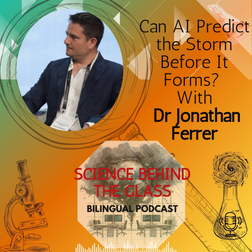
Can AI Predict the Storm Before It Forms? With Dr Jonathan Ferrer

The weather forecast sees the world in 25-kilometre squares. Your entire city fits inside one of them — along with the hill, the valley and the coastline that make your weather completely different from the next suburb. Jonathan Ferrer builds AI that fills in what's inside that square. From a lab in Abu Dhabi, he takes blurry global forecasts and sharpens them to 200 metres: enough to say which streets turn dangerous in a heatwave, or whether a farmer needs to harvest this week. It runs on the same technology that generates images from a text prompt. It starts with static and refines until real weather appears. We talk about whether AI is worth its energy cost, whether this is a bubble, and why he insists that the old-fashioned meteorologists are now more necessary, not less. Timestamps 01:30- From Spain to Australia to Abu Dhabi 03:04- Research at the University of Queensland and CSIRO 04:03- Why applied science matters for real world impact 09:29- Why generative AI matters for weather and climate 13:48- Working with governments on climate and infrastructure decisions 16:24- Balancing AI cost, energy use, and public value 20:57- Ethics, transparency, and energy efficient deployment 31:43- Agriculture, crop planning, and localised weather risk 35:04- Why traditional models and domain expertise are still essential Follow us! Instagram: sciencebehindtheglass X: @sbtg_podcast @daniesguerra @LINDAHE1988 FB: Science behind the Glass TikTok: https://www.tiktok.com/@sbtgpodcast?_t=ZS-8u2DmABj4Us&_r=1 We have a new blog! * https://sciencebehindtheglass.com/blog

¿Y si el primer científico fue un poeta? | Dr. Alfredo Yáñez

Bonus
¿Qué tienen en común un iceberg, un poema y tu abuela diciéndote que no abras el refrigerador cuando llegas acalorado? 🌎 Más de lo que crees. En este episodio conocimos al Dr Alfredo Yañez: científico que se fue hasta la Antártida… y poeta que le escribe a la selva maya. Nos habló de por qué a veces la ciencia se queda sin palabras y tiene que pedirle ayuda al arte. No hace falta ser científico. Solo hace falta tener ganas de mirar el mundo distinto. Capitulos 00:21 La Convergencia entre Arte y Ciencia 01:28 Experiencias en la Antártida 03:29 Microorganismos y su Impacto en el Calentamiento Global 05:45 Conexiones Estéticas en la Ciencia 09:37 La Poesía como Herramienta de Comunicación Científica 13:38 La Influencia de la Naturaleza en la Poesía 18:45 Crecimiento en Chetumal y su Diversidad Cultural 23:25 Creando Comunidades a Través del Aprendizaje 25:36 La Intersección entre Arte y Ciencia 28:24 El Oficio de Escribir y su Relación con la Ciencia 33:24 La Importancia de Dejar un Legado 39:01 La Narrativa de las Leyendas y su Significado 44:04 Reflexiones Finales sobre el Arte y la Vida Siguenos! Instagram: sciencebehindtheglass X: @sbtg_podcast @daniesguerra @LINDAHE1988 FB: Science behind the Glass TikTok: https://www.tiktok.com/@sbtgpodcast?_t=ZS-8u2DmABj4Us&_r=1 Tenemos nuevo blog! * https://sciencebehindtheglass.com/blog Referencias Libro: https://share.google/TZ5C13zuADdUtO3ws

¿Los hongos son anarquistas?

Bonus
¿Y si los seres más subversivos del planeta no tuvieran voz… ni cerebro? Los hongos rompen fronteras, ignoran jerarquías y desarman todo lo que los humanos creíamos ordenado. ¿Son, entonces, los verdaderos anarquistas de la naturaleza? Desde Róterdam, y a partir de la exposición Hongos: los diseñadores de la anarquía, nos sentamos a conversar con la Dra. Karen Muñoz. Hablamos de la muestra, de hongos benéficos y patógenos, de diseño, de ciencia… e incluso de un poema a las ranas. No te pierdas esta conversación. Capitulos 00:20 Explorando la exposición Hongos Anarquistas 05:03 El papel de los hongos en los ecosistemas 07:35 El arte como medio para comprender la ciencia 10:12 La conexión entre los hongos y la salud humana 13:06 La importancia del equilibrio en los ecosistemas 15:57 La representación artística de los hongos 18:45 El impacto del cambio climático en la biodiversidad21:40 Reflexiones finales y conversaciones por venir Siguenos! Instagram: sciencebehindtheglass X: @sbtg_podcast @daniesguerra @LINDAHE1988 FB: Science behind the Glass TikTok: https://www.tiktok.com/@sbtgpodcast?_t=ZS-8u2DmABj4Us&_r=1 Referencias https://nieuweinstituut.nl/en/projects/fungi-anarchistische-ontwerpers https://www.bbc.com/future/article/20251125-the-mysterious-black-fungus-from-chernobyl-that-appears-to-eat-radiation https://mariafernandacardoso.com/projects/spiders-of-paradise/

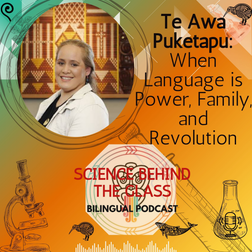
Te Awa Puketapu: When Language is Power, Family, and Revolution

Some women don't just lead, they are warriors. Today's guest is one of them. Te Awa Puketapu, is a Māori language champion, social leader, and an extraordinary force for change in Aotearoa New Zealand. Of Ngāi Tuhoe, Ngāti Ruapani, and Te Atiawa descent, Te Awa was raised speaking te reo Māori and was among the very first children ever enrolled in a Kōhanga Reo in 1982. That early immersion didn't just give her a language, it gave her a purpose. From the Office of the Children's Commissioner to Hutt City Council, she has spent her career fighting for Māori whānau (family), children, and communities. As a 2022 Atlantic Fellow for Social Equity, she is now boldly shaping the next forty years of te reo Māori revitalisation, putting language sovereignty, Māori-led solutions, and the next generation of leaders front and centre. She is a warrior. She is a leader. She is inspiration. Timestamps 00:00 Introduction to Māori Identity and Culture 02:47 The Treaty of Waitangi: Historical Context and Misinterpretations 05:51 Language Revitalization: The Kohanga Reo Movement 09:02 The Importance of Language in Shaping Worldview 11:59 Connection to Nature: Māori Perspectives 14:47 The Role of Women in Māori Society 17:48 Navigating Colonial Systems: Challenges and Resurgence 20:59 Community Support and Collective Action 23:56 Inspiration and Hope for the Future Follow us: Instagram: sciencebehindtheglass X: @sbtg_podcast @daniesguerra @LINDAHE1988 FB: Science behind the Glass TikTok: https://www.tiktok.com/@sbtgpodcast?_t=ZS-8u2DmABj4Us&_r=1 References Strochlic, N. "The Race to Save the World's Disappearing Languages." National Geographic, April 16, 2018. Awarau, A. "The Māori saved their language from extinction. Here's how." National Geographic, June 28, 2024. https://www.socialequity.atlanticfellows.org/fellows-search/te-awa-puketapu
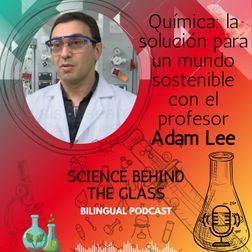
Química: la solución para un mundo sostenible con el profesor Adam Lee

We dive into the fascinating world of atoms and molecules, focusing on their significant impact on our journey towards a cleaner and more sustainable future. Join us as we explore the insights of Professor Adam Lee, a leading chemist whose research is paving the way for revolutionary changes in energy production and manufacturing. Why 95% of consumer goods exist because of catalysis — and why almost nobody talks about it in climate conversations. 🎯 In this episode, you will learn: • Why 95% of consumer goods exist because of catalysis — and why almost nobody talks about it in climate conversations. • How turning toxic waste from African oil crops into nylon and biodiesel can transform rural economies. • What solar panel waste has to do with the future of batteries — and why the solution takes just one millisecond. • How a tiny silver-infused material is changing the way hospitals treat burn victims — without turning anyone blue. • Why Prof. Lee thinks the biggest obstacle to a sustainable future isn't science at all — it's economics, policy, and what we choose to do with education. Timestamps: 03:58 Working Across Continents: How Culture and Geography Shape the Science You Do 06:30 Buffel Grass and Invasive Plants: Local Problems as Global Opportunities 09:14 Waste Valorisation: Turning Toxic African Oil Waste Into Nylon and Biodiesel 14:44 What Is Catalysis? The Invisible Engine Behind 35% of the World's GDP 20:26 Nanomaterials Explained: The Lego Analogy That Changes Everything 20:55 Plastic Recycling: Why Chemical Recycling Is the Real Breakthrough We Need 27:35 Nature-Based Catalysis: How the Human Cell Inspired a New Research Approach 46:20 Where Is the Hope? Why an Economist Might Save the Planet Before a Chemist 51:58 The Ivory Tower Problem: Why Science Funding and Public Education Are Under Threat References → Abbas et al. (incl. Adam F. Lee & Karen Wilson). "Catalysis at the Intersection of Sustainable Chemistry and a Circular Economy." One Earth, Cell Press, 2024. DOI: 10.1016/j.oneear.2024.04.018 https://www.cell.com/one-earth/fulltext/S2590-3322(24)00208-2 → Adam Lee — Editor-in-Chief, Catalysis and Sustainable Chemistry (open-access journal). Scilight Press. https://www.sciltp.com/journals/csc → Challenges and Opportunities in Recycling Technology of Silicon-Based Photovoltaic Solar Panels." Circular Economy and Sustainability, 2025. https://link.springer.com/article/10.1007/s43615-025-00692-3

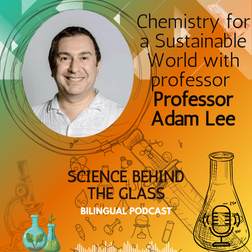
Chemistry for a Sustainable World with professor Adam Lee

We dive into the fascinating world of atoms and molecules, focusing on their significant impact on our journey towards a cleaner and more sustainable future. Join us as we explore the insights of Professor Adam Lee, a leading chemist whose research is paving the way for revolutionary changes in energy production and manufacturing. Why 95% of consumer goods exist because of catalysis — and why almost nobody talks about it in climate conversations. 🎯 In this episode, you will learn: • Why 95% of consumer goods exist because of catalysis — and why almost nobody talks about it in climate conversations. • How turning toxic waste from African oil crops into nylon and biodiesel can transform rural economies. • What solar panel waste has to do with the future of batteries — and why the solution takes just one millisecond. • How a tiny silver-infused material is changing the way hospitals treat burn victims — without turning anyone blue. • Why Prof. Lee thinks the biggest obstacle to a sustainable future isn't science at all — it's economics, policy, and what we choose to do with education. Timestamps: 03:58 Working Across Continents: How Culture and Geography Shape the Science You Do 06:30 Buffel Grass and Invasive Plants: Local Problems as Global Opportunities 09:14 Waste Valorisation: Turning Toxic African Oil Waste Into Nylon and Biodiesel 14:44 What Is Catalysis? The Invisible Engine Behind 35% of the World's GDP 20:26 Nanomaterials Explained: The Lego Analogy That Changes Everything 20:55 Plastic Recycling: Why Chemical Recycling Is the Real Breakthrough We Need 27:35 Nature-Based Catalysis: How the Human Cell Inspired a New Research Approach 46:20 Where Is the Hope? Why an Economist Might Save the Planet Before a Chemist 51:58 The Ivory Tower Problem: Why Science Funding and Public Education Are Under Threat References → Abbas et al. (incl. Adam F. Lee & Karen Wilson). "Catalysis at the Intersection of Sustainable Chemistry and a Circular Economy." One Earth, Cell Press, 2024. DOI: 10.1016/j.oneear.2024.04.018 https://www.cell.com/one-earth/fulltext/S2590-3322(24)00208-2 → Adam Lee — Editor-in-Chief, Catalysis and Sustainable Chemistry (open-access journal). Scilight Press. https://www.sciltp.com/journals/csc → Challenges and Opportunities in Recycling Technology of Silicon-Based Photovoltaic Solar Panels." Circular Economy and Sustainability, 2025. https://link.springer.com/article/10.1007/s43615-025-00692-3

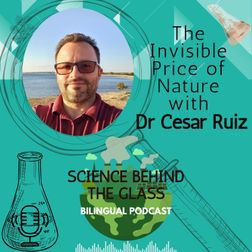
The Invisible Price of Nature with Dr Cesar Ruiz

AI
What is a forest worth? A river? The air you breathe? In a world where economic development often overshadows environmental sustainability, understanding the intricate relationship between biology and economics is crucial. In this enlightening episode of Science and the Glass, Cesar Augusto Ruiz Agudelo shares his journey from biology to economics, emphasising the importance of valuing nature beyond mere numbers. What you will learn in this podcast: • The valuation of ecosystems cannot be reduced to a monetary price; there are values ​​and relationships that no monetary metric fully captures. • The predominance of GDP growth distorts the perception of progress. GDP masks social and ecological losses, reducing development to a material metric. • Economic incentives can be powerful, but dangerously reductive. • Socio-ecological resilience offers a comprehensive view of vulnerability. • Effective communication and social networks are key to generating change. Timestamps: 01:06 César’s Journey: From Biology to Ecosystem Economics 08:15 Types of Value: Relational, Intrinsic, and Instrumental 24:48 Environmental Economics in Practice: Policy, Incentives, and Context 36:18 The Millennium Ecosystem Assessment and Its Global Impact 45:00 Socio-Ecological Resilience: Systems, Tipping Points, and Identity 55:00 Colombia Case Study: Mangroves, Violence, and Real-World Valuation 1:03:27 Science, Advocacy, and How to Speak Truth to Power Follow us: Instagram: sciencebehindtheglass X: @sbtg_podcast @daniesguerra @LINDAHE1988 FB: Science behind the Glass TikTok: https://www.tiktok.com/@sbtgpodcast?_t=ZS-8u2DmABj4Us&_r=1 References IPBES – Global Assessment (Resumen para tomadores de decisiones) https://www.ipbes.net/node/35274 IPBES – Summary for policymakers (PDF) https://files.ipbes.net/ipbes-web-prod-public-files/inline/files/ipbes_global_assessment_report_summary_for_policymakers.pdf La importancia del capital natural (Anthesis Colombia) https://www.anthesisgroup.com/co/art%C3%ADculos/la-importancia-del-capital-natural/ “The Economic Valuation of Ecosystem Services in Colombia. Challenges, Gaps and Future Pathways” https://www.researchgate.net/publication/364165646_The_Economic_Valuation_of_Ecosystem_Services_in_Colombia_Challenges_Gaps_and_Future_Pathways
Season 4

El precio invisible de la naturaleza con el Dr Cesar Ruiz

¿Cuánto vale un bosque? ¿Y un río? ¿Y el aire que respiras? Para el PIB, la respuesta es simple: nada. Solo cuentan cuando se explotan. El Dr. Cesar Ruiz es experto en capital natural y servicios ecosistémicos. En este episodio nos explica por qué la economía global está construida sobre una base que no mide, por qué Colombia es un caso de estudio único en el mundo, y qué herramientas existen para cambiar la forma en que valoramos la naturaleza. Que aprenderá en este podcast: · La valoración de los ecosistemas no puede reducirse a un precio monetario; existen valores y relaciones que ninguna métrica monetaria capta por completo. · El predominio del crecimiento del PIB distorsiona la percepción de progreso. El PIB oculta pérdidas sociales y ecológicas, reduciendo el desarrollo a una métrica material. · Incentivos económicos pueden ser poderosos, pero peligrosamente reductores · La resiliencia socioecológica ofrece una visión integral de la vulnerabilidad · La comunicación efectiva y las redes sociales son clave para generar cambio Lista de Capitulos: 00:00 La Conexión entre Naturaleza y Economía 03:00 Valoración de la Naturaleza y Servicios Ecosistémicos 08:58 Retos de la Valoración Económica 12:03 Impacto del PIB en la Naturaleza 14:50 Instrumentos Económicos para la Conservación 22:18 Instrumentos Económicos y su Efectividad 24:48 Incentivos y Comportamiento Económico 30:24 El Valor del Capital Natural 36:18 Resiliencia Socioecológica y su Aplicación Encuentranos en: www.sciencebehindheglass.com Instagram: sciencebehindtheglass X: @sbtg_podcast @daniesguerra @LINDAHE1988 FB: Science behind the Glass TikTok: https://www.tiktok.com/@sbtgpodcast?_t=ZS-8u2DmABj4Us&_r=1 Referencias IPBES – Global Assessment (Resumen para tomadores de decisiones) https://www.ipbes.net/node/35274 IPBES – Summary for policymakers (PDF) https://files.ipbes.net/ipbes-web-prod-public-files/inline/files/ipbes_global_assessment_report_summary_for_policymakers.pdf La importancia del capital natural (Anthesis Colombia) https://www.anthesisgroup.com/co/art%C3%ADculos/la-importancia-del-capital-natural/ “The Economic Valuation of Ecosystem Services in Colombia. Challenges, Gaps and Future Pathways” https://www.researchgate.net/publication/364165646_The_Economic_Valuation_of_Ecosystem_Services_in_Colombia_Challenges_Gaps_and_Future_Pathways

Cuando la ley falla al planeta: Irán, guerra y ecocidio

Bonus
Mientras el mundo mira, miles de personas están muriendo, 700.000 fueron desplazadas en Líbano, una escuela de niñas fue bombardeada y nadie responde ante la justicia internacional. ¿Por qué? Porque el sistema está roto, y el país más poderoso del mundo es quien lo está quebrando. El Profesor Gary Meyers, experto en derecho internacional, vuelve por tercera vez para explicarnos, sin filtros y sin tecnicismos innecesarios, lo que está pasando en Irán, por qué la Corte Penal Internacional tiene las manos atadas y cómo esta guerra ya está golpeando tu bolsillo, aunque vivas a miles de kilómetros de distancia. Lista de Capitulos: 00:06 – El contexto que nadie te explica: Irán 1953, Mosadegh y el golpe que lo cambió todo 02:21 – Derecho internacional: ¿puede la CPI actuar cuando ningún país la reconoce? 07:11 – Crisis humanitaria: 700.000 desplazados en Líbano y el bombardeo de una escuela 12:10 – Trump fue a la guerra sin permiso del Congreso. ¿Eso es legal? 15:45 – Defensa preventiva vs. defensa anticipatoria: el argumento legal de EE.UU. 18:00 – La amenaza nuclear: lo que realmente dijo el OIEA y por qué importa 27:02 – Ecocidio, petróleo y cómo esta guerra ya está subiendo los precios donde tú vives Encuentranos en: www.sciencebehindheglass.com Instagram: sciencebehindtheglass X: @sbtg_podcast @daniesguerra @LINDAHE1988 FB: Science behind the Glass TikTok: https://www.tiktok.com/@sbtgpodcast?_t=ZS-8u2DmABj4Us&_r=1 Referencias 1. Análisis jurídico más completo disponible en español 🔗 Instituto de Relaciones Internacionales (Argentina) "La legalidad internacional de la intervención de EE.UU. e Israel en Irán: un análisis a la luz de la Carta de las Naciones Unidas" → www.iri.edu.ar 2. Análisis académico sobre la CPI e Israel 🔗 Dialnet / Revista Peace & Security "La Corte Penal Internacional y los crímenes internacionales cometidos por Israel en Territorios Palestinos Ocupados" → dialnet.unirioja.es 3. Noticias ONU en español — Internacionalización del conflicto 🔗 news.un.org/es "Israel-Irán: La internacionalización del conflicto tendría consecuencias enormes" 4. El más completo sobre impacto ambiental — en español 🔗 Observatorio de Ecología Política de Venezuela "Guerra y devastación ecológica en el Medio Oriente" → ecopoliticavenezuela.org 5.La factura ambiental en cifras concretas 🔗 Ambientum (España) "La guerra en Irán deja una factura ambiental y sanitaria que durará décadas" → ambientum.com
1 of 11