
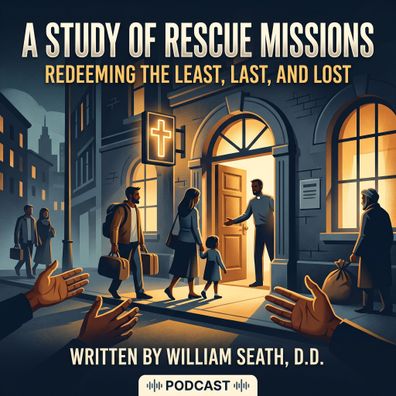
A Study of Rescue Missions (1954) by Dr. William Seath Full Audiobook
Rescue Mission History Full Audiobooks by City Vision University
Oct 1, 2026
01:19:07
Episode notes
This episode dives into the historical and practical insights found in the 1954 publication, A Study of Rescue Missions. Authored by Dr. William Seath, an experienced executive director in the field, the text outlines the origin, theology, and evolution of the rescue mission movement in America, focusing on its specialized role in serving the displaced populations of "Skid Row".
Key topics covered in this episode include:
- The Roots of Skid Row: An exploration of how transient seasonal labor, economic depressions, and personal crises—such as alcoholism, broken homes, and personality maladjustments—created centralized urban areas of extreme poverty and anonymity.
- The Rescue Mission Mandate: A discussion on why specialized missions are uniquely positioned to assist derelict populations. Dr. Seath argues that standard churches lack the necessary facilities, while secular government agencies are unequipped to provide the essential message of Christian salvation, which he views as the only true cure for the root problem of sin.
- Program Evolution: How early "soap, soup, and salvation" models strictly for men expanded over the decades. Modernized missions adapted to include comprehensive services for women, children, and whole families, offering industrial workshops, medical care, personal counseling, and specialized alcoholic wards.
- Operational Models: A breakdown of the different types of rescue operations, ranging from straight gospel halls and self-supporting lodging houses to expansive industrial missions and neighborhood family centers.
- The Ultimate Solution: Dr. Seath’s long-term vision for rehabilitation, which advocates for a return to foundational Gospel teaching in homes, schools, and churches. The episode also covers his proposal for holistic "Men's Town" farm programs designed to physically and spiritually transition individuals out of Skid Row environments and eventually back into smaller communities.