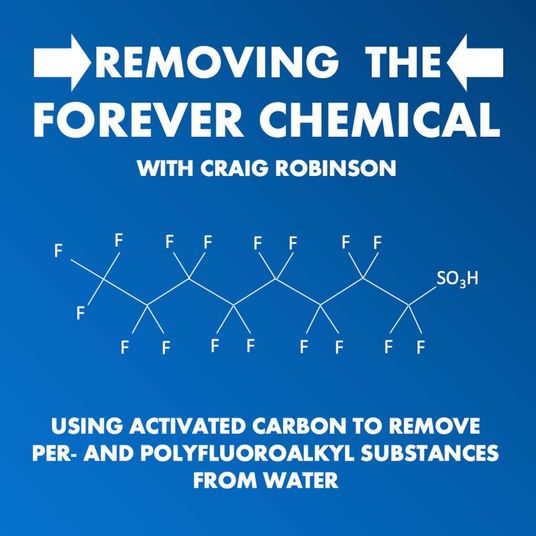
Removing the Forever Chemical: Using Activated Carbon to Remove PFAS from Water
Per- and polyfluoroalkyl substances, or PFAS, earned the nickname “forever chemicals” because of their ability to persist in the environment and bioaccumulate over time. Breaking these chemicals would require an enormous amount of heat energy; and therefore PFAS can remain in waters, on soils, and on pavements for a long period of time. PFAS chemicals, due to their marketable ability to repel both oil and water, are found in a myriad of consumer products: non-stick cookwares, dental floss, paints, and carpets. However, the U.S. Environmental Protection Agency found that high exposure to these chemicals can cause serious medical complications, such as cancers, birth defects, and hormone disruptions. According to an estimate from the 2011−2012 U.S. National Health and Nutrition Examination Survey, PFAS chemicals are present in the bloodstreams of 97% of Americans; a Center for Disease Control study found PFAS in the blood samples of nearly all participants, leading to its classification of widespread exposure. Due to unregulated industrial dumping, stormwater runoff, and fate and transport, concentrations of PFAS chemicals have long been in the drinking water for a vast majority of Americans. The removal of these chemicals is a major challenge in public health and environmental protection. Activated carbon adsorption is a proven way to remove PFAS from water. Through this technology, the activated carbon adsorbent attracts PFAS molecules through their shared property of hydrophobicity. Once the PFAS molecules are bonded to their respective adsorption sites on the surface of the activated carbon, the granular activated carbon can be easily filtered out of the water system. In Removing the Forever Chemical, I discuss the chemistry behind the recalcitrant behavior of PFAS chemicals, how they became ubiquitous in the environment, and how they can be removed through activated carbon adsorption. Additionally, I speak with Dr. Paul Westerhoff, a Regents Professor at the Arizona State University School of Sustainable Engineering and the Built Environment, about his recent publication, which analyzes the adsorption efficiency of different types of activated carbon and their respective abilities to remove different species of PFAS from groundwater samples. I also speak with Dr. Adam Redding, the Drinking Water Solutions Technical Director of Calgon Carbon Company. We discuss the manufacturing process of activated carbon as well as its physical and chemical properties. The following songs are used in this podcast: Rain and Tears by Neutrin05; Back Home by Ghostrifter; Subtle Break by Ghostrifter; Midnight Stroll by Ghostrifter; Mellow Out by Ghostrifter; Hot Coffee by Ghostrifter. This music is available to access on YouTube, Spotify, and Soundcloud. To access a transcript of this podcast with in-text citations and other references, visit tinyurl.com/PFASRemovalPodcast