
Q is stand for Quality

Q is stand for Quality

by Veljko Massimo Plavsic
Season 2
ISO 9001:2015 essential guide
Bonus
This comprehensive guide explains the ISO 9001:2015 standard for Quality Management Systems, detailing its requirements and practical implications. It covers essential aspects like understanding the organizational context, leadership's role, planning based on risks, resource management, and operational processes. The text emphasizes performance evaluation through monitoring, measurement, internal audits, and management reviews. Furthermore, it highlights the importance of continuous improvement and the tangible economic and competitive benefits of achieving ISO 9001 certification.
Season 1
Hoshin Kanri: Your Organization's Compass for True North

Hoshin Kanri: Your Organization's Compass for True North 1. Introduction: Why Every Ship Needs a Compass In your organization, talented teams are working hard. But are they working together? Without a shared compass, even the most dedicated efforts can cancel each other out, leading to wasted energy and stalled progress. This is a common challenge in any complex enterprise. What if everyone had a shared compass pointing toward the same "True North"? This is the core purpose of Hoshin Kanri. In simple terms, Hoshin Kanri is a system designed to "align everyone in your organization, vertically and horizontally, toward common business objectives." It’s not just another strategic plan that sits on a shelf; it is a dynamic process that connects the highest-level vision to the daily actions of every single team member. This document serves as a beginner's guide to demystify Hoshin Kanri, explaining its purpose and core principles in a clear and understandable way. Let's explore what this powerful concept really is, beyond the corporate buzzword. 2. What is Hoshin Kanri, Really? Beyond the Buzzword To truly understand Hoshin Kanri, we must look past the charts and forms and see the collaborative, human system at its heart. 2.1. The Core Idea: A System for Shared Direction Hoshin Kanri is far more than a static plan; it is a continuous process of navigating toward a shared goal. The source material defines it perfectly as "dynamic wayfinding based on situational awareness." It is a method that ties an organization’s broad purpose and long-term strategy directly to the daily work performed by its teams. The ultimate goal is to create a target condition where every team member can say: • I understand our organization's vision. • I know the purpose of my own work. • I see how my individual contribution helps achieve that broader vision. While this perfect state may never be fully reached, the practice of Hoshin Kanri keeps an organization moving ever closer toward it.
The Auditor's Fork
The Auditor's Fork The client’s face was a grid of pixels on my monitor, another remote audit conducted through the sterile glow of a screen. Before me was a digital stack of self-audit forms, all perfectly completed. Remote audits make it easy to present a perfect digital facade. Too easy. But years in this chair teach you to distrust perfection. A healthy system has flaws. This had none, and that’s what bothered me. Everything was pristine, with just a few trivial issues flagged—enough to avoid looking completely 'taroccato', or faked. My skepticism wasn't about this client specifically; it was professional scar tissue from this new way of working. It drove me to dig deeper, and beneath the polished surface, I found it. It wasn't a catastrophic failure, but it was undeniable: a clear minor non-conformity. I screen-shared the evidence, presenting the facts calmly. The client manager didn’t argue. He didn’t have to. The pressure he applied was subtler, a smooth appeal to the business relationship. "For the sake of our partnership," he began, "and the continuity of the business, could we perhaps classify this as an opportunity for improvement?" The request hung in the virtual air between us. The Client's Path The Auditor's Duty Log an "Observation" or "Opportunity for Improvement." Uphold the principle of impartiality from ISO 19011. Keep the client happy and maintain the business. Report a factual non-conformity. View the audit as a business transaction. View the audit as a matter of professional ethics. There it was. The oldest fork in the auditor’s road: the client’s business continuity versus the integrity of the stamp. One path is smooth and profitable; the other is principled, thankless, and correct. It’s a choice that defines our profession. A part of you, the part that has a mortgage, wants to agree with them. It wants to find the gray area. That's when the cynical voices get loud. I suddenly remembered Lee Iacocca's famous line that "safety doesn't sell." In our world, the unspoken version is "professional ethics don't sell." It's a sad and cynical truth, but it hangs over every audit where the client pays the bills. Was I here to sell a certificate or to validate a system? The answer determines the value of my signature on the report. It determines everythin
The Credibility Crisis: Are Business Interests Compromising Quality Certifications?
The Credibility Crisis: Are Business Interests Compromising Quality Certifications? Quality certifications are widely perceived as immutable marks of excellence. They are the seals of approval that signal a company’s commitment to standards, processes, and customer satisfaction. Consumers and businesses alike rely on them as a promise of dependability in a complex marketplace. But what if that promise is being quietly undermined? A troubling conflict of interest is emerging from within the quality assurance industry itself, creating a potential crisis of credibility. Business pressures may be compromising the impartiality of the audit process, threatening to turn the entire system of certification into a mere formality rather than a true measure of quality. When Business Continuity Trumps Compliance A fundamental conflict of interest can exist for third-party Lead Auditors. While standards like ISO 19011 mandate impartiality, there's a cynical acknowledgment that certification has become, above all else, a business transaction. The need to retain a client and ensure business continuity can create immense pressure on auditors to soften their findings. Instead of issuing formal "minor or major non-conformities," an auditor might opt for gentler "observations" or "opportunities for improvement." This approach protects the business relationship by not antagonizing the client. The problem here is profound: the commercial interests of the certification body are prioritized over the rigorous enforcement of standards. This subtle shift doesn't just compromise a single audit; it corrodes the foundational assumption of third-party impartiality upon which the entire certification ecosystem is built. The Grim Parallel: "Professional Ethics Doesn't Sell"
The Plan-Do-Check-Act (PDCA) Cycle: A Foundational Framework for Continuous Improvement
The Plan-Do-Check-Act (PDCA) cycle is presented as the most fundamental framework for lean manufacturing and any organizational improvement process. All other lean tools are considered secondary to this core methodology. The primary reason for the failure of most lean projects in the Western world is not a deficiency in specific tools, but a widespread neglect of the PDCA cycle itself. While project managers often proficiently execute the "Plan" and "Do" stages, the "Check" and "Act" phases are frequently overlooked or deliberately ignored.
AI can be lean?🤔🤔
AI-Powered Continuous Improvement: An Implementation Manual Introduction: Supercharging Lean with Artificial Intelligence This manual provides a practical framework for applying Artificial Intelligence to your continuous improvement processes. The goal is not to replace proven Lean principles with AI, but to supercharge them. Across the Lean community, respected voices are experimenting carefully. Experts like Jamie Flinchbaugh urge transparency, while Mark Graban demonstrates AI’s use as a knowledge assistant. The Lean Enterprise Institute is even piloting AI to improve coaching quality. Forward-thinking companies are already proving the model: Toyota has saved thousands of hours with its internal AI platform, while GE Appliances uses AI to improve flow, accuracy, and safety. This guide frames AI as a "thought partner"—a powerful tool that can clear complexity, remove friction, and analyze vast amounts of data, enabling your teams to focus on higher-value problem-solving and innovation. The winning approach is not a choice between "AI or lean"; it is a strategic integration that asks how we can apply AI to enable and apply Lean more effectively. This manual is structured to provide a clear path forward. We will begin with the foundational principles essential for success, move to strategic frameworks for leadership, and conclude with seven practical, hands-on applications that your continuous improvement teams can implement today. 1.0 Foundational Principles for Successful AI and Lean Integration Before deploying any AI tool, it is critical to establish the right mindset and cultural foundation. Technology is merely an enabler of a human-centric system of improvement. The following principles ensure that AI serves your team and its objectives, reinforcing a culture of deep thinking and engagement rather than undermining it.
Marvelous X Team
The source outlines a proposal for a Global Quality Task Force aimed at preventing product recalls and safety risks across various industries. It highlights the growing challenges of product quality issues due to complex supply chains and accelerated production, leading to significant financial losses and human costs from defective products. The document proposes leveraging Artificial Intelligence (AI) to create a comprehensive, freely accessible global knowledge base of defects, causes, and solutions, moving from a reactive to a predictive quality control model. This initiative seeks to foster cross-industry knowledge transfer and improve product safety, economic benefits, and regulatory collaboration through a collaborative, data-driven approach.
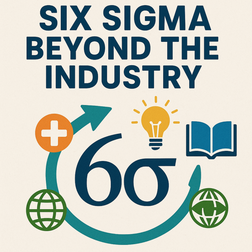
Six sigma beyond the industry
Six Sigma: A Universal Methodology for Process Improvement Executive Summary Six Sigma is a data-driven methodology that originated in manufacturing but has proven universally applicable for improving processes by reducing variation and eliminating defects. The core principle involves achieving near-perfect quality, statistically defined as 3.4 defects per million opportunities (DPMO). Its structured DMAIC (Define, Measure, Analyze, Improve, Control) cycle allows for systematic problem-solving across diverse industries. The financial sector, with its high transaction volumes and standardized processes, is particularly well-suited for Six Sigma implementation, promising significant improvements in efficiency, accuracy, customer satisfaction, and cost reduction. However, successful adoption requires overcoming challenges like resistance to transparency and cultural inertia.
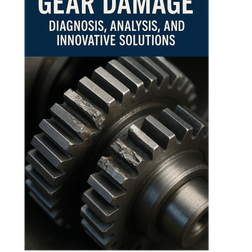
Gear Damage: Diagnosis, Analysis, and Innovative Solutions
This source discusses the critical role of gearwheels in mechanical systems and explores the various factors that lead to their damage and failure. It highlights the importance of material selection, design, and operational best practices, emphasizing condition monitoring and preventative maintenance to ensure longevity. The text examines advanced diagnostic techniques, including AI and digital twins, for identifying and predicting gear failures. Finally, it investigates the use of innovative materials like polymers and hybrid polymer-metal configurations, along with additive manufacturing (3D printing), to enhance gearwheel performance, durability, and cost-effectiveness across diverse applications.
When you say training you don't mean Boeing..right?🤔
Briefing Document: NTSB Investigation into Boeing's Door Plug Blowout Date: July 15, 2025 Source: "Boeing’s inadequate training and oversight led to doorplug blowout: NTSB | Manufacturing Dive" I. Executive Summary: The National Transportation Safety Board (NTSB) has concluded its investigation into the January 5, 2024, Alaska Airlines mid-exit door plug blowout, attributing the incident primarily to Boeing's failure to provide "adequate training, guidance and oversight" to its factory workers. The NTSB's final report, released July 10, 2025, also criticizes the Federal Aviation Administration (FAA) for ineffective compliance enforcement and oversight of Boeing's safety management system. The incident revealed critical lapses in quality control, documentation, and safety culture within Boeing, despite previous commitments to improve. II. Key Findings and Themes: A. Boeing's Systemic Failures: Inadequate Training and Oversight: The core finding is that Boeing did not adequately train, guide, or oversee its factory workers, directly leading to the door plug blowout. Missing Bolts and Improper Reinstallation: The NTSB's initial investigation found "four key bolts were missing from the Boeing 737-9." These bolts, crucial for securing the door, were removed during repairs at Boeing's Renton, Washington, factory and "seemingly not replaced." Lack of Documentation and Process Adherence: Employees who removed the door plug "did not generate a removal record," a violation of Boeing’s business process instruction for parts removals. The door plug was then "closed without securing the bolts and attachment hardware and a quality assurance inspection was not performed." Unresolved Safety Management System (SMS) Issues: Despite initiating an SMS in 2016 as part of a settlement and modifying it after two fatal 737 Max crashes (Lion Air 2018, Ethiopian Airlines 2019), the NTSB found "many issues were still unresolved." Absent Specialized Personnel: None of the technicians "who specialized in opening or closing the plugs were working at the time the plane was at the Renton factory" when the work was performed. Prior Nonconformity Not Fully Addressed: Spirit AeroSystems workers noted a "minor nonconformity in the seal flushness of the door plug" prior to shipping the fuselage to Boeing, though they determined no re-work was needed as it was structurally sound. This highlights a potential area where further scrutiny might have been warranted down the line. B. FAA's Insufficient Oversight: Lack of Enforcement Compliance: The NTSB directly "called out the Federal Aviation Administration for a lack of enforcement compliance and oversight of Boeing’s voluntary safety management system program, which did not identify and mitigate risks." Preventable Deficiencies: NTSB Chairwoman Jennifer Homendy stated, "The safety deficiencies that led to this accident should have been evident to Boeing and to the FAA — should have been preventable... But the same safety deficiencies that led to this accident could just as easily have led to other manufacturing quality escapes and, perhaps, other accidents.” C. Broader Implications and Consequences: Ongoing Legal Battles: Boeing, along with Spirit AeroSystems, faces "multiple lawsuits from passengers on the flight for physical and psychological trauma." Reopened DOJ Case: The incident "reopened a Department of Justice case over two crashes that killed 346 people," which Boeing had initially resolved in 2021. Boeing is currently awaiting a judge's decision on a new plea deal that could involve paying $1.1 billion to avoid criminal charges.
1 of 3