Dangelo68⚔️🔥

Dangelo68⚔️🔥

by JDangelo
Season 214

Believers receive a crown of glory

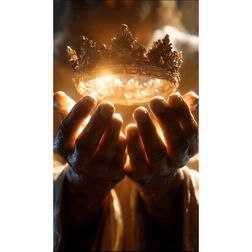
Believers receive a crown of glory “Blessed is the man who remains steadfast under trial, for when he has stood the test he will receive the crown of life, which God has promised to those who love Him.” (James 1:12 ESV) The Bible often describes the life of believers as a race. Along the way, we encounter trials. Some Christians suffer for their faith; they are thrown into prison and persecuted. Others experience intense spiritual warfare and struggle against all kinds of temptations or existential doubt. Following Jesus can be exhausting! But those who finish the race will be awarded a victory wreath or crown. Such a wreath can be compared to a gold medal in major sports competitions. But in God’s Kingdom, there is not just one victory wreath for the “best believer.” On the contrary, everyone who remains faithful until death will receive the crown of life (see Revelation 2:10 and 2 Timothy 4:8). They will once again share in God’s glory, spending eternity in His presence. At creation, humans were appointed as kings and priests to rule over the earth. That mission failed miserably. But soon they will reign as kings and priests of God on the new earth, crowned with His goodness and grace. How do you imagine life on the new earth? What will it be like to live there forever with God?
Season 211

Prayer as Ongoing Conversation

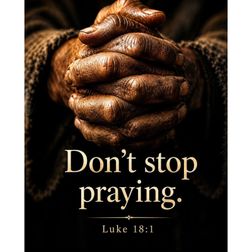
Prayer as Ongoing Conversation When Jesus teaches his disciples to pray, it doesn’t seem as though the Lord’s Prayer is only meant to be used as a rigid script. Instead, he is providing his followers with relational language to both address and honor God, and bring before him our daily needs. Like other places in Scripture, prayer isn’t relegated to a single topic but a posture of attentiveness throughout life. Likewise, Paul’s invitation to “pray without ceasing” isn’t a call to nonstop speaking, but to noticing where God is already at work in our lives and the world around us. This vision of prayer frees us from the pressure to “do it right.” Instead of asking, “Did I pray enough?”, we can begin asking, “Am I staying connected to God throughout my day?” A Prayer for Silent Moments Whispering God, who longs for us to hear your voice and waits in the sheer silence for us to recognize your presence, meet me in this quiet moment. Silence my loud, tumultuous thoughts, and grant my brain rest. Help me let go of my distractions, and my desire to be distracted, to simply sit here with you. And, as the silence unsettles my spirit, let the waves of your peace and presence wash over me. Amen. Reflect: How have you been taught to think about prayer? What makes prayer feel heavy or unsustainable? What would a lighter, more relational prayer rhythm look like?
Season 209

Wednesday

Wednesday Even though you work from home, you are still required to be in the office two or three days a week. You understand that face-to-face interaction with coworkers and colleagues is necessary to create a healthy work culture. As you are getting ready, your mind goes back to that mean and unkind email your coworker sent to you on Monday. “Well, at least I did not respond in kind,” you think to yourself. Even though your coworker responded to your email with a short “Got it,” you have no idea what they thought of your communication. Walking to your car, you have a sense of uneasiness about seeing this person face-to-face. You sigh to yourself, “I hope that this person is not in the office today.” As you drive through the traffic, you reflect on how you both looked at the same situation, interpreted it differently, and reached different conclusions. When you pull into the parking lot, you see the person as they are pulling in. You are tempted to act as if you do not see them, but you pray a quick Nehemiah prayer (Neh. 2:4). You wave, and the person nods their head. As you walk into the building, you continue to pray in your heart and mind, “God help me. Give me grace to be a good listener, not to be defensive. May I say what needs to be said in kindness and wisdom, and in grace and in truth. Enable me to mix the ingredient of love in all my interactions today. In the strong name of Jesus. Amen.” Your meeting with your coworker went better than you expected. Your colleague thanked you for your kind email response and apologized for sending the mean email. Love never fails (1 Cor. 13:8a, NASB) Reflection: How does your memory of the hurtful things said to you by a friend or colleague shape your response to love? Have you engaged in theological and biblical reflection on the experience, trying to remember redemptively, not excusing, but at least trying to understand why the person was so cross?
Season 207

Jesus is crowned with glory again

Jesus is crowned with glory again “But we see Him who for a little while was made lower than the angels, namely Jesus, crowned with glory and honor because of the suffering of death, so that by the grace of God he might taste death for everyone.” (Hebrews 2:9 ESV) The Lord Jesus humbled Himself deeply to bear the punishment for our sin. But when that mission was accomplished, He took His place in heaven once more—clothed in glory and honor, seated at the right hand of the Father on His throne. The apostle John had a vision in which he saw God seated on a throne, surrounded by all manner of heavenly beings. Jesus was there as well, depicted as a Lamb that had been slain (referring to His death on the cross), yet full of power and glory. Angels, animals, and people worshiped Him, saying: “Worthy is the Lamb who was slain, to receive power and wealth and wisdom and might and honor and glory and blessing!” (Revelation 5:12 ESV) This was not just a dream of John’s. God Himself showed him this vision with the command to write it down and share it with other Christians. In another vision, in Revelation 14:14, John saw the glorified Jesus, the divine Son of Man, with a golden crown on His head and a sharp sickle in His hand—a sign of judgment. This image shows us that Jesus, as the glorified King, will also judge the nations. He has all authority in heaven and on earth. All glory to our risen Lord!
Season 205

The Son of God — crowned with thorns

The Son of God — crowned with thorns “And they clothed Him in a purple cloak, and twisting together a crown of thorns, they put it on Him. And they began to salute Him, ‘Hail, King of the Jews!’” (Mark 15:17-18 ESV) In the Old Testament, we read a lot about David. He was a famous king. God promised that his descendants would also rule over Israel. It became increasingly clear that a very special “Son of David” would bring peace and justice. In Psalm 132:18 (ESV), God says about him, “His enemies I will clothe with shame, but on him his crown will shine.” What a wonderful prospect! In the New Testament, we read that Jesus is the promised “Son of David.” He is the King of the Jews—and of all nations. But the Jewish leaders refuse to acknowledge Him as such. On the contrary, they want to get rid of Him! Using false witness statements and political pressure, they have Him condemned to death. Once the verdict is pronounced, the Roman soldiers play their cruel game with Jesus. They dress Him as a king, but instead of a laurel wreath or a diadem, they push a crown of thorns onto His head. Thorns are a sign of judgment and punishment for sin (see Genesis 3:17-18). Now those thorns are used to hurt and humiliate Jesus. The King wears the crown of thorns. The Son of David bears the punishment for our sins. What a striking image of God’s love for sinners!

Season 203

The Son of God

The Son of God — crowned with thorns “And they clothed Him in a purple cloak, and twisting together a crown of thorns, they put it on Him. And they began to salute Him, ‘Hail, King of the Jews!’” (Mark 15:17-18 ESV) In the Old Testament, we read a lot about David. He was a famous king. God promised that his descendants would also rule over Israel. It became increasingly clear that a very special “Son of David” would bring peace and justice. In Psalm 132:18 (ESV), God says about him, “His enemies I will clothe with shame, but on him his crown will shine.” What a wonderful prospect! In the New Testament, we read that Jesus is the promised “Son of David.” He is the King of the Jews—and of all nations. But the Jewish leaders refuse to acknowledge Him as such. On the contrary, they want to get rid of Him! Using false witness statements and political pressure, they have Him condemned to death. Once the verdict is pronounced, the Roman soldiers play their cruel game with Jesus. They dress Him as a king, but instead of a laurel wreath or a diadem, they push a crown of thorns onto His head. Thorns are a sign of judgment and punishment for sin (see Genesis 3:17-18). Now those thorns are used to hurt and humiliate Jesus. The King wears the crown of thorns. The Son of David bears the punishment for our sins. What a striking image of God’s love for sinners!
Season 201

Honest Prayers for Ordinary Emotions

Honest Prayers for Ordinary Emotions The Psalms give us permission to pray honestly, especially about emotions we might otherwise minimize or hide: exhaustion, frustration, loneliness, hard-fought hope... Throughout the Bible, we see these everyday emotions as worthy of prayer. Psalm 13 opens with frustration and ends with trust, without skipping over the pain in between. David doesn’t filter his feelings before bringing them to God. He names them. Prayer becomes the place where honesty and faith meet. Scripture invites us to bring our whole emotional landscape to God, not just the parts we think are important or cleaned up enough. It is important to remember that naming emotions in prayer doesn’t mean they disappear or that all tensions are resolved. Still, over time, praying honestly forms us into people who trust God with all of our real lives, not just our best moments. Ordinary prayer gives language to ordinary feelings, and it reminds us we don’t carry them alone. A Prayer for When You’re a Little Sad Comforter, this sadness is not overwhelming, yet it lingers. Hold me in this moment. I don’t need to have the right words or to fix this feeling—I just need to know that you are here. Sit with me in the quiet, and when the time is right, lift my spirit again. Amen. Reflect: What emotions have been sitting with you lately? Do you feel permission to bring them to God? How might honesty deepen your prayer life?
Season 199

Monday

Monday In our post-pandemic world, working from home on Monday may be a part of your workweek rhythm. Breakfast in the kitchen. No traffic to fight. Homework. Desk and laptop in the home office. Inbox full. Inbox opened. Mean-worded email on Monday morning. The mean words flip your anger switch. Email response drafted in fury! The reply icon seems larger, glaring with a harsh blue hue, standing between you and your coworker on the other side of cyberspace. Lying between the hills of the mean email and your angry draft is a valley of time – a time to decide, a time to regroup, a time to pause, a time to rethink. You have a Bible verse on the wall in your office in bold letters: “Let all that you do be done in love (1 Cor. 16:14, NASB). The reminder grabs your heart – Stop; Pause; Reflect. Respond instead of Repay. You pray, asking the Lord Jesus for the strength to love. Your request for strength to love is not weakness but meekness, not folly but wisdom. You return to your device, delete the email, and draft another one: Kind tone. Considerate words. Careful explanations. You press the reply button with a gentle touch... But since we are of the day, let us be sober, having put on the breastplate of faith and love (1 Thess. 5:8a) Reflection: How will you respond to mean-spirited people today? Even if you must be firm, please ask God to grant you grace to be firm in love. In what sense is agape love a breastplate of protection for you in your interactions with difficult people?
Season 197

💕Growing in Love💕

💕Growing in Love💕 As we live in God, our love grows more perfect. So we will not be afraid on the day of judgment, but we can face him with confidence because we live like Jesus here in this world. 1 JOHN 4:17 N LT Love is hard. It means sacrificing our own priorities for those of another. It goes against our natural flesh instincts. In and of ourselves, love is not our natural reaction or response to the people around us. We have to grow in love and we can only learn this properly from the God who is inherently love. Without God, we are incapable of truly loving. We can try our hardest to be people who love one another, but sooner or later we will fail at it if we don't have God's heart in us. Lord God, I want to represent your heart to the world. know that I am not yet petsten loves I need you to love others through me. I need to see others through your eyes so I can love them flawlessly as you do. Remove my heart of stone and give me a heart of flesh that beats with your love for this world and everyone in it.
Season 195

Kindness Is Always Right

Kindness Is Always Right Instead, be kind to each other, tenderhearted, forgiving one another, just as God through Christ has forgiven you. EPHESIANS 4:32 NLT We must be careful not to judge others quickly based on our limited perception. We mustn't assume things about people based on what we've heard or what little we've observed. The reality is that we truly can't know the full story of those around us. We have no understanding of the losses they've endured or the hardships they've faced. We can never fully know the state of another human heart. Treating one another with kindness is so important because kindness is always fair. Kindness is appropriate for any person in any circumstance. When we are quick to judge, we are sure to miss the whole picture and act wrongly. But when we are quick in kindness, we will always be acting rightly. Fill my heart with kindness toward others, Lord. Remove the desire to judge others. Soften my heart and humble me so that I will not be a harsh critic of those whose stories I haven't read. Let me be slow to assumption and quick to love.
7 of 30