Playful Beginnings

Playful Beginnings

Video Podcast
by Maggie Parker and Kristie Opiola
Season 2

🎧 Playroom Anxiety & CCPT: Expert Insights with Dr. Hayley Stulmaker
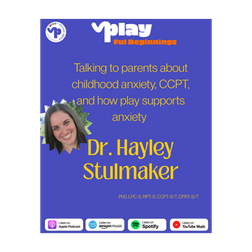
Anxiety in kids isn't always fear—sometimes it's rigid play or outbursts. 🌪️ Dr. Hayley Stulmaker joins the Playful Beginnings Podcast to explain how Child-Centered Play Therapy (CCPT) helps kiddos process anxiety. Listen here: [Link] 🚀 #PlayTherapy #ChildhoodAnxiety #ParentingTips

Relaying CCPT and Anxiety to Parents with Guest Expert Dr. Hayley Stulmaker
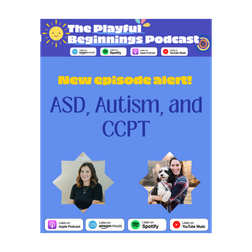
You asked, we listened. You want to know about how to work with parents and make the links between diagnosis/presenting concerns and child centered play therapy. Listen in to this week's episode of Playful Beginnings for a greater understanding of childhood anxiety, how it shows up in the playroom, and bridging the gap with parents. #playtherapy #childcenteredplaytherapy #CCPT #childcenterede #playtherapyworks #playtherapytraining

Child-Centered Play Therapy and Autism: A Natural Alignment Meeting Autistic Children Where They Are
What if Child-Centered Play Therapy wasn't just compatible with autism — but was, at its core, designed for it? In this episode, Dr. Christie Opiola and Dr. Maggie Parker explore the profound alignment between CCPT and the needs of autistic children. Not as a conversation about modifying or adapting the approach — but as an argument that Carl Rogers' six core conditions already speak directly to what autistic children need most: a relationship that meets them exactly where they are, without asking them to be different. They explore what the core conditions look like through an ASD lens, what autistic play communicates in the playroom, how anxiety and ASD intersect, and what this work demands of the therapist's own self-awareness and regulation. They also speak directly to parents — offering a new language for understanding their child that goes beyond deficits, diagnoses, and checklists. Because in the CCPT playroom, a child who lines up every toy, scripts the same scene again, or plays with their back turned isn't doing it wrong. They're finally doing it their way. 🎧 Playful Beginnings — available wherever you listen to podcasts.

Seeing the Soul: A Child Centered Approach to Autism with Dr. Regine Chung
Caring for the whole child means seeing beyond a diagnosis. 🌈 How does Child-Centered Play Therapy align with the needs of autistic children? It starts by recognizing that play is the universal language of childhood—regardless of neurotype. In this episode, Dr. Kristie Opiola and I sit down with Dr. Regine Chung to discuss: Moving from a 'deficit' model to a 'strength-based' approach. The role of the therapist as a regulated, empathetic witness. Why the freedom of the playroom is essential for self-advocacy. Potential adaptations or things to consider in the playroom If you’re a teacher, counselor, play therapist, or caregiver looking to deepen your support for neurodivergent kiddos, this episode is for you. 🔗 Link in bio to listen! #WholeChild #InclusiveEducation #PlayTherapySpace #ChildMentalHealth"

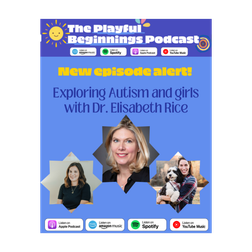
Unmasking the Experience of Girls on the Spectrum with Dr. Elisabeth Rice
In this episode of Playful Beginnings, Dr. Maggie Parker and Dr. Kristie Opiola sit down with Dr. Elisabeth Rice, an Associate Professor at George Washington University and co-host of the On Her Side podcast. The conversation explores the nuanced and often overlooked presentation of Autism Spectrum Disorder (ASD) in girls. Dr. Rice discusses how traditional diagnostic criteria, largely based on male presentations, have led to a "lost generation" of women and girls who go undiagnosed or misdiagnosed. The episode delves into the concept of "masking"—the exhausting social mimicking girls use to blend in—and the internalizing symptoms, such as anxiety and depression, that often lead them to clinical settings before an ASD diagnosis is ever considered. Dr. Rice emphasizes the importance of neuro-affirming practices, moving away from "fixing" behaviors and toward understanding the internal experience and sensory needs of the child.

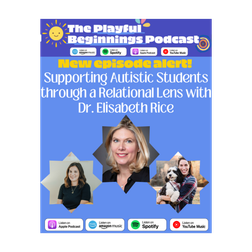
Supporting Autistic Students through a Relational Lens
Episode Summary In this episode, Dr. Lisa Rice joins the show to challenge traditional behavioral approaches to special education. As an accomplished researcher in inclusive education and the co-host of the On Her Side podcast, Dr. Rice discusses the critical importance of a "relational plate" when working with autistic children in school systems. The conversation delves into the "conflict cycle" between adults and children, the often-overlooked emotional needs of teachers, and how we can design school environments that accommodate neurodivergent needs rather than demanding compliance. Key Discussion Points The "Relational Plate" PhilosophyMoving beyond ABA as the "only answer" for behavior. Prioritizing connection and relationship as the foundation for all other interventions. The importance of self-reflection: Asking, "Is this about my need for control or the student's need for support?". Navigating Power Struggles in the Classroom Understanding the Conflict Cycle: How adult responses dictate whether a situation escalates or de-escalates. The pitfalls of forced apologies and why modeling repair is more effective than demanding it. Rethinking "compliance" and "respect" in the context of neurodiversity. Supporting the Supporters: Teacher Wellness The high rates of teacher burnout and assault in the modern classroom. Why teachers need safe spaces—away from administration—to process emotional challenges. The success of trial programs that provide direct emotional support to educators. The Social Model of Disability Shifting the focus from "fixing" the child to fixing the environment. Practical changes: Addressing sensory triggers like fluorescent lights, loud bells, and fire drills. The importance of involving autistic individuals in the development of research and educational practices.

Navigating the Hallways: Expert Tips and Techniques for CCPT in Schools
Working with kids in a school setting is a whole different ballgame. Between the ringing bells, packed schedules, and the pressure of academic demands, finding the space and time to truly connect with a child can feel like a jigsaw puzzle. In this week’s episode of Playful Beginnings, we are breaking down practical, real-world tips and tricks for working with kids within the school system! 🧩✨ Whether you are a school counselor, a play therapist splitting time between sites, or an educator looking to bring a more playful, child-centered lens into your day, this episode is packed with actionable insights. What we’re diving into: The "Time-Crunch" Strategy: How to maximize short, 20-to-30-minute sessions without making the child feel rushed. Creative Space-Saving: No dedicated playroom? No problem. We talk about how to build a mobile "play kit" that brings the therapeutic power of play to any empty office or corner. Speaking the Language of the School: Tips on how to collaborate with teachers and administrators effectively, bridging the gap between clinical needs and classroom realities. Protecting the Relationship: Navigating the unique dual-role pressures of school settings while maintaining a safe, child-centered environment. You don't need a massive, fully stocked playroom to make a massive impact. Sometimes, the most powerful tool you can bring into a school building is your own grounded, playful presence. 🧸💛 🎧 Listen now on your favorite podcast platform! Search Playful Beginnings or click the link in our bio to tune in. #PlayfulBeginningsPodcast #SchoolCounseling #PlayTherapy #SchoolMentalHealth #ChildCentered #SchoolSocialWork #PlayTherapyInSchools #CounselorLife #SupportingKids

Child Centered Play Therapy and Academic Achievement
Play Heals and Helps Kids Thrive in School! 🧸📈 When people think of Child-Centered Play Therapy (CCPT), they usually think about emotional regulation, trauma healing, and behavioral growth. But did you know it also has a massive, evidence-based impact on academic achievement? On this week’s episode of Playful Beginnings, we are thrilled to sit down with the incredible Dr. PJ Blanco to talk about his groundbreaking research on school-based play therapy! 🎒✨ Dr. Blanco’s work bridges the gap between clinical mental health and classroom success. He shares the fascinating data behind how providing children with a safe, non-directive play environment actually unlocks their capacity to learn, focus, and thrive academically. In this episode, we explore: The Research Breakdown: Dr. Blanco dives into his studies showing statistically significant increases in academic achievement scores for children who receive CCPT. The Intrinsic Motivation Factor: How play therapy serves as a protective shield, fostering a child's internal drive to learn and self-regulate, even when facing performance anxiety. Why Traditional Academic Interventions Aren't Enough: Why focusing only on tutoring or drills misses the emotional roadblocks that keep kids from reaching their full potential. Advocating in the School System: Practical ways play therapists and school counselors can use this powerful data to advocate for play therapy clinics and funding within school districts. If you’ve ever needed the hard data to prove to an administrator, school board, or parent that play is serious work, this is the episode you’ve been waiting for! 📊💡 🎧 Tune in now! Search Playful Beginnings on your favorite podcast app or click the link in our bio to listen to our conversation with Dr. Blanco. #PlayfulBeginningsPodcast #CCPT #PlayTherapyResearch #AcademicAchievement #SchoolCounseling #EvidenceBasedPractice #PlayHeals #SchoolMentalHealth #ChildCentered This Research Spotlight with Dr. Pedro J. Blanco features the guest discussing how school-based play therapy serves as a protective factor for children's intrinsic motivation and academic success.

CCPT and Academic Success with Dr. PJ Blanco
Play Therapy & Academic Success In this episode of Playful Beginnings, the hosts sit down with Dr. PJ Blanco to unpack his groundbreaking research on the correlation between Child-Centered Play Therapy (CCPT) and academic achievement. Key Takeaways from the Conversation: The Academic Disconnect: Schools frequently pour resources into traditional academic interventions (tutoring, extra drills, remedial classes). However, Dr. Blanco’s research reveals that for many children, academic struggles are not a cognitive capability issue, but an emotional and regulatory barrier. The Power of the Data: Dr. Blanco discusses his empirical studies showing that children who received CCPT demonstrated statistically significant gains in academic achievement—particularly in reading and math—compared to control groups, even though academic material is never introduced in the playroom. Unlocking Intrinsic Motivation: By providing a non-directive environment where children experience unconditional acceptance and autonomy, CCPT directly targets and reduces performance anxiety, stress, and learned helplessness. When the emotional weight is lifted, the child’s natural desire and capacity to learn are unlocked. Systemic Advocacy: The episode emphasizes the necessity of using this concrete data to advocate for play therapy funding and dedicated spaces within school systems, shifting the narrative from play being "just a reward" to play being a foundational catalyst for school success.

Dr. PJ Blanco provides Tips and Insights for CCPT in Schools

In this episode, the hosts sit down with prominent child-centered play therapy (CCPT) researcher Dr. PJ Bianco to discuss the complex real-world challenges of practicing in school environments. The conversation centers heavily on a common point of friction for school counselors and contracted clinicians: navigating school administrations that ban or restrict aggressive toys from the playroom. The guest and hosts share clinical anecdotes, strategy adaptations, and therapeutic mindsets for maintaining programmatic success when systemic bureaucracy limits your toolset.
9 of 11