Pitcot Podcast
by Anabell & Bill PitcotSeason 1
12 Blogging Benefits That Can Change Your Life Today
Here's what I want you to know — if there is one move that pays you back in skills, reputation, income, and real human connection, it is starting a blog. Not next year. Not when everything feels perfect. Now. You won't believe this, but most people who think about blogging never actually start. And that gap — between thinking and doing — is exactly where opportunity lives. Blogging is not just posting words online. It is a system. A long-game investment that compounds quietly every single week. So, pull up a chair. Let's talk through all 12 reasons this might be the best decision you make this year. 1) You Don't Need to Know Code — Just Start Writing Good news, friend. You don't need to be a developer. You don't need to understand HTML, CSS, or anything that looks like alphabet soup. Platforms like WordPress, Ghost, and Wix have done that heavy lifting for you. You pick a template, write your first post, and hit publish. That's it. Can you imagine sitting down on a Sunday afternoon, writing something that genuinely helps someone, and having it live on the internet by evening? That's the entire barrier to entry right now. Zero coding. Zero tech headaches. Just your ideas in a clean, mobile-friendly layout that works on every screen. Here's what to do on day one: Choose a clean, fast-loading theme — simple always beats flashy. Write a short "About" page that tells people who you are and why they should care. Add a contact form so readers can actually reach you. Set up Google Analytics from the start so you can watch your growth over time. The platform handles the technical side. You handle the message. That's a fair deal, and one of the most underrated blogging benefits for beginners.Top 5 Tools to Supercharge Your Article Writing
Before you write another word. Writing is not just about getting ideas out of your head. It's about shaping them, organizing them, and sending them into the world in the best possible form. And if you're doing that without the right tools? You're climbing a hill with a broken boot. So, let's fix that. You won't believe this, but most writers waste hours every week on tasks that the right software could handle in seconds. Formatting. Spell-checking. Submission tracking. Converting text for the web. Checking if your content will even make it past a spam filter. That's not writing. That's admin work eating your creative energy alive. The good news? There are tools built exactly for this. Five of them, to be precise. Let's walk through each one like we're swapping notes over coffee — what they do, why they matter, and how they'll change the way you work. Ready?
The Power of Whey Protein: A Natural Health Booster
The supplement industry is loud. Every week there’s a new wonder powder, a revolutionary formula, a must-have capsule. Most of it is noise. But whey protein? That one has earned its place. It’s been studied for decades, trusted by athletes and doctors alike, and it works across a remarkably wide range of health goals. So let’s cut through the marketing and talk about what whey actually does — and why you might genuinely want it in your life. What Is Whey Protein, Really? Whey starts life as a byproduct of cheese making. When milk curdles, it splits into two parts — the solid curds that become cheese, and the liquid whey that gets left behind. For a long time, that liquid was considered waste. Then researchers started looking closer and discovered it was loaded with some of the most bioavailable, complete protein on the planet. Once filtered, processed, and dried, whey becomes the powder you see on gym shelves. It contains all nine essential amino acids — the ones your body cannot make on its own and must get from food. That completeness is what makes it so valuable. Egg whites are complete protein. Chicken breast is complete protein. Whey is complete protein — and it digests faster than almost anything else. There are three main forms worth knowing: Whey concentrate is the most common and affordable. It contains 70 to 80 percent protein along with some lactose and fat. The taste tends to be richer and more satisfying. Whey isolate is further processed to remove most of the lactose and fat, leaving 90 percent or more pure protein. It’s the better choice if your stomach is sensitive to dairy. Whey hydrolysate is pre-digested — broken down into smaller peptides for the fastest possible absorption. It’s used primarily in medical nutrition and by elite athletes who need the quickest post-workout delivery. What do you think — does it surprise you that something this useful came from what was once poured down the drain?
Unlocking Weight Loss: 3 Essentials You Can’t Skip
Losing weight isn’t complicated. But it’s not simple either. The fitness industry wants you confused. Confused people buy things. The truth? Real, sustainable weight loss comes down to a handful of principles that actually work. No detox teas. No 21-day miracles. Just honest science and a plan you can stick with for life. Ready? Let’s go. 1. Build a Calorie Deficit — But Don’t Starve Yourself You won’t believe this, but after all the noise about superfoods and cutting carbs and eating every two hours — it still comes down to one thing. Calories in versus calories out. That’s the engine of weight loss. Everything else is detail. A calorie deficit simply means burning more than you consume. To lose roughly one pound of fat per week, you need a deficit of about 3,500 calories across seven days. That’s a 500-calorie-per-day gap. Not dramatic. Not extreme. Totally manageable. What trips people up is going too hard too fast. Dropping to 1,000 calories sounds efficient. It isn’t. Your body reads extreme restriction as a threat. It slows your metabolism, breaks down muscle for fuel, and the moment you eat normally again — it stores fat aggressively to prepare for the next famine. Sound familiar? That’s the diet cycle most people are stuck in. The sweet spot? A moderate deficit of 300 to 500 calories daily, paired with enough protein to preserve muscle. Aim for 0.7 to 1 gram of protein per pound of body weight. It keeps you full. It protects your metabolism. And it gives your body a reason to burn fat instead of cannibalizing tissue. What do you think — does eating less while keeping protein high sound more doable than cutting everything at once?
Debunking Sun Safety Myths
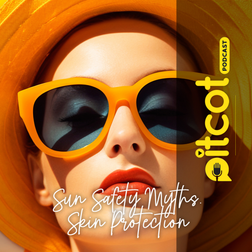
Most of what we know about sun safety is wrong. Not slightly off. Completely, dangerously wrong. And the scary part? These myths have been floating around for so long that they feel like facts. So let's dig in, bust them wide open, and figure out how to actually protect your skin. Ready? Myth 1: Tanning Beds Are Safer Than the Real Sun You won't believe this, but a single 20-minute session in a tanning bed delivers as much UV radiation as spending four hours baking under a midday summer sun. Four hours. From one session. Can you imagine that? Tanning beds are engineered to flood your skin with UVA rays — the long-wave radiation that drills deep into your dermis, breaking apart DNA, collapsing collagen fibers, and quietly programming cells to malfunction. The damage isn't something you feel right away. It builds. Quietly. For years. The World Health Organization classifies tanning beds as a Group 1 carcinogen — the highest possible risk category. Same shelf as cigarettes. Same shelf as asbestos. So if you wouldn't smoke a pack of cigarettes for a golden glow, why climb into a UV chamber? People who use tanning beds before age 35 increase their melanoma risk by 59 percent. That's not a typo. Fifty-nine percent. And melanoma isn't just skin-deep — it spreads fast, it's hard to treat once it moves, and it kills. Over 57,000 people die from it every year worldwide. Want that warm, sun-kissed look? Self-tanners have come a long way. They're streak-free, realistic, and they won't try to kill you. Pair one with a solid SPF 50 broad-spectrum sunscreen and you've got a glow that actually makes sense. No UV coffin required.
Demystifying Public Restroom Germs: Facts & Hygiene Hacks
Alright, let's have the conversation most people avoid because it's slightly uncomfortable. You walk into a public restroom. Maybe it's at an airport, a restaurant, a shopping centre. Your brain immediately starts calculating threat levels. Is this safe? What's on these surfaces? Should you even be touching that tap? Well, here's what we should think through together — the reality is far more interesting, and honestly a bit less terrifying, than your imagination suggests. What's Actually Living in a Public Restroom? You won't believe this, but the toilet seat is not the most dangerous surface in the room. Studies consistently show that the floor, the tap handles, and the door handle on the way out carry significantly higher bacterial loads than the toilet seat itself. Why? Because everyone touches the tap and the door. Not everyone sits directly on the seat. The bacteria most commonly found in public restrooms include E. coli, Staphylococcus aureus, salmonella, and shigella. These are transferred primarily through the faecal-oral route — which is exactly as unpleasant as it sounds. You touch a contaminated surface, then touch your face, mouth, or food, and the bacteria find their way in. This is the chain that good hand hygiene is designed to break. The viruses are a different concern altogether. Norovirus, rhinovirus, and influenza can survive on hard surfaces for hours. In a busy public restroom, surface contamination can happen quickly and persist. So, how do you feel about that? The good news — and there really is good news — is that protecting yourself requires surprisingly little effort once you know what actually matters.
Mastering Freedom: Your Home Business Roadmap
Here's what I want you to think through for a second. Most people spend their entire working lives building someone else's dream. They clock in, clock out, collect a pay cheque, and wonder why Sunday evenings feel so heavy. Sound familiar? Well, there's another way. And it starts with a decision you make before you write a single business plan. The Real Reason Most People Never Start You won't believe this, but the number one thing stopping people from starting a home business isn't lack of money. It's not lack of time either. It's fear dressed up as practicality. People say things like "it's not the right time" or "I need more experience first." What they really mean is they're scared to fail. And that's completely understandable. Starting anything new is uncomfortable. But here's the truth — staying put in a situation that drains you is also a choice. So you're making a choice either way. The question is which choice serves your life better. How do you feel about that? The people who build successful home businesses aren't the boldest people in the room. They're the ones who get uncomfortable and move anyway. One small step. Then another. That's the whole formula. Not glamorous, but it's real.
Beyond Mammograms: A Look at Thermal Imaging for Breast Cancer Detection
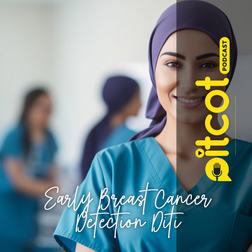
Early Detection Is Everything — And Here's Why Okay, let's have an honest conversation. Breast cancer is one of the most common cancers women face worldwide. And the one thing every doctor, researcher, and survivor will tell you? Catch it early. That's it. That's the whole game. When breast cancer is detected at stage one, survival rates climb above 99%. Stage four? That number drops sharply. So the earlier we find it, the better the outcome — plain and simple. And yet, millions of women are still relying solely on methods that weren't designed to catch what's happening at the very start. Here's what we should think through — mammograms are brilliant tools. They've saved countless lives. But they have real limitations. They can miss tumors in dense breast tissue, they expose you to low doses of radiation each time, and they only show what's already structurally visible. What if something is brewing that hasn't formed a lump yet? That's where the conversation gets really interesting.Conquer Hair Loss: Simple Steps for Real Results
Why Hair Loss Feels So Personal You won't believe this, but hair loss is one of the most emotionally loaded experiences a person can go through — and almost nobody talks about it honestly. You spot it first in the shower drain. Then in the bathroom mirror under bad lighting. Then someone takes a photo of the back of your head and you think: when did that happen? It's not vanity. Hair is identity. It frames your face. It's part of how you've seen yourself since childhood. So when it starts going, it doesn't just change your appearance — it changes how you feel walking into a room. How do you feel about that? Because that feeling is real, and it deserves a real response, not just a shrug and a baseball cap. Hair loss is almost always addressable. Not always fully reversible, but always something you can act on intelligently. The people who get results are the ones who understand what's happening and take structured action. So let's do that.
Banish Body Acne: A Friendly Guide to Clear Skin
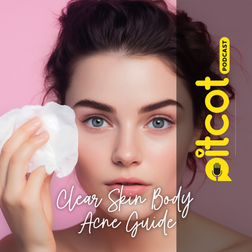
Hey Friend, Let's Talk About Body Acne. Body acne happens to almost everyone at some point, and it's nothing to be embarrassed about. Chest, back, shoulders, even the upper arms—breakouts can show up anywhere your skin produces oil and sweats a little. The good news? It's one of the most fixable skin issues out there, once you understand what's actually causing it. You won't believe this, but most body acne comes down to a handful of simple factors: clogged pores, trapped sweat, friction from clothing, and sometimes diet or stress thrown into the mix. Once you know what's behind it, the fixes start to feel a lot less mysterious. So, ready to walk through this together? Here's another thing worth knowing right away: body skin behaves a bit differently than facial skin. It's often thicker, has larger pores in certain areas, and gets exposed to a lot more friction—think backpack straps, bra bands, gym equipment, and tight waistbands. That means some of the gentle approaches that work on your face might need a slightly stronger touch on your back or chest. We'll get into all of that, piece by piece, so nothing feels overwhelming.