
Episode notes
Is Predator Free 2050 achievable?
Is it possible to remove possums, rats and stoats from 100,000+ hectares of mainland New Zealand, and keep them out, without a fence?
When ZIP began working in South Westland, this was unchartered territory: even the team wasn’t sure. But the local community agreed that it was worth a go.
Starting with a trial in the remote Perth Valley, they worked across the landscape block by block. Some river boundaries helped keep predators out. Others were so leaky that dealing with returning animals made it hard to move on.
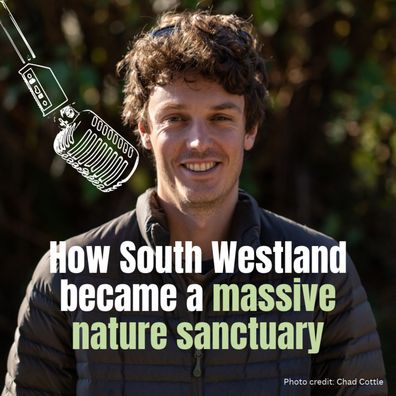
In this episode, Nate St Hill from Zero Invasive Predators (ZIP) shares how the team kept finding ways forward, combining familiar tools with new technology and adapting as they learned.
With initial predator removal completed across more than 100,000 hectares, Nate describes the rewards, like seeing kākāriki in the Perth Valley where he once worked for years without hearing one, and residents telling him their dawn chorus has changed.
It’s a story of persistence, ingenuity and community support, with lessons for anyone wondering whether Predator Free 2050 is possible.
This is the first episode of a two-part mini series looking at this incredible elimination programme. The next episode explores how predator removal is changing life for locals and tourism operators in Ōkārito Lagoon.
We recorded this episode during a visit in late March 2026. Whilst the majority of what we discussed is current at the time of publishing, you can find the latest project updates and numbers here: https://pfsw.org.nz/news
Here are some of the key topics we discussed:
- What predator elimination means in an open mainland landscape
- Using glacier fed, fast-flowing rivers, mountains and the sea as natural boundaries
- How 1080, traps, innovation and AI cameras work together
- Why different predators need different responses
- Working alongside landowners and local communities
- Learning how to manage reinvasion and prevent predators from re-establishing
- Maintaining the gains and the role of the Tomorrow Accord
- Nate’s lessons and insights for adapting this approach elsewhere in Aotearoa
- And much more…
🧑 About Nate:
After completing a Bachelor of Science at Sydney University and travelling overseas, Nate stumbled into the world of conservation as a volunteer for the Department of Conservation on Raoul Island. He spent the best part of two years working on the weeding program there.
Nate joined ZIP as a field ranger working at the temporary Haast field site back in 2017. He’s been with the South Westland team since ZIP began work in the Perth Valley in 2019. These days, he doesn’t spend much time working in the field but enjoys exploring the more accessible parts of the stunning South Westland environment with his 2 year old son.
🔗 Learn more:
- https://zip.org.nz
- https://pfsw.org.nz
- https://www.instagram.com/projectpfsw
- https://www.facebook.com/predatorfreesouthwestland
🎙️Learn more about the podcast at www.conservationamplified.org