
Episode notes
Between what another person says and how we respond, the mind often creates an entire story. We interpret their tone, intentions, character, and what their words appear to say about us—sometimes before we have separated what actually happened from what we assumed it meant.
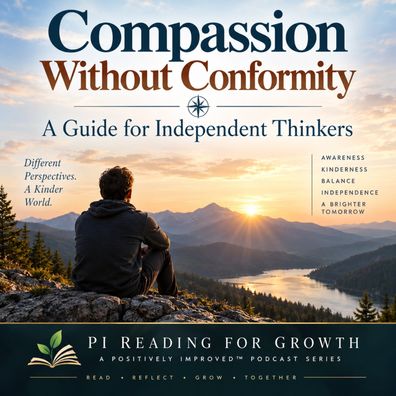
In Episode Eight of Compassion Without Conformity, we explore how reframing can help us approach difficult encounters with greater clarity. Reframing does not ask us to ignore harmful behavior, doubt our instincts, or force ourselves to think positively. It invites us to examine our interpretations so we can respond to the present situation rather than automatically reacting through the pain of past experiences.
We also consider how other people arrive with interpretations of their own. Their understanding of our words and choices may be shaped by fears, expectations, and experiences we cannot immediately see. Compassionate curiosity can help us understand how they reached their conclusions without requiring us to accept those conclusions as the truth.
This episode examines what it means to translate between different worldviews, listen for the values beneath opposing positions, and remain open to another perspective without surrendering our own. It also explores how we can choose what meaning we carry forward after a difficult encounter.
In this episode, you will explore:
- The difference between an observation and an interpretation
- How past experiences influence present reactions
- Why questioning an assumption is not the same as doubting yourself
- How to understand another person’s perspective without adopting it
- The difference between validation and submission
- How to translate between conflicting worldviews
- Why openness and conviction can exist together
- When compassionate curiosity should give way to a healthy boundary
- How to choose a meaningful lesson without denying the pain of an experience
REFLECTION QUESTIONS
What did you actually hear during a recent difficult encounter, and what meaning did you add to it?
Could an old experience be influencing the way you are interpreting a present situation?
Can you understand how another person reached their conclusion without allowing that conclusion to define you?
What meaning would help you carry this experience forward with greater clarity, wisdom, and self-respect?
Reframing is not about making every experience appear positive. It is about seeing more clearly, responding more intentionally, and refusing to let one difficult moment determine our future capacity for honesty, connection, and care.
Thank you for listening to PI Reading for Growth, presented by Positively Improved™.
TAGS
reframing, reframing difficult conversations, personal growth, self-awareness, emotional intelligence, compassionate communication, healthy boundaries, conflict resolution, perspective taking, independent thinking, relationship skills, self-trust, emotional awareness, Compassion Without Conformity, PI Reading for Growth, Positively Improved