One More Sip
by Oleg PlakhotniukBourbon, Part II: How Production Shapes Taste
This episode is about how bourbon is made. We’ll hear how choices about grain, recipe, yeast, wood, time, and strength shape what finally reaches the glass, and how the law sets the boundaries around those decisions. It’s a story of character taking form long before the bottle is sealed. So the story begins where that character first takes root.Bourbon: Corn, Char, and the Honest Bottle
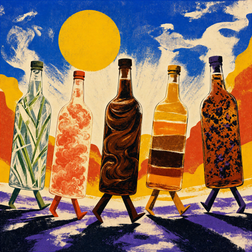
This is the story of how bourbon became a distinctive American whiskey, from early grain whiskey and Kentucky distilling to the rules, labels, and styles that define it today. We move from the practical beginnings of making whiskey, through the slow settling of bourbon as a named style, into the long push for honest bottles and clear standards. Then the focus widens from law to taste, using three simple style axes and four bottles to show how far apart good bourbons can sit. So before the name on the label means anything at all, it helps to begin at the point where whiskey itself first comes together.Rum, In the Making: From Cane Field to Bottle
This is the story of how rum is shaped from cane field to bottle. What follows traces the choices that guide its character—how the cane is grown and harvested, how its sugars are prepared and fermented, how the spirit is distilled, rested or aged, and how it is finally balanced before bottling. So before the still and the barrel have their say, we begin where that character first starts to form.Rum: Origins, Rules, and the Rum Spectrum
This is the story of how rum changed from a by-product of sugar-making into a global spirit shaped by trade, branding, law, production, and style. Along the way, it moves through the Caribbean, the Atlantic world, naval life, modern cocktails, legal definitions, and the often-misleading language of labels, before ending with a simple way to think about how different great rums can be. And to understand all of that, it helps to begin with what the sugar world first left behind.Scotch, Step by Step: From Barley to the Glass
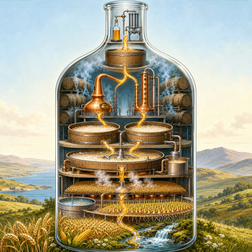
This narrative follows how Scotch whisky is made and how its character is shaped from the first raw materials to the whisky in the bottle. It moves through each stage in turn, showing how choices along the way influence aroma and flavour. So before oak, copper, and time do their work, we begin where the process is first set in motion.Scotch: Time, Place, and the Passport on the Label
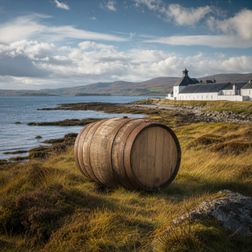
This narrative follows how Scotch became a legally defined, carefully made, and clearly labeled whisky over time. It begins with the long history that shaped Scotch’s identity, from early distilling and taxation to modern rules, global trade, and the slow patience built into the spirit itself. It then turns to how Scotch is made, tracing the path from grain and fermentation to distillation, cask aging, and the five official styles. Finally, it shows how those rules appear on a bottle’s label, so a listener can better understand what the words on the glass are really promising. To begin, we step back into the older world where Scotch first took shape.Mezcal, Step by Step: Decisions That Change the Glass
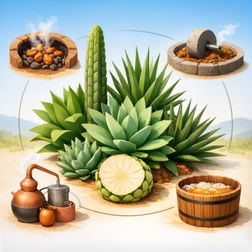
This eisode follows the making of mezcal, showing how each choice shapes what you taste. You’ll move step by step through the journey—from which agave is chosen and when it’s harvested, through cooking, crushing, fermentation, and distillation, and finally into aging decisions and the last tuning at bottling. Along the way, the label becomes a kind of guide, pointing back to the plant, the place, the allowed methods, the batch, and the proof. A few careful comparisons to additive-free 100% agave tequila help sharpen what’s distinctive about mezcal without losing the thread of the story.Mezcal: History, Rules, and the Mezcal Map
This is the journey of mezcal—from maguey’s earliest roles to the modern ways we define, make, and choose it. We’ll step into a world where agave was food and ritual drink, hear how language hints at mezcal’s name, and then watch distillation transform fermented sap into a high-proof spirit tied to colonial trade. From there, the story follows mezcal as it becomes written about, taxed, banned, and controlled, while tequila rises from a regional “vino mezcal” into a separate identity. Finally, we shift into the era of standards, protected names, and today’s debates, then walk through additive-free production and the label clues that help you spot a no-additives, no-cheats bottle on the shelf.Additive-Free Tequila, Part II: The Decisions That Shape Taste
This episode traces how additive-free tequila earns its taste, step by step, from plant to bottle. We’ll move through the quiet decisions that shape sweetness, aroma, texture, and finish—how Blue Weber agave is grown and harvested, how cooking unlocks fermentable sugars and cooked-agave character, and how crushing sets the stage for what yeast can do. From there, fermentation builds personality, distillation refines it through careful cuts, and aging (when used) lets wood and time soften or transform the spirit without shortcuts. Finally, bottling choices like proof, water, and filtration decide how much of that true character reaches your glass.Additive-Free Tequila: History, Method, and the Label Test
This episode is about how tequila became what it is today, and how to spot additive-free bottles using what the label and the maker’s methods can actually tell you. We’ll begin in western Mexico’s Tequila region, where agave moves from everyday use into a distilled spirit shaped by colonial pressure, legalization, trade, and eventually formal standards that define tequila around blue agave and a protected place-name. Then we’ll narrow to artisan, additive-free production from field to bottle, showing how cooking, crushing, fermentation, distillation cuts, and aging choices shape flavor without added sweeteners, coloring, aromatizers, or flavorings. Finally, we’ll step into a U.S. liquor store and rely on legally defined label terms and concrete “show your work” details—rather than vague front-label claims—to guide what you pick up.