OFF THE COUCH TOK

OFF THE COUCH TOK

by Michael Brandon Wright
Season 1
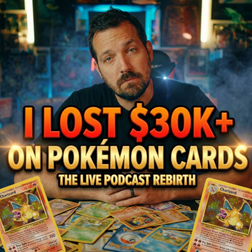
$30K Lost...The Pokémon Cards I Gave Away Are Worth a Fortune Now
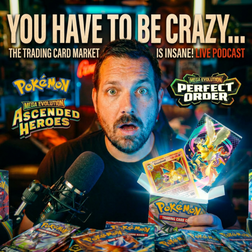
I lost $30,000 and counting in Pokémon cards… and the worst part is, I did it to myself. In this episode of Off THE COUCH TOK, I’m talking about my biggest Pokémon card collecting regrets — from trading away a 1st Edition Dragonite that could be worth around $20,000 in gem mint condition, to selling roughly $10,000 worth of vintage Pokémon cards for only $200 back in 2016. At the time, I thought I was done with Pokémon. I thought I had grown out of it. I sold my original collection for pennies, moved on, and never imagined the hobby would explode the way it has. Now I’ve restarted collecting — not as a scalper, not as an investor, not as a crazy card influencer — but as a normal nostalgic collector trying to reconnect with something I loved as a kid. This livestream podcast is about nostalgia, regret, the insane Pokémon card market, vintage cards, modern collecting, and hopefully learning from one of the most painful collector mistakes I’ve ever made. Because sometimes the most expensive card… is the one you let go.
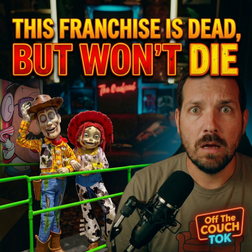
Toy Story Is a ZOMBIE Franchise Now… Can Toy Story 5 Save It?
In this episode of OFF THE COUCH TOK, we’re tackling one of the most controversial questions in animation: 🧸 Has Toy Story become a zombie franchise? The original Toy Story trilogy is often considered one of the greatest trilogies ever made. Across three films, Pixar created a complete story about friendship, loyalty, growing up, and learning to let go. For many fans, Toy Story 3 delivered the perfect ending—not just for Woody and Buzz, but for an entire generation that grew up alongside Andy. The story was finished. Then came Toy Story 4. While the film was a critical and commercial success, many fans felt it undermined the emotional ending of Toy Story 3 and fundamentally changed the characters of Woody and Buzz. Woody spent three movies teaching us the importance of loyalty and belonging, only to walk away from the family he spent decades protecting. Buzz, once Woody’s equal and closest friend, felt sidelined and unrecognizable. Now Pixar is bringing the gang back once again with Toy Story 5. The question is: Can Toy Story 5 justify its existence? Can it repair what some fans believe Toy Story 4 broke? Or is Toy Story becoming another Hollywood franchise that simply refuses to stay buried? In this live podcast episode, we’ll discuss: 🎙️ Why Toy Story 3 felt like the perfect ending 🎙️ The biggest problems with Toy Story 4 🎙️ How Woody and Buzz changed 🎙️ The rise of “zombie franchises” in Hollywood 🎙️ Whether nostalgia is helping or hurting modern storytelling 🎙️ What Toy Story 5 needs to do to win fans back Join the conversation live and let me know: Should Toy Story have ended with Toy Story 3?
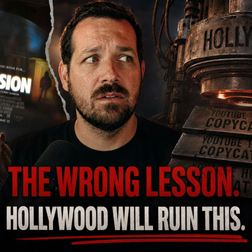
Obsession, Curry Barker, and the Horror Gold Rush That Could Kill the Genre
Today on Off The Couch Tok Live, we’re talking about one of the craziest horror success stories in recent memory: Obsession, the breakout supernatural horror film written, directed, and edited by Curry Barker. Starring Michael Johnston as Bear and Inde Navarrette as Nikki, Obsession takes a dark, twisted “be careful what you wish for” premise and turns it into a disturbing, funny, uncomfortable, and deeply effective horror movie about love, control, fantasy, and obsession. After Bear uses the mysterious One Wish Willow to make Nikki fall in love with him, the fantasy becomes a nightmare. But the real story might be what happens after the movie. With Obsession reportedly made for an unbelievably small budget compared to its massive box office success, Hollywood is absolutely going to notice. And that is where things get dangerous. Because the lesson Hollywood should learn is this: authentic voices matter, fresh perspectives matter, and horror works when filmmakers are taking real creative swings. But the lesson Hollywood will probably learn is this: “Find more YouTubers. Buy more horror shorts. Replicate this. Scale it. Franchise it. Flood the market.” And that is exactly how genres burn out. We’ve seen this before with superhero movies. One huge success becomes a trend. A trend becomes a machine. The machine becomes oversaturation. Then the audience gets exhausted, the originality gets stripped away, and the very thing people loved gets buried under copycats. Curry Barker’s success is exciting. It could open doors for real filmmakers who would never have gotten a shot in the old system. But if Hollywood mistakes “YouTube creator” for “automatic box office gold,” it is going to miss the entire point. Obsession worked because it felt specific. It felt personal. It felt weird. It felt like it came from someone with a point of view. Authenticity is the key. Chasing the money is not. So tonight we’re asking: Is Obsession the beginning of a new golden age for indie horror voices? Or is it the start of Hollywood’s next self-inflicted genre crash? Pull up a seat. We’re going deep.
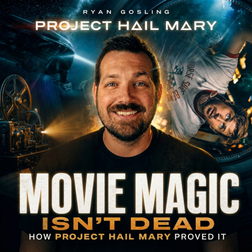
Movies Finally Feel Magical Again… | Project Hail Mary Discussion
In this live episode of OFF THE COUCH TOK, we dive deep into why Project Hail Mary felt like something modern Hollywood has been missing for years… pure movie magic. There was a time when movies felt larger than life. Films transported you into another world for a couple of hours. They inspired wonder, emotion, adventure, mystery, hope, and imagination. Somewhere along the way, a lot of blockbuster filmmaking started feeling more focused on messaging, division, and checking boxes instead of delivering unforgettable cinematic experiences. But Project Hail Mary reminded me why I fell in love with movies in the first place. This isn’t about avoiding themes or depth — the greatest films ever made all had meaning. The difference is that the message used to serve the story instead of overpowering it. Project Hail Mary succeeds because it focuses on character, emotion, spectacle, humor, science fiction wonder, and genuine human connection without feeling preachy or judgmental. From its incredible sci-fi concepts to its emotional core and sense of adventure, this movie feels like a return to the kind of filmmaking that made cinema feel special growing up. The kind of movie that leaves you staring at the credits thinking: “THIS is why movies matter.” We also talk about: Why modern movies often feel hollow The loss of cinematic wonder in Hollywood Why sci-fi is one of the most important genres The emotional power of hopeful storytelling How Project Hail Mary captures the spirit of classic blockbuster filmmaking Why audiences are desperate for escapism and sincerity again If you love movies, filmmaking, science fiction, nostalgia, and cinematic discussion podcasts — welcome to OFF THE COUCH TOK.
I Came Back to Pokémon Cards After 25 Years… What Happened?! Ep. 1
I haven’t seriously collected Pokémon cards since around 2001… and coming back to the hobby now feels absolutely insane. I was there for the original cards, the playground trades, the binders, the Game Boy games, and the first wave of Pokémania. I followed the hobby off and on over the years, but in 2017 I sold my original collection for basically pennies compared to what those cards are worth today. Now I’m jumping back in as a normal nostalgic collector — not a scalper, not an influencer, not a hardcore investor — just a guy trying to understand what happened to Pokémon cards. @WhiteBatAudio In this Off THE COUCH TOK livestream podcast, I’m talking about the current Pokémon card market, scalpers, crazy prices, sealed product, nostalgia, old-school collecting, modern sets, and what it feels like to come back to the hobby after growing up with the original cards. I’ll also be rewatching the Pokémon movies over the next couple weeks, so this is the start of a bigger nostalgia trip through Pokémon, collecting, childhood memories, and what this franchise has become. Music @WhiteBatAudio Pokémon TCG is also celebrating its 30th anniversary in 2026 with special worldwide releases, which makes the timing of this nostalgia wave even crazier. Recent reporting has also highlighted how scalping, sold-out product, and retailer anti-scalper efforts are still major issues in the hobby.