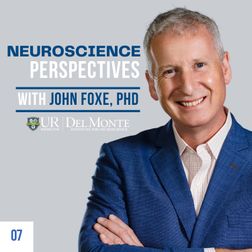
Neuroscience Perspectives

Neuroscience Perspectives

by Del Monte Institute for Neuroscience at the University of Rochester

How do we learn? How does our brain change between different mental states?

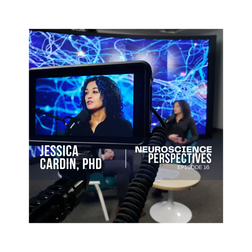
What changes happen at the cellular level in the cerebral cortex between concentration and daydreaming? Jessica Cardin, PhD, associate professor and vice chair of the Neuroscience Department at Yale School of Medicine, joins John Foxe, PhD, director of the Del Monte Institute for Neuroscience at the University of Rochester, on NeURoscience Perspectives. They explore her interest in understanding how we learn, specifically, the flexibility of our brain, and her creative approaches in the lab that aim to improve our understanding of the cellular mechanisms behind neurodevelopmental disorders such as autism or schizophrenia. Dr. Cardin also shares how conducting experiments during childhood helped shape her curiosity.

How does the brain perceive touch? How does it process pain?

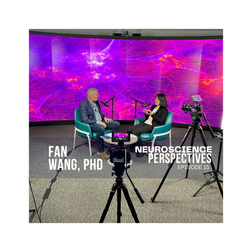
How does the brain perceive touch? How does it process pain? Could what we know about pain better inform treatments for addiction? Fan Wang, PhD, professor in the Brain and Cognitive Sciences department at the McGovern Institute for Brain Research at MIT, joins John Foxe, PhD, director of the Del Monte Institute for Neuroscience at the University of Rochester for this engaging discussion in NeURoscience Perspectives. Hear her journey to research, how the focus of her lab has transformed over time, and how she is using role as a researcher to better the lives of others.

What does the spontaneous activity in the brain tell us?

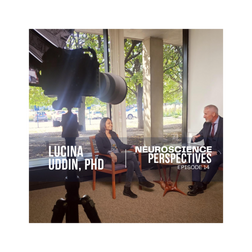
Lucina Uddin, PhD, professor-in-residence of Psychiatry and Biobehavioral Sciences at University of California, Los Angeles, joins John Foxe, PhD, director of the Del Monte Institute for Neuroscience at the University of Rochester for this engaging discussion in NeURoscience Perspectives. Hear her journey to research, how she’s taking on diversity and inclusion in the NIH funded largest long-term study of adolescent brain development (the ABCD Study), and her best advice for aspiring scientists.

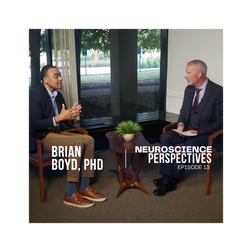
NeURoscience Perspectives: Brian Boyd, PhD

How a paragraph in a textbook and a summer camp were pivotal to the career of Brian Boyd, PhD, William C. Friday Distinguished Professor of Education Interim Director of the Frank Porter Graham Child Development Institute at the University of North Carolina (UNC). Boyd has dedicated his career to autism spectrum disorder (ASD). He trained in special education, and much of his research has involved developing and evaluating evidence-based practices for children with ASD in schools and at home. His recent work focuses on how implicit bias and race affect the outcomes of children with and without disabilities. He sat down with John J. Foxe, PhD, director of the Del Monte Institute for Neuroscience at the University of Rochester, on a visit to the Medical Center as one of the keynote speakers of the Del Monte Institute for Neuroscience and UR-IDDRC annual symposium.

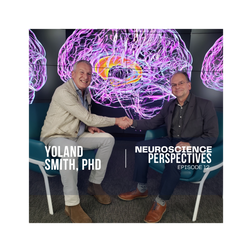
NeURoscience Perspectives: Yoland Smith, PhD

In this episode of NeURoscience Perspectives, John J. Foxe, PhD, the director of the Del Monte Institute for Neuroscience at the University of Rochester, is joined by Yoland Smith, PhD, Division Chief, Neuropharmacology and Neurologic Diseases, Emory National Primate Research Center. Dr. Smith [https://bit.ly/43TGPwG] seeks to understand the pathophysiology of Parkinson's Disease and characterize changes in the synaptic plasticity of the basal ganglia in normal and pathological conditions. He shares one of the biggest challenges in Parkinson's research. Dr. Smith is a prolific publisher with more than 250 peer-reviewed manuscripts on the pathophysiology of brain networks in Parkinson’s disease and related movement disorders. He is also a senior editor at the European Journal of Neuroscience and discusses why it is a position he has become passionate about. He also discuss the importance of mentorship throughout ones career and why a job in academia research is the best job to have. A transcript version is available on YouTube: https://youtu.be/mLVSTiOgOM4

NeURoscience Perspective: Dean Salisbury, PhD

In this episode of NeURoscience Perspectives, John J. Foxe, PhD, the director of the Del Monte Institute for Neuroscience at the University of Rochester, is joined by Dean Salisbury, PhD, a professor of Psychiatry at the University of Pittsburgh. Dr. Salisbury [https://www.cnrl.pitt.edu/] helped to change the conceptualization of schizophrenia as a static, perinatal encephalopathy by pioneering the combined use of structural brain imaging and electroencephalographic (EEG) measurement of auditory cortex responses to demonstrate that progressive gray matter loss during the early disease course of schizophrenia is linked to progressive auditory impairment. A transcript version is available on YouTube: https://youtu.be/hP8m1csJgPE

NeURoscience Perspectives: Katalin Gothard, MD, PhD

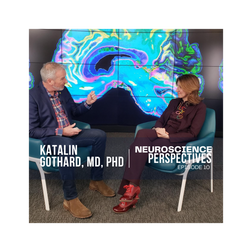
In this episode of NeURoscience Perspectives, John J. Foxe, PhD, the Director of the Del Monte Institute for Neuroscience at the University of Rochester, is joined by Katalin Gothard, MD, PhD, a professor of Physiology and Neuroscience at the University of Arizona. Dr. Gothard's lab [https://gothardlab.org/] studies the neural basis of emotion and social behavior. Originally, from Romania Dr. Gothard worked in the orphanages while she trained to be a physician. Today, her research mostly focuses on touch, and what she experienced with those children early in her career is never far from her mind. Don't miss her incredible story. A transcript version is available on YouTube: https://youtu.be/JOlDtM7J0es
NeURoscience Perspectives: Qiang Chang, PhD

In this episode of NeURoscience Perspectives with John Foxe, PhD, the Director of the Del Monte Institute for Neuroscience at the University of Rochester, he is joined by Qiang Chang, PhD, a professor of Medical Genetics & Neurology at University of Wisconsin-Madison. Dr. Chang's lab studies Rett syndrome, a developmental disorder caused by mutations that deform an essential protein called MeCP2. [https://www.waisman.wisc.edu/stem-cel...]. He is the director of the Waisman Center at and leads the Intellectual and Developmental Research Center at UW-Madison. A transcript version is available on YouTube: https://youtu.be/PJocpQy-mzA

NeURoscience Perspectives: Helen Barbas, PhD

In this episode of NeURoscience Perspectives with John Foxe, PhD, the Director of the Del Monte Institute for Neuroscience at the University of Rochester, he sits down with Helen Barbas, PhD, a professor of Anatomy & Neurobiology at Boston University School of Medicine. Dr. Barbas started her lab, Neural Systems Laboratory [https://www.bu.edu/neural/], at BU in the 1980s and has made numerous contributions to our understanding of circuits in the prefrontal cortex in primates. Deemed a pioneer in neuroanatomy of the primate brain, she pursued work in the prefrontal cortex that others though was “too complex to study”. A transcript version is available on YouTube: https://youtu.be/mxcU4NhbdvU

NeURoscience Perspectives: Bea Luna, PhD

In this episode of NeURoscience Perspectives with John J. Foxe, PhD, the Director of the Del Monte Institute for Neuroscience at the University of Rochester, he sits down with Bea Luna, PhD, a professor of Psychiatry at the University of Pittsburgh. Dr. Luna is a developmental neuroscientist known for conducting neuroimaging research on the development of cognitive control, reward, and reinforcement learning from early childhood to adolescence. She shares her journey from Chile to the U.S. as a teen, why she has spent her career dedicated to understanding adolescence brain development, her time working in the White House, and reflects on being a woman and mother in science. A transcript version is available on YouTube: https://youtu.be/b4-8FQq9za0
4 of 5