
Mining Scripture
by Rick Neubrander Season 1
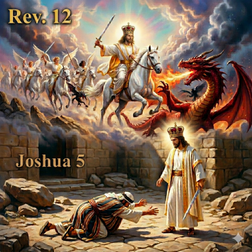
What if one of the most misunderstood titles in the Bible — “Michael the Archangel” — actually refers to Jesus Christ Himself before His incarnation? In this deep-dive episode of Mining Scripture, we slow down and examine verse by verse the biblical evidence that Jesus Christ and Michael the Archangel are the same divine being. From the Old Testament to the book of Revelation, we explore one of the most important questions about the identity of the Son of God: Is Michael simply a created angel, or is He a pre-incarnate title for Christ? Why does the Bible describe Michael as the “Great Prince” who stands up for God’s people, raises the dead, and leads the armies of heaven — roles that belong only to Christ? What does the word “archangel” really mean, and why does calling Jesus Michael actually affirm His divinity rather than deny it? How can the “Angel of the Lord” receive worship, forgive sins, and speak as God — actions that only Deity can perform? What changes when we understand that Michael is not a lesser being, but one of the majestic titles of the Son of God? Whether you’ve always been taught that Michael is a created angel, or you’ve quietly wondered why certain passages seem to show Michael acting with divine authority, this episode will invite you to test everything against the full testimony of God’s Word. This podcast was generated from my full and complete study. I had AI make it into a discussion so it is easy to listen to. If you wish to see the full document click on the link below. Michael the Archangel - Is He Jesus? 
The Importance of the 70 Week Prophecy

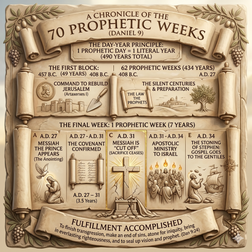
What if one of the most precise and beautiful time prophecies in the Bible — Daniel’s Seventy Weeks — has been overlooked or misunderstood by many Christians today? In this deep-dive episode of Mining Scripture, we slow down and examine the Seventy-Week Prophecy of Daniel 9 verse by verse, from beginning to end. We walk through the prophecy’s starting point, its exact timeline, and how it was remarkably fulfilled in the life and ministry of Jesus Christ. Why does the prophecy describe seventy weeks — 490 years — as one continuous period beginning with a specific decree? How does the timeline starting in 457 B.C. lead directly to Jesus’ baptism in 27 A.D. and His crucifixion in 31 A.D.? What six major purposes of the prophecy were perfectly accomplished through the Messiah’s work? What powerful astronomical and agricultural evidence confirms a Friday crucifixion in 31 A.D. according to the ancient Karaite calendar? Whether you’ve studied this prophecy before or are encountering it for the first time, this episode will invite you to see how Daniel’s vision beautifully points to the redemptive work of Jesus and strengthens our confidence in God’s precise timing and promises. This podcast was generated from my full and complete study. I had AI make it into a discussion so it is easy to listen to. If you wish to see the full document click on the link below. Seventy weeks of Daniel 9
How Can I Know God's Will For Me?
What if one of the most common assumptions in modern Christian teaching — that God’s purpose for your life is something you must desperately search for like a hidden treasure or secret clue — is not actually the way Scripture presents it? In this deep-dive episode of Mining Scripture, we slow down and examine the question verse by verse, from the wisdom literature to the teachings of Jesus and the letters of the apostles: Does the Bible actually call us to hunt for a mysterious, individualized “life purpose”? Or has a relatively recent cultural mindset — shaped more by self-help thinking than by the full testimony of God’s Word — quietly replaced the biblical framework of spiritual alignment and daily obedience? If God’s will is primarily revealed in Scripture rather than through secret signs or inner promptings, why do so many believers feel anxious and uncertain about major life decisions? Why does the Bible place such strong emphasis on renewing the mind, persistent prayer, and counsel from mature believers instead of promising a sudden flash of personalized direction? Where did the popular “find God’s perfect will for my life” approach actually originate, and why is the exact “blueprint” for each person’s future never clearly mapped out in Scripture the way many assume? What changes when we read passages about guidance, calling, and decision-making through the lens of the whole counsel of God — focusing on known commands, surrender, and faithfulness — rather than later traditions or emotional confirmations? Whether you’ve always believed you need to discover a hidden purpose or you’ve quietly wondered why peace, talents, and Scripture seem to be the consistent biblical markers of direction, this episode will invite you to test everything against the full testimony of God’s Word. This podcast was generated from my full and complete study. I had AI make it into a discussion so it is easy to listen to. If you wish to see the full document, click on the link below .God’s Will / Finding God’s Purpose
In this deep-dive episode of Mining Scripture, we slow down and examine the subject of forgiveness verse by verse, from Genesis to Revelation: Does the Bible actually command us to forgive without limits, or have we quietly softened God’s radical call into something more manageable and human? If God removes our sins “as far as the east is from the west” and remembers them no more, why do we often keep a mental record of offenses against us? Why does Jesus instruct Peter to forgive “seventy times seven” — and then illustrate it with a parable about an unforgiving servant who faces judgment for his own refusal to show mercy? What do the stories of Joseph, Stephen, and the crucifixion of Jesus reveal about what real, active forgiveness looks like in the face of betrayal and injustice? How does our unwillingness to forgive endanger our own fellowship with God, and what changes when we treat forgiveness as a heartfelt transformation rather than an optional feeling? Whether you’ve always believed forgiveness is important but struggled to practice it fully, or you’ve quietly wondered how anyone can truly “let it go” after deep hurt, this episode will invite you to test everything against the full testimony of God’s Word and discover the liberating power of mirroring the Creator’s grace. This podcast was generated from my full and complete study. I had AI make it into a discussion so it is easy to listen to. If you wish to see the full document click on the link below. Forgiveness 

Does the Bible support evolution?
In this deep-dive episode of Mining Scripture, we slow down and examine the question verse by verse: Does the Bible actually teach a literal six-day creation, or has a popular idea — influenced more by modern evolutionary theory than by the Hebrew and apostolic writings — quietly shaped what many Christians assume is true? If death existed for millions of years before Adam, why does the Bible say that sin entered the world through one man, and death through sin? Why does Scripture repeatedly describe the original creation as “very good,” with no death or suffering, if evolution requires millions of years of struggle, disease, and extinction? Where did the idea of long-age evolution actually originate, and why is it never stated or even hinted at in the Bible the way most people assume? What changes when we read the promises of the gospel and the necessity of Christ’s atonement through the lens of the whole counsel of God instead of later scientific traditions? Is there science for creation? Whether you’ve always accepted the evolutionary timeline or you’ve quietly wondered why certain verses seem to create tension with it, this episode will invite you to test everything against the full testimony of God’s Word. This podcast was generated from my full and complete study. I had AI make it into a discussion so it is easy to listen to. If you wish to see the full document click on the link below. Creation vs Evolution
Were 2300+ Years Of History Predicted?
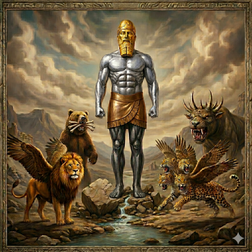
What if the prophetic visions in Daniel 2 and Daniel 7 provide a detailed chronological blueprint of world history — from ancient empires to the final judgment? In this deep-dive episode of Mining Scripture, we examine the metallic statue of Daniel 2 and the four symbolic beasts of Daniel 7, which represent the successive empires of Babylon, Medo-Persia, Greece, and Rome. We then focus on the “little horn” power that rises among the ten horns of the fourth beast. Using seven specific historical and behavioral marks from the text, we identify this little horn as the Roman Catholic papacy. We trace how it emerged from the divided Roman Empire, exercised supremacy for 1,260 years, altered divine laws, and persecuted believers until its political power was broken in 1798. This episode shows how these prophecies reveal the divine order behind geopolitical shifts and ultimately point to the heavenly judgment and the establishment of God’s eternal kingdom that will replace all human governments. Whether you’re studying Bible prophecy for the first time or revisiting these chapters, this discussion invites you to test everything against the full counsel of Scripture. This podcast was generated from my full and complete study. I had AI turn it into a conversational format to make it easier to listen to. If you would like to explore the full written document, you can find it through the link below. Daniel's history of the world
Biblical Tongues: Real Languages, Signs to Unbelievers, or Private Prayer Language?

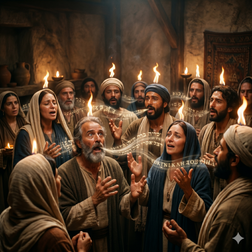
In this deep-dive episode of Mining Scripture, we slow down and examine the gift of tongues verse by verse through the New Testament. What did the apostles actually do when they spoke in tongues at Pentecost, with Cornelius’ household, and at Ephesus? Were these real, known human languages or unintelligible utterances? Why does Paul call tongues “a sign… not for believers but for unbelievers”, 1 Corinthians 14:22, and how does Isaiah 28 shape our understanding? We explore: How tongues functioned as a powerful missionary and cross-cultural sign during the gospel’s expansion — reversing the confusion of Babel. Paul’s clear regulations for order and edification in the church (only 2–3 speakers, interpretation required, or silence). Why Scripture never presents uninterpreted ecstatic speech as a private “prayer language” or required evidence of Spirit baptism. The contrast between biblical tongues and modern practices that emerged in the early 20th century. A look at what actually happens in the brain during glossolalia (2006 University of Pennsylvania SPECT study) and historical claims about pagan parallels. Whether you’ve experienced charismatic worship, been confused by popular teachings, or simply want to test everything against Scripture, this episode invites you to return to the full testimony of God’s Word. Experience must always submit to the clear teaching of the apostles. This podcast was generated from my full and complete study. I had AI make it into a discussion so it is easy to listen to. If you wish to see the full document click on the link below. The Gift Of Tongues
Why did Jesus have to Die and Resurrect?

In this deep-dive episode of Mining Scripture, we tackle the two most foundational questions of the Christian faith: Why did Jesus need to die, and why did He need to rise again? This isn't just about religious tradition; it’s about a legal and spiritual necessity rooted in the very character of God. How does God’s role as the Source of Life turn sin into a literal severance from existence, making death the "natural" wage rather than just a punishment? Why couldn't a sinless angel save us? We explore the "Kinsman Redeemer" principle from Ruth and Leviticus to see why our Savior had to be "near of kin" to legally buy us back. How did an immortal God become capable of dying? We examine the "emptying" of Christ in Philippians 2 and why the Incarnation was the only way to satisfy the requirements of justice. Is the Resurrection just a "happy ending," or is it the legal proof of our justification and the definitive defeat of death's dominion? What is Jesus doing right now? We look at the ongoing work of our High Priest in the heavenly sanctuary and why His life—not just His death—is what saves us continually. Whether you are looking for the "why" behind the Gospel or seeking to understand how the Resurrection gives you a transformed life today, this episode will invite you to see the perfect intersection of God's mercy and justice. This podcast was generated from my full and complete study. I had AI make it into a discussion so it is easy to listen to. If you wish to see the full document, click on the link below. Why did Jesus have to Die & Resurrect?
When Bad Things Happen to Good People
The legal framework of suffering is the only way to explain why tragedies strike good people. In this episode of Mining Scripture, we explore a cosmic court battle that shows your pain isn't a sign of God's judgment; it's a symptom of a world where God’s protection is being legally contested in court. In this episode, we mine the legal mechanics of: Time and Chance: Why tragedies like the "Tower of Siloam" don't reflect your standing in the Heavenly Court. The Job Deposition: Proving character is deeper than physical "perks" or safety. Strategic Relocation: How Joseph’s "pit" was a legal move to get him to the palace. Jacob’s Wrestling Match: Why a crippled hip was the legal requirement to transform a "Deceiver" into a "Prince." The Final Exam: Preparing for the "Endgame" where the hedge is removed to close the case against Satan forever. Discover how your endurance in the dark provides the irrefutable evidence needed to win the universe. This podcast was generated from my full and complete study. I had AI make it into a discussion so it is easy to listen to. If you wish to see the full document click on the link below. When Bad Things Happen To Good People
A Violent God or a Loving God? Joshua to Jesus.
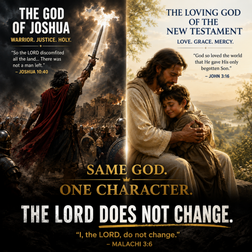
In this episode, we tackle one of the most persistent questions in Christian theology: Is the God of the Old Testament the same God found in the New Testament? While many perceive a discrepancy between a "harsh" judge and a "loving" Father, a closer examination of the biblical evidence reveals a single, consistent character that does not evolve or change. In this episode, we mine the character of God as depicted in the Old & New Testaments: God claims in Exodus 34:6-7, Himself to be "merciful and gracious, longsuffering, and abundant in goodness" yet states He "will by no means clear the guilty". We analyze the political structure of Israel as a Theocracy, where God functioned as the direct Head of State and supreme authority over warfare and territory. We explore the concept of the "full cup" of iniquity, demonstrating that judgment—whether the Flood, Sodom, or the Canaanite conquest—only falls after immense periods of divine patience. We discuss the 490-year prophetic timeline afforded to Israel to finish their transgressions and the danger of human traditions superseding the clear Word of God. We connect the Old Testament judgments to the Luke 21 prophecy, where Jesus explicitly identifies the destruction of Jerusalem as the "days of vengeance" for rejecting the Gospel. This episode moves through the historical manifestations of God's power, from the pillar of cloud and fire witnessed by the Canaanites to the 40-year window of mercy provided before the fall of Jerusalem in AD 70. We conclude that the God who "is love" is the same God who maintains the absolute necessity of justice, offering a unified divine nature that provides mercy to all who heed His warnings. This podcast was generated from my full and complete study. I had AI make it into a discussion so it is easy to listen to. If you wish to see the full document click on the link below. Same God, One Character