
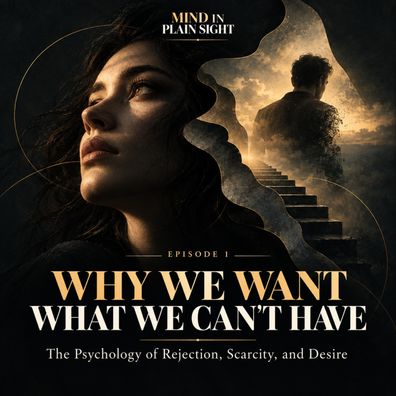
EP01 — Why Rejection Makes You Want Someone More
Episode notes
Why can someone or something become more desirable the moment it feels unavailable?
In Episode 1 of Mind in Plain Sight, we explore the psychology behind rejection, scarcity, uncertainty, and desire.
We examine why rejection can increase attention, why uncertainty can keep the mind hooked, and why the loss of freedom or access can sometimes make us want something more than we did before.
This episode explores:
- psychological reactance
- scarcity and perceived value
- rejection and social exclusion
- uncertainty, rumination, and intrusive thinking
- intermittent reinforcement and unpredictable rewards
- the difference between wanting and liking
- ego threat, status, competition, and self-esteem
- attachment patterns and relationship behavior
- why unavailable people can feel more desirable
- when “playing hard to get” works and when it backfires
- how texting, dating apps, read receipts, and social media can amplify uncertainty
- where popular relationship psychology oversimplifies the science
We also challenge some familiar claims:
Does ignoring someone really make them want you more? Does rejection actually increase attraction? Do anxious and avoidant people inevitably chase each other? And are we sometimes mistaking obsession for genuine desire?
The central question:
Do we actually want something more when we can’t have it or does the mind simply hate losing control?
Mind in Plain Sight explores the psychology hiding in everyday behavior, separating what research actually shows from the stories we tell ourselves about why humans do what they do.