Love, Laughter and Kindness

Love, Laughter and Kindness

by David Ayliffe
Season 1

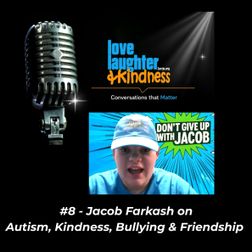
#8 - Jacob Farkash - 17 - Autism, Kindness, Bullying and Friendship

A conversation with young author and podcaster Jacob Farkish about the message behind his creative work. Jacob shares what first drew him to speaking up about kindness and emotional growth, his perspective on disability and respect, and what bullying taught him about spotting real friends. We close with where to find his books, podcast, and social content. Opening vision for a kinder world and show introduction What introduced Jacob to the need for kindness in our world? What sort of supports does the government provide for people with disabilities and special needs? What did he learn about the difference between true friendship and bullying from middle school experience? Closing with where to find his books on Amazon and his public profile on LinkedIn, Substack and his podcast - Don't Give Up with Jacob Farkash Search for Jacob Farkash on Amazon,com to find books like: The Adventures of Even Steven and Dr. Odd Man Out: The Evens vs. The Odds Produced by www.Zorzle.org with a vision for a global kindness movement led by children. Join the cause by subscribing today.
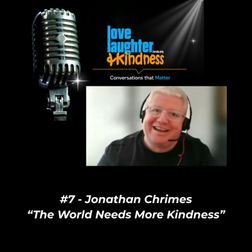
#7 - Jonathan Chrimes - The World Needs More Kindness

Jonathan Chrimes is a registered nurse with Lifeblood in Melbourne, Victoria, Australia — and one of LinkedIn's most consistent voices for kindness. In this conversation we talk about what got him started posting about kindness, the "economy of kindness" and what Singapore's national kindness movement got right, why he thinks kindness has to be practised rather than assumed, An uncomfortable truth about bullying culture in nursing ("nurses eat the young"), and his response to my pitch for a national "kindness audit" of government policy. We also talk Dolly Parton, Australian classic comedy movie, The Castle, Famous nurse for all, Florence Nightingale, World War 1 hero of many Simpson and his donkey, and why the happiest people Jonathan ever met were kids in some of the poorest villages he visited on aid work. If you believe kindness is more than a nice idea — that it's a practice, a policy lever, and an economic force — this one's for you. 🔗 More episodes: https://zorzlekindness.substack.com//🔗 Connect with Jonathan on LinkedIn / jonathan-chrimes-831071229 #Kindness #Nursing #Lifeblood #NDIS #LinkedIn #Leadership Produced by www.Zorzle.org with a vision for a global kindness movement led by children. Join the cause by subscribing today.
#6 ~ Julia Coorey - Being Michael’s Mum

My interview with Julia, former Tax Lawyer, now full-time mum of three children, including Michael who is profoundly autistic. Life is a major challenge for Julia, her husband and family. They have separate holidays so one can look after Michael who can't cope with new environments. The Village We Don’t Have Many families are not able to provide the support that they receive from theirs and yet life is an enormous challenge. It takes a village to raise a child, they say, but what if you don't have a supportive community around you? A Kindness Summit / Audit Government support for people with disabilities is discussed, including plans to reduce supports. And we talk briefly about a concept for some kind of Kindness Summit / Audit as to how we track as a nation. This would include every area of community and include culture, policy and actions and would start with government and include all of us. It would ask us to include the question in our public and private lives: “Is it kind, does it benefit people? Michael's Mum - Facebook/Substack Julia writes on Facebook and Substack as "Michael's Mum". She is an excellent writer and touches on subjects close to her heart, including the daily challenges faced by so many people around the world in loving and caring for children and adults with disabilities.

#5 - Julie Fisher - A Beautiful Extra Chromosome

A conversation filled with hope. Julie is the mother of Darcy who was born 20 years ago with Down syndrome. She discusses her decision to find out before Darcy was born so that the family could prepare to celebrate his birth, rather than face shock or disappointment at that time. Subscribe for more videos: / @zorzle-kindnesssub_confirmation=1 A great conversation about what it is to be a family. Belonging. Acceptance. Community. Compassion. Most of all, it is about recognising the humanity in every person. As Julie says throughout the interview, when we look beyond a diagnosis, we discover extraordinary people—and often discover something about ourselves as well. If you've ever wondered what inclusion really looks like, or simply need reminding that kindness still changes lives, this conversation will stay with you long after it ends. The conversatino touches on many issues including the need for Governments and Community to properly support those living with disabilities. And be prepared to learn some valuable life lessons from unexpected sources! ------- www.zorzle.org is the website for our vision for a global kindness movement led by children. A kind world is a caring world that never excludes others on the basis of race, religion, ethnicity, or sexuality.

#4 - Ros & Sally "Turning Life Around'

Healing Through Laughter, Kindness, and Connection: An Inspiring Conversation In this episode, Roz Ben-Moshe and Sally Pymer share powerful stories and insights on how laughter, kindness, and genuine connection can transform lives, build resilience, and foster community. They explore personal health challenges, the importance of listening, and the profound impact small acts of kindness can have. This episode is a reminder that kindness, laughter, and active listening are small acts with enormous potential to improve lives and bridge divides. Embrace the power of genuine connection today. Main Topics Covered: • The healing power of laughter and intentional positivity during health crises • How small acts like smiling and listening can significantly impact those around us • The potential of kindness and empathy to create societal change • Personal stories of overcoming health challenges with resilience and reframing • The significance of understanding the "why" behind people's behaviour and invisible struggles Timestamps: 00:00 – Welcome & introduction 00:22 – Guest introductions: Roz Ben-Moshe and Sally Pymer 00:50 – The power of smiling and little acts of kindness 01:20 – A young man's suicide attempt and the importance of connection 03:00 – "Every superhero wears a disguise" — personal strengths 04:00 – Roz's journey with bowel cancer and the role of laughter in healing 06:00 – Turning a cancer diagnosis into an empowering journey 08:00 – Reframing and intentional positivity during adversity 10:00 – Sally's story of managing chronic lung disease 13:00 – Small gestures and the power of listening in community 14:36 – Not judging by surface appearance — everyone's got a story 20:00 – Kindness and laughter as tools for societal change 22:16 – Understanding the "why" behind behaviours; fostering empathy 24:00 – Personal influence vs. leadership: ripples of kindness 26:00 – The importance of genuine, face-to-face connection 28:18 – How shared challenges deepen understanding and resilience 30:38 – Listening and acknowledging people's stories without assumption 35:50 – Impactful stories of kindness and presence 38:00 – Roz on a resident's transformation after laughter therapy 41:24 – How one simple smile can change a life 42:34 – Reflecting on kindness and resilience 43:00 – Closing thoughts and gratitude Resources & Links: • Laughing at Cancer — Roz's book about her cancer journey • The Laughter Effect — Roz Ben-Moshe's approach to laughter in health • Sally: empoweredwithsally.com.au • Roz: ros-benmoshe.com

#3 - Craig Foster Kicking Goals For Humanity

I was delighted when former Socceroo, broadcaster, filmmaker, author and refugee advocate Craig Foster agreed to join my new Love, Laughter and Kindness podcast. Given his wide audience, his willingness to support a new podcast was a wonderful act of generosity. Foster reflected on his journey from professional football to human rights advocacy. He believes the values learned in great teams—caring for teammates and respecting fair rules—naturally extend beyond sport. The instinct to protect the youngest and most vulnerable, he says, is the same instinct that should lead us to care for refugees and other marginalised people. We discussed the recent FIFA World Cup controversy, where changes made to benefit powerful interests raised questions about fairness. Foster argued that when rules are applied unequally, the integrity of both sport and society is diminished. He drew a parallel with global politics, suggesting that while international law and human rights frameworks are sound, they are too often enforced against weaker nations while powerful countries escape accountability. Our conversation then turned to refugees. Drawing on his documentary work in Bangladesh's Cox's Bazar refugee camp, home to more than a million Rohingya refugees, Foster argued that refugee movements cannot be separated from war, political decisions and climate change. Nations involved in conflicts or failing to meet climate commitments also share responsibility for the humanitarian consequences. I shared my vision for a national Kindness Summit to examine how Australia performs in government, education, business and sport. Foster welcomed the concept, suggesting that human rights provide kindness with a practical framework. Access to housing, education, food and freedom from discrimination are not simply policy goals—they are kindness put into practice. One of the conversation's most memorable ideas was Foster's belief that proximity is the antidote to hatred. Drawing on his football career, he explained that prejudice fades when people genuinely know one another. He pointed to the Queensland town of Biloela, whose residents embraced a Sri Lankan refugee family, as a powerful example of compassion overcoming fear. When asked to nominate an act of kindness in sport, Foster chose Australian sprinter Peter Norman. By wearing a human rights badge alongside Tommie Smith and John Carlos at the 1968 Mexico Olympics, Norman demonstrated quiet courage and paid a personal price. Today, his stand is widely recognised as one of Australia's finest sporting moments. Craig Foster's message is clear: kindness is more than compassion. It requires fairness, accountability and the courage to recognise our shared humanity. This episode follows earlier conversations with Hugh Mackay, author of The Kindness Revolution, and Canadian futurist Guy Dauncey, whose forthcoming book is The Economy of Kindness.

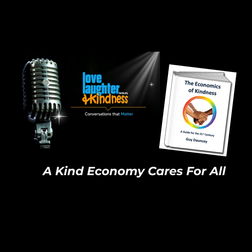
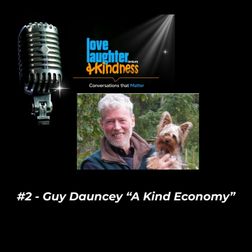
Episode 2 - Guy Dauncey "A Kind Economy"

Author, Environmentalist Guy Dauncey Interview. What If Kindness Were an Economic System? Guy Dauncey argues that this should be the case. His new book “The Economics of Kindness” will be available later this year. It helps us understand how the world would be if instead of a playground for greedy billionaires, kindness and respect was what brought us together. In the interview, Guy’s powerful comment on what troubles us is: “The Power of our Vision must be so much stronger than the power of our Fear”. He has built his life work around this concept as a futurist, a “practical utopian” (his term), an advocate for the environment, and author of 10 books. His new book “The Economics of Kindness: A New Ecological Civilization” - available soon from Palgrave Macmillan - took him 10 years to research, when all the others only took three. There were many things that motivated his research. Put simply he saw our troubles had origins in the economy. So many issues all driven by how we monetize our world. Issues like: the affordable housing crisis, the increase in the number of billionaires, ordinary people struggling to live and pay the rent, increasing housing and rent costs when private equity continue to buy up homes and look for greater and great returns, the climate crisis and assaults on nature. In the interview, he frames kindness as a structural economic force rather than a personality trait. It’s powerful and not weak. The founder of the BC Sustainable Energy Association, Guy is also co-founder of the Victoria (Canada) Car Share Cooperative and West Coast Climate Action Network, based in Yellow Point, BC and a Recipient of the King Charles III Coronation Medal (2025) Kindness as Economics, not Sentiment Dauncey contrasts“homo economicus” (self-interest as the engine of markets) and what he calls “homo amicus” — a model of humans as cooperative by nature. Visit rural Australia and you will often see that moreso than in our cities. He is critizal of today’s economy that has become what he calls a “kindness-free zone” where benefits concentrate at the top while nature and people absorb the cost I was really taken by what Guy had to say. It blended beautifully with Hugh Mackay’s interview (Episode 1) and Hugh’s published books, including “The Kindness Revolution”. A clear question for all of us (please give me your comments, I’d love to hear). What would an economy built on cooperation rather than competition actually look like where you live?” OH DEAR, SHAKESPEARE IS DEAD Aside from all of the above, Guy writes music, songs and poetry, and thanks to him I discovered, Surprise Surprise and with Deep Grief, that Bill Shakespeare is no longer with us. However, he channels him very well with this poem, (the full version in the interview): HAMLET’S ODE TO THE 21st CENTURY To grow, or not to grow: that is the question, Whether ‘tis nobler on Earth to suffer The filth and waste of outrageous production Or to take arms against a toxic sea of troubles, and by opposing, end them?

#1 - Hugh Mackay AO: Kindness = Species Survival

Hugh Mackay AO: Kindness = How Kindness Helps Us Survive David welcomes one of Australia's most respected social researchers and authors, Hugh Mackay AO, for a deeply personal conversation about the state of our society and the transformative power of kindness. Hugh reflects on his journey from a young researcher to a passionate advocate for social change. He describes the pivotal moment when his publisher encouraged him to move beyond simply reporting what is and begin exploring what should be. Beginning with The Good Life (2016), his work shifted from observing Australians to challenging us to build a kinder society. The discussion explores loneliness as one of Australia's greatest public health challenges. Around one-third of Australians—and an alarming one-third of young adults aged 18–24—report feeling lonely most of the time. Hugh argues that digital connection can never replace the eye contact, conversation and human presence that help us truly belong. He offers a simple but profound definition of kindness: "Anything we do that shows another person we take them seriously—that they belong, that they are not overlooked or marginalised." Drawing on archaeology, neuroscience, philosophy and history, Hugh argues that kindness is not a soft option but a survival skill. Research into why Homo sapiens survived while other human species disappeared suggests that our ability to form small, mutually supportive communities through cooperation and kindness was our greatest evolutionary advantage. David shares the moving story of a young Canberra man who survived a suicide attempt and later said, "If someone had smiled at me, I couldn't have jumped." Together they discuss how simple acts of human connection can literally save lives. The conversation also explores the idea of applying a kindness test to public policy—asking not only "Is this economically responsible?" but also "Is this kind? Is this inclusive? Does it respect our common humanity?" Hugh points to Jacinda Ardern's leadership as an example of compassion in public life and discusses the NDIS as kindness expressed through policy. The episode also examines inequality, with 3.5 million Australians living below the poverty line, and argues that reducing poverty and strengthening neighbourhoods are essential to rebuilding trust and social cohesion. David concludes by reading his original poem Kindness and the Klan, based on the true story of Jewish cantor Michael Weisser, whose persistent acts of compassion transformed a Ku Klux Klan Grand Dragon. Hugh reflects on the story as a powerful reminder that kindness can overcome hatred in ways force never can. The episode closes with a preview of the next guest: former Socceroo and human rights advocate Craig Foster. Key Themes Hugh's journey from researcher to advocate. Loneliness as one of Australia's greatest public health challenges. Kindness as making people feel seen, valued and included. Kindness as strength—not weakness. Why cooperation helped humanity survive. Listening as one of the greatest acts of kindness. Applying a kindness test to public policy. Strong communities begin with good neighbours. Poverty and inequality as drivers of division. Kindness and the Klan: a remarkable true story of compassion transforming hatred.