COMM 1035 Listening

COMM 1035 Listening

by Sunny Skye Hughes
Season 1

Unit 1 Recap for The Foundations of Listening
In this recap episode, we review the key takeaways from Unit One. You learned the difference between hearing and listening, explored the stages of the listening process, and examined how attention, perception, schemas, and memory shape what we understand and remember. We also connected these concepts to real-life situations in school, work, and relationships, showing why active listening matters. In the next unit, we’ll build on this foundation by exploring the challenges and barriers that interfere with listening—and how to overcome them.

Unit 1 Lecture: The Foundations of Listening
This lecture introduces listening as an active, cognitive process rather than a passive act of hearing. Students explore the key differences between hearing and listening, the three stages of listening (receiving, understanding, and remembering), and the roles of attention, perception, memory, and schemas in meaning-making. Through everyday examples and current research, the lecture highlights why effective listening matters in academic, professional, and personal contexts, emphasizing that active listening builds comprehension, connection, and trust.

Unit 1: Overview of the Foundations of Listening
Unit 1 introduces listening as an active process rather than a passive skill. Students learn to distinguish between hearing and listening by examining attention, perception, memory, and prior experiences that shape meaning-making. Through videos, knowledge checks, and applied activities, students practice the stages of listening and reflect on real-world communication. The unit concludes with an analysis of a real-life listening scenario, helping students develop practical skills they can use in academic, professional, and personal contexts.

COMM 1035: How will you learn?

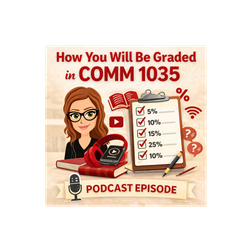
In this bonus episode, Dr. Sunny explains how you will be graded, the different types of assignments, and the course latework policy, as well as time expectations.

Welcome to COMM 1035 Listening

COMM 1035 is built around the idea that listening is an active, learnable skill that shapes how we learn, work, and connect with others. The course includes eight units, each following a clear, consistent structure that guides you through learning, applying, and reflecting on key listening concepts—without exams or high-stakes surprises. All work must be completed through the Modules page in Canvas, where content is organized in sequence. You’ll learn primarily through podcast-style recordings, a required audiobook, and expert videos, supported by a Toolbox of resources designed to help you succeed. Throughout the course, you’ll develop practical listening skills by analyzing theories, evaluating messages and credibility, applying concepts to real situations, and building adaptive listening strategies. Success comes from steady engagement, thoughtful effort, and reflection over time.

Unit 7 Recap: Adaptive and Resilient Listening
Bonus
As Unit 7 concludes, the focus shifts from simply understanding listening to being able to apply it effectively under pressure. You learned that the real challenge in communication is not comprehension in ideal conditions, but maintaining accuracy when faced with internal triggers, cognitive overload, emotional intensity, and environmental distractions. Throughout the unit, you practiced strategies such as narrowing focus, regulating emotions, asking clarifying questions, using reflective listening, reducing cognitive load, and adopting an adaptive mindset to stay engaged. Through activities like the Resilient Listening Lab, the Self-Regulation Toolkit, and the major assessment, you moved from knowledge to application—learning how to recognize when listening breaks down and how to recover. These skills are essential in real-world situations like conflict, feedback, and high-pressure environments, reinforcing that effective listeners are not perfect, but adaptable, able to stay focused and respond thoughtfully even when communication becomes challenging.

Unit 7 Overview: Adaptive and Resilient Listening
Trailer
Unit 7 focuses on adaptive and resilient listening, shifting from simply understanding messages to maintaining effectiveness when communication becomes difficult, emotional, overwhelming, or high-stakes. You will learn how factors like internal triggers, cognitive overload, emotional intensity, and environmental stressors affect your ability to listen, and how to apply strategies such as emotional regulation, narrowing focus, and reducing cognitive load to stay engaged and accurate in real time. Through activities like the Resilient Listening Lab, the Self-Regulation Toolkit, and a major advice-based video assessment, you will practice not just understanding listening—but performing it under pressure. This unit emphasizes that strong communicators are not those who listen well when it’s easy, but those who can adapt when it’s difficult, helping you stay focused, composed, and effective in personal, academic, and professional situations where communication matters most.

Unit 6 Recap: Evaluating Information Quality
Bonus
In Unit 6, we shifted from simply understanding messages to actively evaluating the quality of the information we hear. You learned that listening is not just about comprehension—it’s about determining whether a message is accurate, reliable, and credible. Using the EERB framework—expertise, evidence, reasoning, and bias—you practiced analyzing how messages are constructed and identifying when information is incomplete, misleading, or flawed. You also explored how fast, automatic thinking can lead you to accept messages too quickly, and how slowing down helps you question what you hear. By the end of the unit, you should be able to distinguish between what sounds persuasive and what is actually credible, making you a more critical listener, stronger decision-maker, and more informed communicator.

Unit 6 Overview: Evaluating Information Quality
Trailer
In Unit 6, you shift from focusing on how listening works to evaluating the quality of the information you hear. Instead of just asking what a message means, you begin asking whether it should be believed. You learn that not all information is equal—some messages are supported by strong evidence and reasoning, while others rely on emotion, assumptions, or incomplete details. Using the EERB framework—expertise, evidence, reasoning, and bias—you develop a structured way to assess credibility. You also explore how fast, automatic thinking can lead you to accept information too quickly, and why effective listeners slow down to question and evaluate messages intentionally. Throughout the unit, you apply these skills through lectures, knowledge checks, activities, and assignments, all designed to help you become a more critical, informed, and intentional listener.

Unit 5 Recap: Response Styles and Personal Biases

Bonus
In this episode, we wrap up Unit 5 by turning the focus inward. You’ve moved beyond analyzing communication from the outside and begun examining your own role within it. This unit explored how response styles and personal biases shape not only how you interpret messages, but how conversations unfold. You learned to recognize patterns like defensive, avoidant, aggressive, and empathic responses—and to identify when your reactions are automatic rather than intentional. More importantly, you practiced shifting from reacting based on assumptions and emotions to responding with clarity and purpose. This is where listening becomes self-awareness. And that shift changes everything. Because when you understand your own patterns, you gain control over your communication. You move from reaction to intention, from assumption to understanding, and from conflict to clarity. As we look ahead, these skills become the foundation for critical listening in Unit 6, where you’ll begin evaluating the quality of information itself. Because effective communication isn’t just about understanding others. It’s about understanding yourself.
2 of 3