Health Simplified

Health Simplified

by Dr. Deep Bhattacharya
Season 1

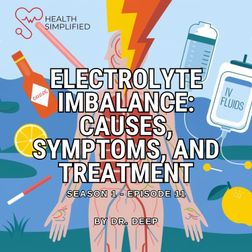
Electrolyte Imbalance: Causes, Symptoms, and Treatment

Electrolyte imbalances, caused by excessively high or low levels of minerals like sodium and potassium in the body, are discussed. These imbalances, often stemming from underlying health conditions or medication, can manifest with symptoms such as muscle weakness and heart irregularities. Diagnosis involves a blood test (electrolyte panel), and treatment varies depending on the specific imbalance, potentially including intravenous fluids or medication. Prevention focuses on maintaining adequate hydration. Reference:- 1- https://my.clevelandclinic.org/health/symptoms/24019-electrolyte-imbalance 2- https://www.healthline.com/health/electrolyte-disorders 3- https://emedicine.medscape.com/article/240903-overview

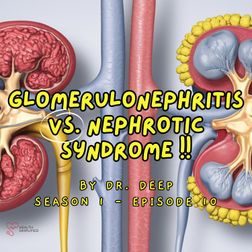
Glomerulonephritis vs. Nephrotic Syndrome

Let's discuss various aspects of glomerulonephritis (GN), a kidney disease causing inflammation and scarring of blood filters. Several sources detail specific types of GN, including post-infectious GN, membranoproliferative GN, and minimal change disease, exploring their clinical presentations, diagnostic methods (like kidney biopsies and blood tests), and treatment approaches (immunosuppressants, etc.). One source focuses on a case study of C3 glomerulonephritis, highlighting diagnostic and prognostic challenges. Another source reviews the latest advances in understanding and treating nephrotic syndromes, encompassing diverse causes and novel therapies. Finally, one text examines infection-induced kidney diseases, covering various pathogens and their associated renal pathologies. Reference :- 1- https://www.akdh.org/article/S2949-8139(24)00110-1/fulltext 2- https://www.medicalnewstoday.com/articles/glomerulonephritis-vs-nephrotic-syndrome 3- https://www.kidney.org/kidney-topics/glomerulonephritis 4- https://www.frontiersin.org/journals/medicine/articles/10.3389/fmed.2018.00327/full

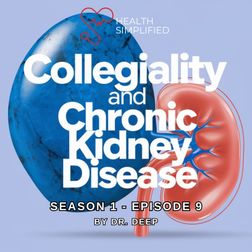
Collegiality and Chronic Kidney Disease

Comprehensively examine chronic kidney disease (CKD), exploring its global prevalence, associated complications (including cardiovascular disease, anaemia, and bone disorders), and treatment strategies. Several articles emphasise the importance of early detection and collaborative care between primary care physicians and nephrologists to improve patient outcomes. Specific treatments like SGLT2 inhibitors are highlighted for their efficacy in slowing CKD progression. Finally, the increasing global burden of CKD, particularly in under-resourced settings, is discussed, along with the need for increased awareness and improved access to care. Reference Material:- 1- https://www.mdpi.com/2227-9059/12/2/416 2- https://pmc.ncbi.nlm.nih.gov/articles/PMC6341007/ 3- https://pmc.ncbi.nlm.nih.gov/articles/PMC2474786/ 4- https://www.akdh.org/article/S1548-5595(11)00141-8/abstract

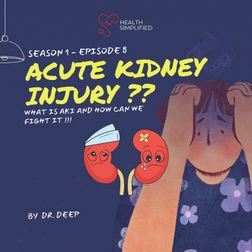
Acute Kidney Injury: Diagnosis, Treatment, and Prevention

This deep dive is an excerpt from medical publications focusing on acute kidney injury (AKI). One source details the KDIGO clinical practice guideline for AKI, outlining its development, methodology, and recommendations for diagnosis, prevention, and treatment, including pharmacologic interventions and renal replacement therapy. Another source offers a comprehensive overview of AKI, covering its definition, classification (including RIFLE and AKIN systems), pathophysiology, etiology, diagnosis, management, complications, and prognosis, with emphasis on various diagnostic tests and treatment options. The final source examines kidney injury biomarkers for earlier AKI detection and explores the ongoing debate surrounding optimal timing for renal replacement therapy initiation. Reference material :- 1- https://www.mayoclinic.org/diseases-conditions/kidney-failure/diagnosis-treatment/drc-20369053 2- https://emedicine.medscape.com/article/243492-treatment 3- https://www.aafp.org/pubs/afp/issues/2019/1201/p687.html 4- https://www.kidneyfund.org/all-about-kidneys/other-kidney-problems/acute-kidney-injury-aki
How to Keep Your Liver Healthy !!

Initiated from a WebMD article offering advice on maintaining liver health. It details numerous lifestyle choices and preventative measures, including moderate alcohol consumption, a balanced diet rich in fruits and vegetables, regular exercise, safe sex practices, and responsible medication use. The article also cautions against excessive acetaminophen intake and the use of certain herbal remedies. Finally, it stresses the importance of vaccination against hepatitis A and B and seeking medical attention for potential liver problems. The piece cites various medical journals and organisations to support its recommendations. Reference articles :- 1- https://www.webmd.com/fatty-liver-disease/ss/slideshow-keep-liver-healthy 2- https://liverfoundation.org/resource-center/blog/healthy-liver-tips/ 3- https://www.liver.ca/your-liver/ 4- https://www.hopkinsmedicine.org/health/wellness-and-prevention/5-ways-to-be-kind-to-your-liver

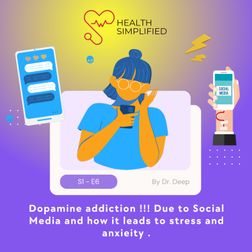
Dopamine addiction !!! Due to Social Media and how it leads to stress and anxiety .

Anna Lembke's Dopamine Nation explores the neuroscience of addiction, arguing that it stems from an imbalance between pleasure and pain in the brain's reward system. The book uses patient case studies to illustrate how this imbalance manifests in various compulsive behaviours, from sex addiction to excessive reading. Lembke proposes a "DOPAMINE" framework for recovery, emphasising abstinence, mindfulness, insight, and the pursuit of pain as methods to restore balance. She also examines the societal factors that contribute to widespread addiction, such as increased access to potent substances and the influence of technology. Finally, the book discusses the role of medications and the complexities of using them to manage addiction. Reference Links :- 1- https://extension.usu.edu/mentalhealth/articles/understanding-and-improving-mental-health-with-pets, 2- https://pmc.ncbi.nlm.nih.gov/articles/PMC10262044/, 3- https://habri.org/blog/how-pets-impact-our-mental-health/, 4-https://newsinhealth.nih.gov/2018/02/power-pets, 5- https://health.ucdavis.edu/blog/cultivating-health/health-benefits-of-pets-how-your-furry-friend-improves-your-mental-and-physical-health/2024/04#:~:text=Mental%20health%20benefits, 6- Help%20reduce%20stress%20and%20anxiety

The Power of PETS

The Human Animal Bond Research Institute (HABRI) website provides information on the positive impacts of pets on human health and well-being. Research highlights the role of pets in reducing loneliness, fostering community, encouraging mindfulness, promoting healthy habits, and supporting resilience and recovery from mental health challenges. HABRI's studies involve various animal types and target diverse populations, including children with autism and veterans with PTSD. The website offers resources like infographics and blog posts, showcasing the significant benefits of the human-animal bond. HABRI actively promotes awareness and funding for further research in this area. Reference Articles:- 1- https://habri.org/blog/how-pets-impact-our-mental-health/#:~:text=Research%20has%20found%20that%20pets,stability%20in%20times%20of%20need. 2- https://newsinhealth.nih.gov/2018/02/power-pets 3- https://www.helpguide.org/wellness/pets/mood-boosting-power-of-dogs 4- https://health.ucdavis.edu/blog/cultivating-health/health-benefits-of-pets-how-your-furry-friend-improves-your-mental-and-physical-health/2024/04 5- https://pmc.ncbi.nlm.nih.gov/articles/PMC10262044/ 6- https://www.mentalhealth.org.uk/explore-mental-health/a-z-topics/pets-and-mental-health

Effective Strategies for Managing Anxiety and Stress

The Anxiety & Depression Association of America (ADAA) website offers extensive resources on anxiety and depression. Its content includes information on various disorders, coping strategies (such as relaxation techniques and exercise), and finding professional help. The site also provides self-help materials, peer support communities, and educational webinars and blogs. In addition, ADAA's website features information about the organization itself, including its mission and how to get involved. Reference articles :- 1- https://adaa.org/tips 2- https://www.medicalnewstoday.com/articles/how-to-cope-with-anxiety 3- https://pmc.ncbi.nlm.nih.gov/articles/PMC6692438/ 4- https://www.mayoclinichealthsystem.org/hometown-health/speaking-of-health/11-tips-for-coping-with-an-anxiety-disorder 5- https://manhattanpsychologygroup.com/MPG-blog/effective-coping-strategies-for-adult-anxiety-stress/ 6- https://pmc.ncbi.nlm.nih.gov/articles/PMC8595982/ 7- https://www.mentalhealth.org.uk/explore-mental-health/publications/how-overcome-anxiety-and-fear

The burnout crisis among young professionals.

A recent study by Future Forum reveals a significant increase in workplace burnout, exceeding 40% of full-time desk-based workers surveyed. Women and individuals under 30 are disproportionately affected, with nearly half of 18-to-29-year-olds reporting burnout. This heightened stress among younger generations is attributed to factors such as economic uncertainty, career instability, and intense pressure to succeed. The gender disparity is linked to existing inequalities, including women's underrepresentation in leadership roles and their disproportionate burden of unpaid labour. The pandemic's impact and ongoing childcare challenges further exacerbate the situation for women. References links :- 1- https://www.cnbc.com/2023/03/14/burnout-is-on-the-rise-gen-z-millennials-and-women-are-the-most-stressed.html 2- https://www.firstbeat.com/en/blog/burnout-among-young-employees/ 3- https://pmc.ncbi.nlm.nih.gov/articles/PMC8701194/ 4- https://www.frontiersin.org/journals/public-health/articles/10.3389/fpubh.2024.1326227/full 5- https://www.bbc.com/worklife/article/20190719-why-is-burnout-rising-in-the-land-of-work-life-balance

Hormonal Imbalance in Women

In this episode, we discuss the common signs and causes of hormonal imbalances in women, from mood swings and fatigue to weight changes and more. We explore how lifestyle, stress, and health conditions can disrupt hormonal balance and offer practical tips to help you take control of your well-being.
3 of 4