

Enterprise Finance & Corporate Risk Management AI News Updates Podcast- AI B2B News

Enterprise Finance & Corporate Risk Management AI News Updates Podcast- AI B2B News

by Jack
Season 2026

June 6, 2026 – Enterprise Finance and FinTech Sector Update– 10 Top Stories Driving Markets and Tech

AI
Disclaimer: This report is for informational purposes only. It does not constitute legal, financial, or medical advice. All news stories discussed are purely informational and should not be construed as advice or recommendations. Do not make financial or legal decisions based solely on this content. Always consult appropriate professionals for advice specific to your situation.

“June 5 2026 — Markets Explode as AI Stocks Defy the Fed (Record Rally or Final Crash?)”

AI
DISCLAIMER: The following is a highly detailed news report provided strictly for informational and educational purposes. It does not constitute legal, medical, financial, or official advice. All news stories and anecdotes are presented as reportage only and should not be interpreted as guidance or recommendations. Always seek professional advice for any financial decisions or health queries.

Navigating Early Exits vs. High-Beta Rotations: A Scenario-Based Option Strategy Analysis

AI
Navigating Early Exits vs. High-Beta Rotations: A Scenario-Based Option Strategy Analysis Educational Note: This scenario-based analysis aims to illustrate trade-offs, not to provide financial advice. Outcomes for any individual investor will vary. A balanced approach might involve partial scaling – e.g. selling a portion of broad-market calls early (securing profits) while still holding some exposure, then gradually increasing tech-focused positions as confidence in the timing of the IPO rally grows. Whatever the approach, prudent risk management and flexibility are key. Major tech IPOs can indeed be “the tide that lifts all boats” under favorable conditions, but strategic timing and understanding the instruments’ characteristics are essential to navigating these waves.

The Uncertain World of “Likely Voters” and Polling Error: Methodological Insights

AI
The Uncertain World of “Likely Voters” and Polling Error: Methodological Insights Pre-election polls face a web of uncertainties at every step, from identifying who will vote to accounting for biases and error. The widely reported “margin of error” typically addresses just one factor – random sampling noise – while leaving many other sources of inaccuracy unmeasured. In lower-turnout contests like primary elections, these uncertainties are amplified, and seemingly small errors can shift outcomes. In extreme cases, a combination of misjudged turnout (“likely voter” errors) and polling biases can even produce surprise results – for example, both top finishers in a top-two primary coming from the same party, contrary to initial poll expectations. Below, we detail why a “likely voter” isn’t necessarily a “probable” (actual) voter, and examine how sampling error, design effects, nonresponse, weighting, likely-voter screens, and pollster-specific “house effects” contribute to polling uncertainty. We then show how these factors compound in primary elections and under top-two systems. [nuundigital.com], [biologyinsights.com]

A Generation’s Call to Hope: A Manifesto for Gen Z in the Age of AI and Space

AI
A Generation’s Call to Hope: A Manifesto for Gen Z in the Age of AI and Space By embracing bold visions, new technologies, and deep human connections, young people today can overcome nihilism and shape a brighter future. Despite the challenges of our era—from climate fears to rapid technological change—this is a time of unprecedented opportunity. Emerging fields like artificial intelligence, robotics, and the space economy promise enormous growth and the potential to solve problems once thought insurmountable. Instead of retreating into cynicism or resisting innovation, we can find purpose and meaning by learning new skills, building businesses, and forging strong communities. The following manifesto lays out why aiming high and embracing optimism is both possible and necessary for Gen Z and beyond.

Strategic Chokepoints and Post-Conflict Reconstruction in the Strait of Hormuz: Legal & Economic Frameworks

AI
Strategic Chokepoints and Post-Conflict Reconstruction in the Strait of Hormuz: Legal & Economic Frameworks Executive Summary: The Strait of Hormuz is one of the world’s most critical maritime chokepoints, and any proposal to secure it through military or political intervention must consider multiple legal and economic regimes. International law strongly protects freedom of navigation in straits and state sovereignty, while post-conflict reconstruction efforts rely on frameworks for foreign investment and economic development. Policy and academic debates about such proposals weigh security benefits (e.g. stable trade flows, reduced conflict risk, improved investment climate) against serious risks (e.g. legal and legitimacy issues, regional escalation, moral hazards, governance pitfalls, uncertain sustainability). The sections below provide a neutral analysis of these frameworks and arguments:

Optimistic Scenarios: Peace in the Gulf, a “Refounded” Iran, and a Global Relief Rally - the botched episode
AI
Optimistic Scenarios: Peace in the Gulf, a “Refounded” Iran, and a Global Relief Rally In this report, we explore two best-case scenarios for a hypothetical peace accord involving Iran, the Strait of Hormuz, the U.S., Israel, Gulf Arab nations, and Pakistan. Both scenarios assume a swift end to conflict and sustained international support, but differ in Iran’s internal trajectory: **Scenario A – Durable Peace & Reintegration: A multi-party peace accord ends hostilities in the Gulf, rapidly reopening the Strait of Hormuz and lifting major sanctions on Iran. This triggers a global “relief rally” as energy prices fall and risk appetite surges. Iran re-enters the world economy but with its current governance model largely intact. Economic growth resumes but remains moderated by existing structural constraints. **Scenario B – High-Impact Transformation (Refounded “Persia”): Building on Scenario A, Iran undergoes deep political and economic reforms (or leadership change), rebranding itself as a more open and stable “New Persia.” Comprehensive governance changes curb state-dominated sectors and enable a massive reconstruction and modernization drive. Global markets and investors gain access to a truly open Iranian economy, unleashing one of the largest emerging-market growth surges in decades.

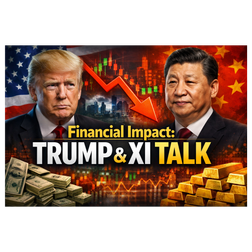
U.S.–China Summit Geopolitical-Financial Impact Report
AI
Institutional Investor Note (Narrative Format; Public Companies Only) U.S.–China Beijing Summit: Geopolitical–Financial Scenario Map, Regional Spillovers, and Company-by-Company TA/FA/QA Sensitivities (No Tables) Scope & framing: This note treats the Beijing meetings as a U.S.–China leadership summit with geo‑economic stakes (tariffs, export controls, critical minerals, maritime risk, FX/capital flows). It does not analyze personalities or domestic politics. Reported previews frame the summit as an attempt to maintain “fragile stability,” with agenda expectations spanning trade frictions, technology controls, and broader security-linked topics.

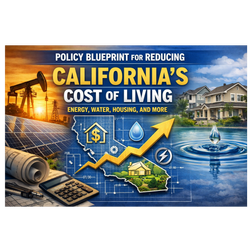
Policy Blueprint for Reducing California’s Cost of Living: Energy, Water, Housing, and More

AI
(A theoretical state-level policy and zoning concept paper for California, focusing on family cost-of-living relief under legal and rights-based constraints) Introduction: California faces high living costs – from expensive energy and water to housing shortages – that strain family budgets. The following policy and zoning actions are explored as theoretical strategies to reduce cost-of-living pressures without compromising legal and ethical standards. We outline six focus areas – energy, water, housing, workforce integration, public land use, and public safety – detailing objectives, proposed mechanisms, legal constraints, economic impacts, and risks for each. All proposals are discussed as conditional and exploratory, given California’s robust environmental protections, constitutional rights, and regulatory limits. https://mydeals.page/i76j https://jackandrewestes.substack.com/publish/posts/detail/181367986/share-center https://www.patreon.com/cw/JAEMoneyPodcast Overview of Strategies: The table below summarizes key theoretical policy tools, their intended cost-of-living benefits for families, and the main legal/regulatory considerations or risks associated with each. All proposals are analyzed as hypothetical scenarios, flagged with their feasibility and constraints:

Modernizing Economic Metrics: Why GDP Falls Short and How “Household GDP” Can Bridge the Gap

AI
Executive Summary: Gross Domestic Product (GDP) has long been the headline measure of economic performance, yet it increasingly fails to reflect the economic reality of modern households. GDP was conceived in an era when many families relied on a single breadwinner and most economic activity ran through formal employment. Today, the landscape has shifted: a majority of households depend on multiple earners, millions of individuals juggle side jobs or freelance “gig” work, and a significant amount of essential labor (like caregiving and housework) remains unpaid and excluded from GDP. This report examines why national GDP is a flawed metric for capturing household well-being in the 21st century and proposes a complementary framework called “Household GDP”, which aggregates total household earnings across all jobs and income sources. By measuring gross household income and productivity in the era of side hustles and self-employment, Household GDP would provide richer insights for policymakers, highlighting disparities, labor market shifts, and financial stress that GDP alone obscures. We outline the concept’s rationale, data sources, methodological design, and policy applications, as well as addressing potential limitations (like privacy and standardization). Household GDP is not intended to replace GDP, but to complement it, enabling a more inclusive and nuanced understanding of economic progress that focuses on households’ actual financial outcomes alongside aggregate national output.
7 of 12