
J P LINSTROTH EPOCHAL RECKONINGS PODCAST

J P LINSTROTH EPOCHAL RECKONINGS PODCAST

by J P Linstroth

POETRY FOR THE ZEITGEIST OF THE 21ST CENTURY
AI
This podcast is based upon the poetry of my two published books, Epochal Reckonings (2019 Winner of International Proverse Prize, Proverse Hong Kong, 2020) and Swimming in Blue Shadows: A Collection of Short Stories and Poems (2022 Winner of Supplementary Book Publication Prize, Proverse Hong Kong). AI Podcasters, Alice and Bob, analyze my poems and examine common themes expressing the zeitgeist of the 21st century. In Epochal Reckonings, the author (J. P. Linstroth) wants his poetry to cause concern, discussion, and surprise as well as evoke the emotions of anger, empathy, and sadness. In other words, I want the reader to have an experience by reading my poetry and taking away with something memorable. Moreover, and even if the reader has never been a fan of poetry, or really, never reads it, perhaps from reading such poetry of the times, they will change their mind about the power of poetry as an artistic genre. In Epochal Reckonings (2020), J. P. Linstroth portrays the great human migrations of the 21st century in the Americas, Asia, Africa, the Middle East, and Europe, and those hoping for safety and a better life. Likewise, he covers the human condition through astonishing acts of violence: the 9/11 destruction of the twin towers of the World Trade Center in New York; Hurricane Katrina of 2005; the Haitian earthquake of 2010. In all, Linstroth reveals man’s inhumanity against man, whether callous, careless, mistaken, or deliberate. Such unspeakable violence extends to the police killings of African American youths; the genocide of Brazilian Amerindian peoples; the torture of Iraqi prisoners at Abu Ghraib prison; mass school shootings in the United States; homelessness; and the Yemeni civil war. According to Linstroth his poetry is emergent, much like Michaelangelo’s prigioni (slaves) sculptures with his words outlining the struggles and sufferings of various groups during major crises in the 21st century, embodied by racism, extremism, violence, and tragedies too many to be told. Poems in Epochal Reckonings capture such calamities by defining their symbolic significance for many of those who have experienced these disasters o four times across the globe. In Linstroth’s book, Swimming in Blue Shadows, he portrays such poetic themes about Artificial Intelligence (AI), the war in Afghanistan, COVID-19 (Coronavirus), Native American boarding schools, love, depression, death, loss, and youthful exuberance. As the title suggests, the collection uses a phrase from the first story, suggesting the nearness of death in its innumerable and nebulous guises, pinpointing especially how various protagonists face death, as if swimming in death’s blue shadows, hidden yet there.

"FIELD RESEARCH". ITS MEANING AND HISTORY

AI
Today’s podcast is based upon J. P. Linstroth’s encyclopedia entry, “Field Research” (2008, 2012). It should be known today that all field researchers must be aware of their role in the field and of their effects on their subjects in both informal and formal contexts. Therefore, reflexivity is an important aspect of the researcher's work. Field research is guided by past experience and informed by the mistakes of previous research when ethical guidelines were not as strict-for example, in U.S. the Tuskegee Syphilis Project, in which unnecessary harm was caused when the treatment for syphilis was withheld from study participants even when penicillin became available; the U.S. Department of Defense's Project Camelot, a U.S Army program that was designed to evaluate the causes of warfare, but in actuality was used to undermine revolutionary movements in places like Latin America; psychologist Stanley Milgram's studies of behavioral aspects of authority and obedience, studies that were highly controversial because of the ethical concerns raised by his use of deception in experiments using electric shock; or even the most recent controversy involving anthropologist Napoleon Chagnon and geneticist James Neel about the Yanomami peoples of Brazil and Venezuela. Ethics review boards of universities, especially those in the United States, were created to guarantee against unwarranted deception and to ensure informed consent as well as the privacy and confidentiality of the study participants (as appropriate). Such ethical requirements for the study of human subjects involve the respect for all persons and their well-being and provide a framework for moral standards to follow during field research.

HOW A PHONE CALL SAVED A MAYAN VILLAGE (HONOURING LATE, ANTHROPOLOGIST, SHELTON DAVIS)
AI
The purpose of this essay, “The Mayan People and Sandy (Shelton) Davis: Memories of an Engaged Anthropologist”, by J. P. Linstroth is to honour my late friend, anthropologist, Sandy (Shelton) Davis (1942-2010). The article will highlight the activism of Shelton Davis and his involvement with the Mayan people during the 1980s. Of particular importance is the portrayal of an immigration hearing of nine Kanjobal Maya defendants in 1983 and the circumstances surrounding the problems of immigration in the state of Florida at that time. The article also explores how Shelton Davis helped save a village of Kaqchikel Maya in the Department of Chimaltenango, Guatemala. Of importance is how to represent varying narratives from three close colleagues of Shelton Davis to an overall conceptualization of the epistemology of narrative formulations. One finds that dispersed memories and aspects of synchronic trauma provide some avenues of forming a picture about Davis’ activism with the Mayan people. Likewise, it is significant to realize that histories and memories are not confined to specific structural agencies but rather may be regarded as multi-faceted expressions of pastness through an individual’s memories and narratives.

HISTORY, TRADITION, AND MEMORY AMONG THE BASQUES
AI
This article, “History, Tradition, and Memory among the Basques” by J. P. Linstroth explores the historical commemoration, the Alarde of the Spanish-Basque town of Hondarribia re-enacted for almost 400 years. It is a social account of the past portrayed through a history of local militarism and a history of commemorative performance. Since 1996, controversy has divided local inhabitants concerning wider female-inclusion in the male-dominated event, separating the town into factions, traditionalists (asserting traditions remain the same) and feminists (advocating broader female involvement).Theoretical concerns include examining traditions and their gradual transformations over time, rather than as episodic change; that interpreting the past can be competitive over rights of belonging; that history may be influenced by different agencies of gender, kin ties, memory, politics, and social experience; that people do not purposefully ignore the passage of time but may be protecting communal harmony; that commemorative rites are more than embodied performances; and that history can be a multiple, contested, and lived experience. Today, as of 2026, the Alarde controversy in Hondarribia continues and there are two parades held there every September 8th, one for so-called “traditionalists” and another held on the same day for those supporting the “feminist cause”.

HOW BRAZILIAN URBAN AMERINDIANS FIGHT AGAINST ERASURE: UNDERSTANDING INDIGENOUS RIGHTS
AI
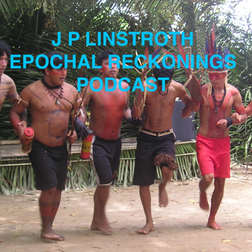
J. P. Linstroth’s book chapter, “Brazilian Nationalism and Urban Amerindians: Twenty-First Century Dilemmas for Indigenous Peoples Living in the Urban Amazon and Beyond” (2015), examines a reflection on at least two significant points: the “insurrection of subjugated knowledges” (Foucault 1980) and “invisible histories” (Linstroth 2005). These two notions are intertwined. First, by "insurrection of subjugated knowledges," Linstroth claims that indigenous peoples have for centuries been subjected to destruction, oppression, and marginalization as minorities within nation-states through enslavement, epidemics, eradication schemes, forced settlement, debt peonage, massacres, proselytization, rape, and numerous other abuses, and other untold atrocities. Moreover, to understand this J. P. Linstroth examined the forceful seizure of the National Health Foundation (Fundação Nacional de Saúde, FUNASA) in Manaus in June 2009 by hundreds of urban Amerindians and Indians from reserves in the interior. He argued that the appropriation of the FUNASA buildings was more than a call for the acknowledgment of Native health rights but rather was also directed at white society and its control over governmental organizations such as FUNAI and FUNASA. The urban Amerindians were making a stand against their invisibility to Brazilian governmental organizations like FUNAI and FUNASA, which did not recognize them because urban Indians are considered to be "civilized" or civilizados, a pejorative entirely removing their Indianness.While such political indigenous struggles are well-known in the city of Manaus, Brazil, in the middle of Brazilian Amazonia, they are less known beyond Manaus. Thus, these events are mostly invisible to the world and even the Brazilian nation. Urban Amerindians such as the Sateré-Mawé have been campaigning for years for their rights for better health care but also just recognition as true Indians and not as civilizados. Likewise the Munduruku have been in conflict with the Brazilian government for the legal demarcation of their lands in order to suspend hydroelectric dam building and to prevent illegal mining activities. These are largely “invisible histories.” Therefore, states’ relations with indigenous peoples are like the Brazilian saying about the jaguar: Năo cutuque a onça com vara curta—"Never poke a jaguar with a short stick” because to state governments such as that of Brazil, Indians are continually poking the stick at them and thus statist retribution often ensues against indigenes as it has for the past five-hundred years, evidence the Sateré-Mawé and Munduruku cases.

PEACE LESSONS FROM A BULLET ANT (TUCANDEIRA) DANCE AMONG THE SATERE-MAWE
AI
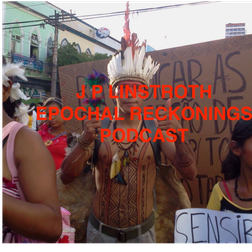
This book chapter by J. P. Linstroth, titled: “Conflict Avoidance among the Sateré-Mawé of Manaus, Brazil’, and Peacemaking Behaviours among Amazonian Amerindians” (2016), there is a general discussion of Amazonian Amerindian practices of peacemaking and then analysed different aspects of Sateré-Mawé culture, mythology, and ritual. This led to an interpretation of urban Sateré-Mawé conflict avoidance behaviours in Manaus, Brazil. As such, the urban Sateré-Mawé of Manaus, Brazil, are different from other Amazonian peoples and even the Sateré-Mawé in the interior because they have lost many of their traditions by living in the city, such as the tradition of the cultivation of guaraná. Like their Christian Sateré-Mawé Protestant crentes (believers) in the interior, the urban Sateré-Mawé Seventh-Day Adventists (adventistas), because of their Christian beliefs, have altered the meaning of the tucandeira ritual. In Amazonian societies, conflict avoidance behaviours are often about ontological states of personhood and socialization of learned emotive con- duct whereas such states of being are less likely among urban Sateré-Mawé because of their life in the metropolis and therefore forgetting a traditional way of life. Hence, I analysed some Sateré-Mawé leaders (tuxauas), Paulo of the CA, Waldir of the AM, and Soraya of the AMIA, but concentrated on Paulo for his conflict avoidance behaviours because of his psychological perspective in doing so. I believe much of Paulo's disposition has to do with his Seventh-Day Adventist faith and Christian beliefs developed from the New Testament as he avoided conflict as much as possible. Modern day Sateré-Mawé tuxauas like Paulo no longer rely on the cult object, the puratim, to resolve conflict based upon Sateré-Mawé moral codes. They handle and avoid conflict through their own leadership skills and what they know from the Christian message in the New Testament. Urban Indians like the Sateré-Mawé are not unlike other Amazonian Indians in the interior as they supposedly do lead more harmonious lives than white people in the city. They reiterated to me on several occasions how different they are from white people and that they care for one another, in other words, their form of "conviviality."ll! As such, even though urban Satere-Mawé in general have lost many of their traditions, they are still Indians all the same and try to live harmonious lives in the city,

BRAZILIAN URBAN AMERINDIANS & ADVOCACY

AI
In J. P. Linstroth's book chapter, "Urban Amerindians and Advocacy: Toward a Politically Engaged Anthropology Representing Urban Amerindigeneities in Manaus, Brazil" (2015), my political engagement in advocacy for urban Amerindians in Manaus, Brazil may be characterized as more by accident than not in the sense of not knowing a priori that my fieldwork should follow some Brazilian anthropologists' leads in advocating for Indian rights. Prior to fieldwork I did not know about the indigenous politics in Manaus or for that matter not much about Indian groups living in Manaus as little is known about these city dwelling Indians outside Brazil. Also, I did not know of the many years of activism and advocacy of anthropologists in the Department of Anthropology at the Universidade Federal do Amazonas (UFAM) who had been working for the political rights of urban Amerindians and Amerindians throughout Brazil for years. I was a novice by comparison. To many Indians I encountered I was an oddity from North America but with the possibility of being strategically important to them in their indigenous politics for reaching a wider English-speaking audience. In this manner, as with other anthropologist acquaintances, I became a "political object' to them in a positive sense. I was someone who might prove to be politically useful to them over time. Anthropologists who become political objects to Indians serve as an example of what engagement might entail for the interethnic relationship of anthropologists with politically mindful Indians. In my view political engagement with indigenous peoples not only entails advocacy but also evokes a multiplicity of relations between anthropologist and Indian. It implies an interethnic and intersubjective relationship, which is also reciprocal. Indians, on the one hand, use Brazilian anthropologists for their advantage in gaining access to governmental organizations, NGOs, and addressing health and economic needs and in navigating judicial issues. (In this sense, I fit in with a model of a type of a professional they were already accustomed to dealing with.) Anthropologists, on the other hand, seek empirical data in which to theorize anthropologically about Indians. Engagement is therefore a mutual dialogue and may involve indigenous peoples determining the direction of anthropological inquiry and its outcomes (as in my case). In my particular study the urban Indians of Manaus were most concerned with my promulgating their politics to a broader audience and my propagating their memories of racism and discrimination from the mistreatment of Brazilian society and Brazilian government agencies. The reason for writing this essay is thus in support of urban Amerindians living in Manaus and to demonstrate to others the discrimination and racism they have experienced. Writings such as this chapter may add to the dedication and work of Brazilian anthropologists who have successfully advocated for the rights and recognition of urban Indians in Manaus, a continual process, and especially in negotiating with governmental agencies such as FUNAI and FUNASA. This writing contribution however attempted to move beyond mere recognition of the Indians and their causes. Rather, it also analysed the indigenous trauma experienced through discrimination and racism and how trauma may be regardedas a catalyst for overcoming interethnic strife while at the same time defining indigeneity in juxtaposition to Brazilian society.

CONFLICTS AS TRAPS & CONFLICTING ENTRAPMENTS: WHY ELITE PEACEBUILDING MODELS FAIL VICTIMS

AI
The intellectual debt for the title of my presentation, "Conflicts As Traps & Conflicting Entrapments", I owe to the anthropologist, Alfred Gell, whose powerful ideas still continually inspire me in all things anthropological.1 Here, rather than thinking of traps as art, or even art as traps, we may use some of Gell’s (1999) notions to explain conflict, particularly intractable conflict and conflict theory. My concern is with human entrapment. I employ metaphors of traps as a means of understanding how human actors become entrapped in conflict, and moreover, how researchers have become entrapped in a language of entrapment. By this I mean to explain on the one hand, the dilemma all humans face when confronted with conflict, particularly of the protracted kind, but importantly on the other hand, why intellectuals fall prey to theorizing in abstractions which have little to do with human experience. As both an anthropologist and conflict resolutionist my critique stems in large part to an examination of a body of theory driven by researchers from the fields of political science, international relations, and conflict resolution. The dilemma here is unsnarling some theoretical propositions from these areas of study by exploring the role of culture in conflict resolution, the how-to aspects of peacebuilding, and some meanings surrounding peace-making models. For a more nuanced approach to intractable conflict I am suggesting a closer scrutiny of ethnography to provide a more humanist conceptualization of memory, suffering, and the meanings of violence. Further, I address the divergent interpretations of human rights with a special emphasis of self-determination movements but more predominantly with a mind toward the applicability of deliberative democracy theory and ideas associated with freedom and liberty. Lastly, I address the Basque conflict and what lessons can be gained from the above in moving forward with the pending peace process.

THE HUMAN REALITIES BENEATH MOST CONFLICTS
AI
This introductory article to the Special Issue of Peace and Conflict Studies asks, “Are we in the ‘Age of Resistance’ in a post-9/11 world?” J. P. Linstroth argues the concept of “resistance” may be framed in a broad theoretical context to include multiple and contested meanings by social and political actors as well as by scholars and through intellectual debate. The article questions recent ideas prevalent in faux-political science studies which promote a clash of civilizations, essentialize histories, support anachronistic Orientalist-approaches, and bolster foreign policy initiatives by removing the human element. The contention is for researchers and theorists to concentrate on “invisible histories”, which reveal the less understood elements of history, social organization, and the inter-connectedness of conflict and violence across a broad range of cultures. Anthropology as a discipline demonstrates how invisible histories are revealed in multi-valent and nuanced ways of the past in the present and through the social interrelatedness of violent expressions and their analytical understanding. Beyond this, it is claimed that epistemological conceptions of nationalism may be examined on different levels through cultures, localities, and regions as contested and multiple expressions, which confront generalist and monolithic images. Partially this is explained through the notion of the “distributed” and “partible” person, as an extension of human activity, political agency, and political ideology to complementary and constituent parts of collective but detotalized wholes. To conceptualize this theory, the Basques will be utilized as exemplifying how such ideas are applicable. In all, this Special Issue of Peace and Conflict Studies will present some new approaches for comprehending our post-September 11 world, not only in our understanding of conflict but our role as conflict-resolution-specialists.

GENDER AS A CATEGORY FOR ANALYSIS OF CONFLICT

AI
In this encyclopedia entry, "Gender as Category for Analysis of Conflict", J. P. Linstroth, points out how increasingly we are faced with situations and international issues of crime, refugees, epidemics, feminist movements, and human rights, all of which have considerable influence on the construction of gender and the role that gender plays in conflict across the transnational realm. These are challenges as much to the United Nations, nongovernmental organizations, and for countries around the world. What is obvious is that even though we may accept and recognize the global is progressively impinging on local communities at an unprecedented scale affecting indigenous peoples and those living in the developing world to detrimental degrees such incursions are not isolated in history. Now we face a surfeit of other dilemmas in relation to gender, especially in outlawing forms of gender violence and female oppression by men in male dominated societies. There is also the international illegal trade in arms and drugs whereby women become victims in other ways through black market economies and outlawed activities, especially in relation to gender beyond the simplicity of statistics for informal economies. Women are often silent and muted victims and invisible to most observers in addressing such harmful processes across borders.
2 of 4