Intersections Podcast

Intersections Podcast

by Dr. Hitendra Wadhwa

Arthur Brooks on the Happiness Plan for the Second Half of Life

When we imagine a happy and successful life, the portrait that’s often painted before us includes someone who is dynamic, engaged and achieves success upon success. And yet, in a time like today when lifespans continue to lengthen, there’s a whole period to life that goes beyond our peak performance days, far from the limelight we once had, unnoticed and forgotten. What then is the definition of success and happiness in this second half of life? Do people get happier or unhappier as they age? What happens when our professional decline sets in earlier than expected, and what self-correcting mechanisms can we put in place to avoid its negative consequences? Does happiness take care of itself or is there a formula we can use to maximize our flourishing, in not just the second half, but in every chapter of our lives? Listen to some powerful insights from decades of happiness research and from Arthur Brook’s own luminous life journey, in an exclusive conversation with Prof. Hitendra Wadhwa on Intersections Podcast. Arthur C. Brooks is the William Henry Bloomberg Professor of the Practice of Public Leadership at the Harvard Kennedy School and Professor of Management Practice at the Harvard Business School. Before joining the Harvard faculty, he served for ten years as president of the Washington, D.C.-based American Enterprise Institute, one of the world’s leading think tanks. Arthur is the author of 12 books, including the #1 New York Times bestseller From Strength to Strength, and national bestsellers Love Your Enemies and The Conservative Heart. He is also a columnist for The Atlantic, host of the podcast How to Build a Happy Life with Arthur Brooks, and subject of the 2019 documentary film The Pursuit, which Variety named as one of the “Best Documentaries on Netflix” in August 2019. Arthur gives more than 100 speeches per year around the U.S., Europe, and Asia; has been selected as one of Fortune Magazine’s “50 World’s Greatest Leaders,” and was awarded six honorary doctorates. In this Intersections episode, Arthur reveals: Why happiness doesn’t take care of itself and how to craft a 401K happiness plan for the rest of our lives Two key reasons why our professional decline starts earlier than we think and the self-correcting mechanisms we can put in place now to avoid its negative consequences Why faith and reason are not mutually exclusive, and how to integrate multiple viewpoints and ideas to arrive at our own truth The wrong and the right formula for happiness in seven words And many inspiring stories and timeless wisdom drawn from both eastern and western cultures that illustrate the human capacity for transformation

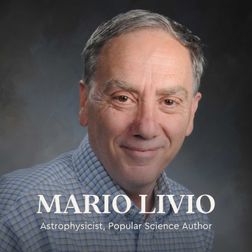
Mario Livio on Dissolving Boundaries in Our Hyper Specialized World

In a world that celebrates specialization, what can we gain by dissolving boundaries between disciplines and exploring multitudes? What do extraordinarily creative people have in common, and what tools do they use to access breakthrough ideas and insights? What lessons can we draw from the blunders made by some of the pioneering scientists from history to pursue our own professional quests? And can these same lessons be used to reduce polarization and create a more unified world? Listen to some powerful insights on the power of dissolving boundaries from Dr. Mario Livio, in an exclusive conversation with Dr. Hitendra Wadhwa, on Intersections Podcast. Dr. Mario Livio is an internationally known astrophysicist, bestselling author, popular speaker, and a Fellow of the American Association for the Advancement of Science. Dr. Livio has published more than 500 scientific articles, made significant theoretical contributions to topics ranging from cosmology, supernova explosions, and black holes to extrasolar planets and the emergence of life in the universe. His popular books include The Golden Ratio, Is God A Mathematician? that inspired the NOVA program “The Great Math Mystery,” which was nominated for an EMMY in 2016, Brilliant Blunders and more recently, Galileo and the Science Deniers. Dr. Livio’s work is frequently featured in leading media including The Daily Show, 60 Minutes and On Being; is the former Science Advisor to the Baltimore Symphony Orchestra, and has presented science-related topics in a number of their concerts; and has also collaborated with composer Paola Prestini in the creation of the Hubble Cantata, which was inspired by Hubble images and discoveries. In this Intersections episode, Dr. Livio reveals: The power of dissolving boundaries between disciplines and exploring multitudes What some of the world’s most extraordinarily creative people have in common, and the tools they use to access breakthrough ideas and insights The lessons we can draw from the blunders made by some of the pioneering scientists from history, and how we can apply them in our own professional quests The benefits and relevance of being a polymath in a hyper specialized world And the best remedy for fear in our painfully polarized society

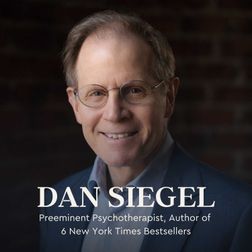
Dan Siegel on Breaking the Illusion of the Self

Modern culture has influenced many of us to view the self—the seat of human experience—purely by the boundaries of the body and the mind, creating a fundamental sense of separateness from the rest of existence. And yet, the pandemic shattered the illusion of the separate solo self in many ways. Could it be that despite our best intentions, we have a misunderstanding of who we really are? And could it be that the illusion of the self may be standing in the way of us realizing our full potential? Drawing from the intersection of modern science and ancient wisdom, Dr. Dan Siegel offers some remarkable stories and insights about the true nature of the self in an exclusive conversation with Dr. Hitendra Wadhwa, on Intersections Podcast. And gain some life-changing tools you can use to integrate all facets of your identity and serve yourself, others and the world from a place of pure awareness. Dr. Dan Siegel is a clinical professor of psychiatry at the UCLA School of Medicine, founding co-director of the Mindful Awareness Research Center at UCLA, and Executive Director of the Mindsight Institute that offers online learning and in-person seminars on how the development of mindsight in individuals, families and communities can be enhanced by examining the interface of human relationships and basic biological processes. An award-winning educator, he is a Distinguished Fellow of the American Psychiatric Association and recipient of several honorary fellowships. Dr. Siegel has written six New York Times bestsellers including Mind: A Journey to the Heart of Being Human, and Aware: The Science and Practice of Presence. His most recent book, IntraConnected: MWe (Me + We) as the Integration of Self, Identity, and Belonging, is now out in bookstores and is also the topic of conversation for this episode. In this episode, Dr. Siegel reveals: Why the common understanding of the “self” is a constructed illusion Two life-changing tools to deepen our perception of the self, break out of this illusion and take action that not only serves us, but everyone and everything around us And how to live joyfully even when the world rejects your vision and your ideas

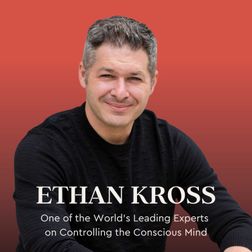
Ethan Kross on Recruiting Our Mind to Perform at Our Best

Oftentimes, it is our inner voice that gives us clarity and power — or then takes it all away without notice, leading us to tumble and fall from grace, into the rabbit hole of rumination and worry. How can we master the silent conversations we have with ourselves, and turn our inner voice from a critic to a coach? Why is empathic leadership much more than just creating the space for sharing and listening with intent? What can we do to covertly support others in managing their inner voice better without taking away their agency or shining a spotlight on their vulnerabilities? Listen to some cutting-edge scientific insights from Ethan Kross on how to tame our inner world, in an exclusive conversation with Prof. Hitendra Wadhwa, on Intersections Podcast. Ethan Kross is one of the world’s leading experts on controlling the conscious mind. An award-winning professor and bestselling author in the University of Michigan’s top ranked Psychology Department and its Ross School of Business, he has founded the Emotion & Self Control Laboratory and studies how the conversations people have with themselves impact their health, performance, decisions and relationships. Ethan is the author of the National Bestseller CHATTER: The Voice in Our Head, Why it Matters and How to Harness It, scheduled to be translated into 35+ languages. His research has been featured in leading platforms including Science, The New England Journal of Medicine, CBS Evening News, The New Yorker, Harvard Business Review, The Economist, The Atlantic, Forbes, and Time. In this Intersections episode, Ethan reveals: How our life’s three most important domains can be severely compromised by our own inner voice Two ways our internal chatter can lead to disastrous interpersonal outcomes, and push those away who genuinely care about us How we can recruit our minds to solve our problems at hand without falling down the rabbit hole of rumination and worry Two key principles of empathic leadership that can help us curate a support network of people, both at work and in life Three ways to offer invisible chatter support to others without taking away their agency or shining a spotlight on their vulnerabilities Two powerful tools that can help us become our own chatter coach, in both everyday and high-stakes situations

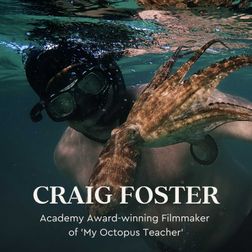
Craig Foster on the Extraordinary Lessons We Can Learn from an Octopus

What wisdom can we receive from developing deep connections with an octopus and other life forms in the marine world? Could a friendship with a member of another species teach us more about life, our relationships and our humanity, than our books, TV and other media? What if the subtle science and mysteries of nature could be discovered in our own backyard? And what life lessons could we draw from tracking wild animals? Listen to Craig Foster’s deeply intimate friendship with an octopus in the wild, and how it can connect the human heart with the natural world, in an exclusive conversation with Prof. Hitendra Wadhwa, on Intersections Podcast. Craig Foster is a co-founder of the Sea Change Trust and one of the world’s leading natural history filmmakers. He has dedicated himself to learning the secrets of the Great African Seaforest—the inshore kelp habitat at the South West tip of Africa, his underwater home. His film My Octopus Teacher (winner of the Academy Award and BAFTA, nominated for an Oscar) follows the story of his year with a wild octopus, at the same time honoring his pact to dive 365 times a year. Through this regular intensive immersion, he has uncovered a plethora of new animal behaviors and species, one of the species is a shrimp which has been named after him: Heteromysis fosteri. He has founded the Sea Change Project to share his love of nature with others, and has also co-authored the book, Underwater Wild: My Octopus Teacher's Extraordinary World. In this Intersections episode, Craig reveals: Why developing intimacy with wild nature and other sentient beings improves human relationships and helps us lead more conscious lives How learning to track wild animals can advance our own work, life and leadership The potential for discovering the subtle science and mysteries of nature in familiar surroundings

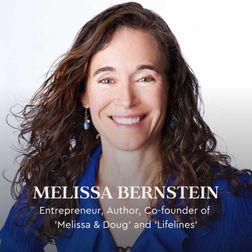
Melissa Bernstein on Building a Billion Dollar Business While Dealing with Depression

When we face inner turmoil, some of us go on a downward spiral, shutting down all possibilities of finding inner peace, balance and happiness. Is there an alternative way, a way where we turn such moments of vulnerability into unique strength? Could a time of depression translate into our greatest creative expression, in service of ourselves and our community? How does one build a billion dollar business while struggling with existential depression for three decades? Listen to the remarkable personal transformation story of Melissa Bernstein, in an exclusive conversation with Prof. Hitendra Wadhwa on Intersections Podcast. Melissa Bernstein is an entrepreneur, creative, and working mother of 6. As co-founder of the wildly successful toy company Melissa & Doug, she has spent the last 30 years helping children discover themselves, their passions, and their purpose. In 2020, after her own personal journey of self-discovery and acceptance, Melissa founded Lifelines. Through Lifelines, she is using her creativity and imagination to reinvent well-being products and experiences to help adults strengthen their resilience, stay grounded, and unlock their full potential. Melissa has also recently published her memoir, LifeLines: An Inspirational Journey from Profound Darkness to Radiant Light. In this Intersections episode, Melissa reveals: The source of our greatest creative expression, even in times of our greatest depression What brings true meaning and purpose in life, and how to channel our inner turmoil into inner strength and happiness And the key to forging a winning path in our entrepreneurial journey, even in the most unfavorable conditions

Roshi Joan Halifax on Cultivating Compassion and Wisdom in the Presence of Death

In a culture that views death only as a biological and morbid end to life, what can we learn from someone who has spent more than 50 years in end-of-life care? What inspiration can we draw from such a luminous life on how to best be of service to our loved ones in their final chapter of life, how to awaken our natural compassion, and on how to reframe our own relationship with death? Listen to some powerful insights on how death can be our greatest teacher from Roshi Joan Halifax, in an exclusive conversation with Prof. Hitendra Wadhwa, on Intersections Podcast. Roshi Joan Halifax is a Buddhist teacher, founder and head teacher of Upaya Zen Center in Santa Fe, New Mexico, a social activist and author. She is a pioneer in the field of end-of-life care, has lectured on the subject of death and dying at many academic institutions and medical centers around the world, and has received many awards and honors from institutions around the world for her work as a social and environmental activist, and in the end-of-life care field. Roshi Joan has continued to work with dying people and their families, and to teach health care professionals and family caregivers the psycho-social, ethical and spiritual aspects of care of the dying. She is Director of the project, Being With Dying; Founder of the Upaya Prison Project that develops programs on meditation for prisoners; has been involved with the Mind and Life Institute since its inception; and is founder of the Varela International Symposium. Her books include The Fruitful Darkness: A Journey Through Buddhist Practice and Tribal Wisdom, Being with Dying: Cultivating Compassion and Wisdom in the Presence of Death, and Standing at the Edge: Finding Freedom Where Fear and Courage Meet. In this Intersections episode, Roshi Joan reveals: How our attitude towards death can help us find freedom in the present moment, and enable us to live a life true to ourselves Three simple tenets of living that can radically improve our inner and outer perception, and how the world perceives us How to awaken the natural compassion within us, and use our spheres of influence to make it contagious in the world How to best be of service to our loved ones in their final chapter of life And many compelling stories that illustrate our innate capacity for transcendence from our material, mental and physical conditions

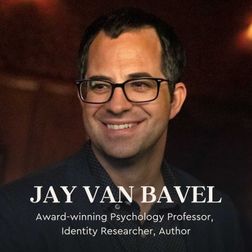
Jay Van Bavel on How Our Shared Identities Can Propel Us to Greatness – or Self-Destruction

What is the true nature of our identity, and how does it shape our thoughts, beliefs and actions? What do we gain from dissolving the boundaries created by our social identities? How can today’s managers, leaders, and changemakers use the language of identity to eliminate negative stereotypes, false beliefs and deep-seated racial biases in their teams, organizations and communities—and also create the potential for more cohesion, collaboration and peak performance? Listen to some powerful scientific insights and real-life stories on how to harness our shared identities for personal and collective success from Jay Van Bavel, in an exclusive conversation with Prof. Hitendra Wadhwa, on Intersections Podcast. Jay Van Bavel is an Associate Professor of Psychology & Neural Science at New York University, an affiliate at the Stern School of Business, and Director of the Social Identity & Morality Lab. He is the co-author of The Power of Us: Harnessing Our Shared Identities for Personal and Collective Success. From neurons to social networks, Jay’s research examines how collective concerns—group identities, moral values, and political beliefs—shape the mind, brain, and behavior. His work addresses issues of group identity, social motivation, cooperation, implicit bias, moral judgment, decision-making, and social media. An award-winning researcher, Jay’s work has been featured in leading platforms including the New York Times, BBC, Scientific American, Wall Street Journal, US Supreme Court and Senate, TEDx, United Nations, European Union, and the World Health Organization. In this Intersections episode, Jay reveals: The true nature of our identity, how it governs our thoughts, beliefs and actions, and what role our life’s experiences and external forces play in shaping it How to eliminate negative stereotypes, false beliefs and deep-seated racial biases, and create the potential for more cohesion, collaboration and peak performance A compelling story of how ‘identity’ divided an entire town based on the shoes the townsfolk wore [Hint: It involves two of the biggest sportswear brands] Why identity is a double-edged sword that serves to manifest not just our best, but also our worst And a powerful form of identity that can enable us to transcend its limitations, foster inclusivity, and help us express our best in service of humanity
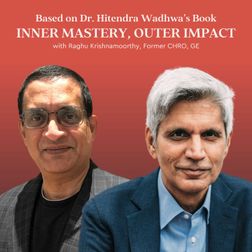
Raghu Krishnamoorthy and Hitendra Wadhwa on Why the Future of Leadership Lies Within

In this Intersections episode, Dr. Hitendra Wadhwa and Dr. Raghu Krishnamoorthy offer critical insights on: How we’re moving from a “find it out” world to a “figure it out” world What it takes to advance leadership from being business-centered to human-centered Moving beyond outer metrics to ground leadership in inner metrics How empathy and compassion can drive organizational performance Moving from “getting the most out” to “bringing the best out” of employees In the post-pandemic era, trends such as the “Great Resignation,” hybrid work and employee well-being are creating a paradigm shift in organizational culture. These trends require us to go back to the basics to redefine the model of what it means to be an exceptional leader. The way we lead today needs to evolve to embrace the new future of work, workers and the workplace. Based on Dr. Wadhwa’s recently published book, Inner Mastery, Outer Impact, we will examine how Inner Mastery could provide the foundation on which leaders can tackle these shifts for their organizations — as they manage people and drive performance, equip their managers with new skills and tools to tackle the accompanying challenges, and help employees operate in an ever-changing landscape of continued disruption. Raghu Krishnamoorthy is a seasoned global executive with 35+ years of experience in driving business outcomes as a Human Resources professional. He retired from General Electric (GE) as the CHRO in early 2019, after 25 years with the company — doing work that spanned three continents, several multi-billion-dollar lines of business, and exciting corporate leadership roles. At Mentora, Raghu serves as an Executive Director and Senior Faculty, driving pragmatic, application-oriented solutions for Mentora clients in learning and transformational change. Raghu is often sought out to share his expertise at leading universities and forums including Harvard, MIT, Yale, Columbia, the Economist and the Milken Institute. He has recently taken on the role of Director of the “Chief Learning Officer Executive Doctoral Program” at the University of Pennsylvania. His research has won the best paper award at the Academy of Business Research August conference. He was also named one of the top 50 Asian Americans in the world of business in 2009.

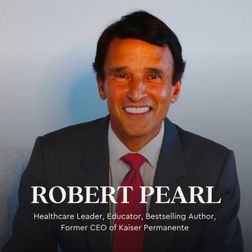
Robert Pearl on How the Culture of Medicine Kills Doctors and Patients

What can we learn from the powerful journey of a healthcare changemaker to bring reform and reinvention to our own professions? What cultural and systemic flaws exist in America’s healthcare system today? Why are physicians fast burning out, and how is it impacting the lives of patients and their treatment? What key lessons can the culture of medicine draw from business? And how can physicians be empowered to take full control of their own destinies, and serve their patients with greater impact? Listen to some powerful stories and insights, and actionable ideas from Dr. Robert Pearl in a stimulating conversation with Prof. Hitendra Wadhwa, exclusively on Intersections.
5 of 11