
The Liquidity Game

The Liquidity Game

by Wilder Brooks
Season 1

The Market You Can’t See: Dark Pools, Off-Exchange Trading and the Hidden Side of Liquidity

AI
In Episode 7 of The Liquidity Game, we investigate the hidden side of modern market structure: dark pools, alternative trading systems, internalization, and off-exchange trading. Why would an institution want to trade without showing its full order publicly? What exactly is a dark pool? How is an ATS different from an exchange? Why do wholesalers execute so much retail order flow away from public markets? And what happens when a massive institutional order needs to trade without advertising itself to every trader watching the book? We break down: dark pools, ATSs, off-exchange trading, midpoint execution, internalization, block trades, hidden liquidity, trade reporting, market impact, information leakage, fragmentation, price discovery, and the limits of Level 2. We also examine some of the biggest myths surrounding hidden liquidity: Does a huge dark-pool print mean an institution is buying? Are dark-pool trades invisible forever? Is off-exchange volume automatically bullish or bearish? Do dark pools exist to manipulate retail traders? Can institutions buy huge positions without moving price? And if Level 2 doesn’t show every buyer and seller, what exactly are traders seeing? The deeper question is: How do you understand price discovery when some liquidity is visible before the trade and some only becomes visible after it happens? The Liquidity Game — Markets. Risk. Psychology. Execution.

The Short Side: What Actually Happens When You Short a Stock?

AI
What actually happens when you short a stock? In Episode 6 of The Liquidity Game, we follow a short sale from the moment a trader presses Sell Short through the hidden securities-lending system that makes the trade possible. Where do the borrowed shares come from? Who owns them? What is a locate? Why do some stocks become hard to borrow? Why can borrow fees explode? What happens if the lender wants the shares back? And what does it really mean when short interest becomes extremely high? We break down: stock borrowing, locates, lenders, brokers, prime brokers, short-sale marking, hard-to-borrow inventory, borrow rates, utilization, recalls, forced buy-ins, settlement, fails to deliver, Regulation SHO, and the mechanics behind short squeezes. Then we investigate some of the most controversial claims in retail trading: Does high short interest guarantee a squeeze? Does 100% utilization mean no shares exist? Are fails to deliver evidence of illegal naked shorting? Can the same shares effectively support multiple layers of short exposure through legitimate market activity? And what actually forces a short seller to cover? The central question: When you sell a stock you don’t own, what machinery has to exist underneath that trade? The Liquidity Game: Markets. Risk. Psychology. Execution. For educational purposes only. Active trading involves substantial risk of loss.

Where Did My Order Go? Inside the Hidden Journey From Buy to Execution
AI
What actually happens after you press Buy or Sell? In Episode 5 of The Liquidity Game, we follow a retail stock order from the trading app all the way to execution and uncover the hidden market infrastructure operating in the background. Most traders imagine their order simply goes to “the stock market.” In reality, U.S. equities trade across a network of exchanges, market makers, wholesalers, alternative trading systems, and other execution venues. This episode explores: what happens after a retail order is submitted broker-dealers and smart order routing exchanges versus wholesalers market makers and internalization ATSs and off-exchange trading displayed versus hidden liquidity the National Best Bid and Offer price improvement market orders and limit orders queue position and execution probability slippage and thin liquidity maker-taker fees and exchange rebates payment for order flow best-execution obligations why two brokers may route similar orders differently why commission-free trading still has an economic model behind it why Level 2 does not show every source of liquidity what Rule 605 and Rule 606 disclosures can tell investors We also examine some of the biggest misconceptions in retail trading: Does every order go directly to Nasdaq or the NYSE? Does payment for order flow automatically mean worse execution? Do dark pools secretly control stock prices? And if the best displayed ask is $50.02, how can your order sometimes fill at a better price? The central question: When you click Buy, who actually receives your order and who decides where it gets filled? The Liquidity Game explores what happens beneath the chart: market structure, liquidity, risk, psychology, and execution. For educational purposes only. Active trading involves substantial risk of loss.

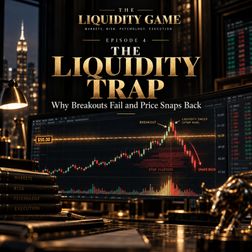
The Liquidity Trap: Why Breakouts Fail and Price Snaps Back

AI
Why does price sometimes break an obvious level, trigger a burst of buying or selling, and then suddenly reverse? In Episode 4 of The Liquidity Game, we investigate the market mechanics behind failed breakouts, liquidity sweeps, clustered stop orders, support and resistance, and trapped traders. We break down what can actually happen when price approaches a level everyone is watching—like a previous high, premarket high, opening-range level, round number, or VWAP and why the move through that level can accelerate before collapsing back the other way. This episode explores: why obvious price levels attract orders breakout buyers and short-covering stops stop-market vs. stop-limit orders aggressive vs. passive liquidity liquidity sweeps and thin order books slippage during fast markets absorption at breakout levels exhaustion and failed follow-through successful vs. failed breakouts trapped longs and trapped shorts failed breakdowns and short-covering reversals why high volume does not automatically confirm a breakout how Level 2 and Time & Sales may look during these events why low-float stocks can behave very differently from mega-caps and ETFs We also take a hard look at one of the most common claims in trading: “They hunted my stop.” Who exactly is “they”? Can market makers really see everyone’s stops? Does a move above a previous high prove manipulation or can clustered orders and normal liquidity mechanics explain much of what traders are seeing? The central question: When price breaks a level, how do you tell the difference between real acceptance and a liquidity trap? The Liquidity Game explores what actually happens beneath the chart markets, risk, psychology, execution, and the mechanics behind price movement. For educational purposes only. Active trading involves substantial risk of loss.

Reading the Tape: What Level 2 Really Tells You

AI
Can Level 2 actually show you where a stock is going or are traders reading far more into the order book than it really reveals? In Episode 3 of The Liquidity Game, we break down Level 2 market data, Time & Sales, order flow, and the mechanics behind what traders see flashing across their screens in real time. We explain, in plain English: Level 1 vs. Level 2 bids, asks, spreads, and market depth displayed vs. hidden liquidity aggressive vs. passive orders Time & Sales and trade prints absorption and exhaustion iceberg and reserve orders liquidity sweeps queue priority and cancellations NBBO and fragmented U.S. markets dark pools and off-exchange trading high-frequency market making spoofing and layering why a “huge bid” or “huge ask” can be misleading We also examine what traders call institutional footprints and ask a more important question: What can the tape actually tell you and what can it never tell you with certainty? Through hypothetical order-flow scenarios, we explore disappearing liquidity, repeated buying at the ask, large prints, stalled price action, replenishing orders, and sudden moves through thin books. The goal is not to turn Level 2 into a crystal ball. It is to understand what the order book represents, what it leaves out, and how liquidity really behaves in modern markets. The Liquidity Game explores market structure, risk, psychology, and execution, so traders can understand the machinery underneath the chart. Educational content only. Active trading involves substantial risk of loss.

The Opening Bell: Why the First Hour Trades Differently

AI
Why does the market feel completely different at 9:30 AM? In Episode 2 of The Liquidity Game, we break down what actually happens before and after the opening bell—and why the first hour can be the most active, volatile, and dangerous part of the trading day. We explain, in plain English: premarket trading and overnight gaps the opening auction and official opening price market-on-open and limit-on-open orders opening imbalances why spreads widen at the open liquidity, slippage, and market depth why high volume does not always mean deep liquidity market makers and adverse selection opening ranges and failed breakouts VWAP and how traders actually use it institutional execution and market impact why “all gaps fill” is a myth why beginners often get trapped in the first 30 minutes We also walk through several hypothetical opening scenarios from earnings gaps and reversals to failed breakouts and heavy-volume index trading to show what may be happening underneath the chart. The central question: Why can the exact same stock behave one way at 9:32 AM and completely differently at 11:30 AM? The Liquidity Game is about understanding market structure, risk, psychology, and execution before chasing setups. Educational content only. Active trading involves substantial risk of loss.

Why Prices Move: What Actually Happens When You Buy a Stock

AI
What actually makes a stock price move? In Episode 1 of The Liquidity Game, we go beneath the chart and break down the real mechanics of modern markets. If every trade has both a buyer and a seller, why does price still move sharply up or down? That question opens the door to understanding how the market actually works. We explain, in plain English: bids, asks, and the bid-ask spread market orders vs. limit orders liquidity and market depth Level 1, Level 2, and time & sales volume, volatility, and slippage market makers and price discovery why aggressive orders move price hidden liquidity and institutional execution opening auctions, halts, and short squeezes The goal of this episode is simple: understand what is happening underneath the chart before trying to trade it. The Liquidity Game is a podcast about active trading, market structure, risk, psychology, and execution without hype, fake gurus, or guaranteed-profit nonsense. Educational content only. Active trading involves substantial risk of loss.