In The Garden

In The Garden

by Gordon Clinton Williams, M.Ed.
Season 1

Genesis 32: When the Blessing Becomes the Man

Jacob wrestles with God — and walks away a new man. Genesis 32 reveals how God fulfills His blessing not just through abundance, but through transformation. In this episode, we journey with Jacob as he returns home after twenty hard years of exile, labor, and growth. Once a man who grasped blessings through deception, Jacob now finds himself surrounded by God’s unseen protection at Mahanaim — “God’s camp.” Angels meet him on the road, reminding us that God has gone before him, faithfully fulfilling the promise spoken years earlier by Isaac. But Genesis 32 is not about Jacob’s strategies or fears. It is about what God does. In the night, Jacob is left alone — and wrestles with a mysterious man until daybreak. Wounded yet clinging, Jacob refuses to let go without a blessing. In that moment, God changes his name from Jacob (“heel-grabber” and deceiver) to Israel — one who strives with God and prevails. This is where the blessing becomes more than wealth. This is where promise becomes identity. Jacob names the place Peniel, saying, “I have seen God face to face, and yet my life has been delivered.” Before facing Esau’s face, God graciously reveals His own — bringing deliverance, not destruction. Genesis 32 teaches us that God is faithful not only to provide, but to shape and transform the people who carry His promises. The years of struggle were not punishment — they were preparation. The blessing was always coming, but so was the refining work of God. If you’ve ever wrestled through seasons of waiting, hardship, or change, this episode will remind you that God is at work — fulfilling His promises and forming your heart. Keywords: Genesis 32, Jacob wrestles with God, blessing fulfilled, Mahanaim, Peniel, transformation, Jacob becomes Israel, God’s faithfulness, spiritual growth, Biblical promise, wrestling with God, Old Testament podcast 👉 Call to Action: If this episode encouraged you, share it with a friend, leave a review, and follow the podcast for more journeys through Scripture that reveal God’s faithfulness from Genesis to Jesus. Scriptures Referenced: Genesis 27:28–29, 39–40 Genesis 32:1–2, 24–30 Genesis 33:9–11

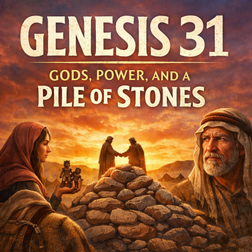
Genesis 31: Gods, Power, and a Pile of Stones

Gods were stolen. Power was challenged. And a pile of stones became a treaty before God. In Genesis 31, a family conflict reveals deep truths about idolatry, manipulation, and how God establishes justice across cultures. In this episode, we walk through Jacob’s departure from Laban after twenty years of labor and tension, uncovering the spiritual and cultural layers beneath the story. We begin with Rachel’s theft of the household gods (teraphim)—objects that symbolized protection, inheritance, and authority in the ancient world. Though God had clearly blessed Jacob, Rachel clung to old securities, revealing how faith often grows slowly. Even as God leads us forward, we’re tempted to keep “backup plans” tucked away in our hearts. Next, we examine Laban’s bold claim of ownership over Jacob’s wives, children, and flocks. While such language reflected ancient patriarchal culture, Laban was using tradition to justify control and exploitation. Jacob had fulfilled every obligation—yet Laban leaned on power and custom to manipulate. Scripture quietly exposes this misuse of authority, reminding us that God stands against oppression, even when it’s hidden behind cultural norms. Finally, we explore the powerful moment of reconciliation marked by a heap of stones named in two languages—Jegar-sahadutha in Aramaic and Galeed in Hebrew—both meaning “Heap of Witness.” In a divided world shaped by Babel, this cross-cultural monument becomes a treaty of peace, declaring that God Himself is witness and judge between them. Genesis 31 isn’t just a family drama. It’s a story of God freeing His people from idols, breaking cycles of manipulation, and establishing boundaries rooted in truth and accountability. ✨ What false securities do we cling to? ⚖️ Where do we use power or tradition to control others? 🪨 And where is God calling us to trust Him as our witness? 👉 Listen now, share with a friend, and join the conversation as we continue exploring the deep wisdom of Genesis. Scriptures Referenced: Genesis 30 Genesis 31:1–55 Genesis 31:14–16 Genesis 31:19 Genesis 31:32 Genesis 31:43 Genesis 31:47–52 Genesis 11:1–9

Genesis 30: Sticks, Sheep, Sisters, and the Providence of God

What happens when family rivalry, human scheming, and superstition collide in the midst of God’s promises? In Genesis 30, we find Jacob navigating wives, maids, children, and flocks with unusual methods—and yet God’s providence shines through every messy moment. This episode of In The Garden dives into one of the most colorful and chaotic chapters in Scripture. From Rachel and Leah’s competition over children to Jacob’s striped sticks and multiplying flocks, we explore how God works through human weakness, mischief, and even superstition to fulfill His covenant promises. We’ll uncover the spiritual truth hidden behind these strange agricultural practices and see how growth—both in family and in flocks—ultimately comes from God’s hand, not human tricks. What You’ll Learn in This Episode: The family dynamics of Jacob, Leah, Rachel, Bilhah, and Zilpah, and how God’s plan progresses despite rivalry. The meaning behind Jacob’s “rod technique” and why it points to God’s providence, not superstition. How Genesis 30 demonstrates that God can bring life, growth, and blessing through flawed, messy, and scheming people. Insights on faith, trust, and God’s faithfulness even in the dirt of everyday life. Keywords: Jacob, Genesis 30, Rachel, Leah, Bilhah, Zilpah, family rivalry, Bible study, providence of God, God’s faithfulness, parenting, spiritual growth, superstition, shepherding, agricultural themes, covenant promises. Call to Action: Take a moment today to reflect: How might God be working in your life through the “messy” parts—through relationships, plans, or mistakes that feel chaotic or out of control? Listen closely for His providence. And if this episode encouraged you, share it with someone who might need a reminder that God’s blessing often grows in unexpected ways. Scriptures Referenced in This Episode: Genesis 30:1–43 ESV – Jacob’s family, the rivalry of the sisters, and the multiplying flocks. Genesis 31:1–55 ESV – God’s hand in protecting and prospering Jacob despite Laban’s schemes.

Genesis 29: Flawed People, Faithful God

What happens when human sin, jealousy, and deception collide with God’s covenant plan? In Genesis 29, Jacob is tricked into marrying two sisters, Laban manipulates his own family for profit, and love and rivalry collide in a messy household. Yet, in the midst of human brokenness, God’s faithfulness shines through—Leah bears Judah, the son through whom the covenant and redemption will continue. In this episode of In The Garden, we explore how God works through imperfect, flawed people to accomplish His perfect purposes. Jacob, Leah, Rachel, and Laban are not role models to emulate—the Bible shows their failures, not to praise them, but to point us toward our ultimate Redeemer, Jesus Christ. This story reminds us that God’s covenant never depends on human perfection, only on His faithfulness. What You’ll Learn in This Episode: Why Genesis 29 is messy and morally complex, and why that matters. How God uses the overlooked, unloved, and flawed to advance His covenant. Why none of these characters—Jacob, Leah, Rachel, or Laban—should serve as role models. How Judah’s birth points forward to the line of David and ultimately to Jesus, the perfect Redeemer. How the Bible’s honest portrayal of sin teaches us our need for God’s grace. Keywords: Genesis 29, Jacob, Leah, Rachel, Laban, Judah, flawed people, faithful God, covenant, messiness, redemption, Bible study, Jesus, Redeemer Call to Action: Notice the mess, recognize God’s faithfulness, and reflect on your need for a Savior. Share this episode with someone who might feel discouraged by their own imperfections—God’s covenant moves forward even through broken lives. Subscribe to In The Garden to explore more stories of God’s faithfulness throughout Scripture. Scriptures Referenced: Genesis 29:1-35, 30:1-24

Genesis 28: Jacob's Ladder

He slept on a stone—and heaven opened. Jacob’s turning point comes not through striving, but through grace that meets him in the wilderness. In this episode of Genesis 28: Jacob’s Ladder, we explore the powerful contrast between Esau’s pattern of regret without obedience and Jacob’s journey from grasping for blessing to receiving God’s promise. Esau settles into the land through his three marriages—first to Hittite women who grieve his parents, then to a daughter of Ishmael in a self-directed attempt to fix his mistake. Each choice reveals a heart rooted in the present rather than the promise. Jacob, by contrast, obeys his father and leaves everything familiar behind. Alone in the night, with nothing but a stone for a pillow, God meets him in a dream of a ladder stretching from earth to heaven, angels ascending and descending, and the Lord reaffirming the covenant of land, offspring, blessing, and presence. This moment marks Jacob’s shift—from striving to secure his future to learning to trust God’s faithfulness. Yet Jacob’s response also reveals a common human error. He marks the stone, names the place Bethel, and treats the location as sacred—localizing God’s presence rather than embracing the promise that God will be with him wherever he goes. This instinct to contain God becomes the root of many forms of idolatry: turning encounters into objects, places into shrines, and reminders into replacements. We also connect Jacob’s ladder to Jesus’ words in the Gospel of John, where Christ reveals Himself as the true bridge between heaven and earth. Key themes include: • Sojourner vs settler faith • Regret vs obedience • Grace that meets us in exile • The danger of localizing God’s presence • God’s covenant faithfulness • Jesus as the true ladder between heaven and earth If this episode encouraged you, share it with a friend, subscribe to the podcast, and leave a review to help others discover the story that leads to Jesus. Scriptures referenced: Genesis 26:2, 34–35 Genesis 27:46 Genesis 28:1–2, 8–22 Hebrews 12:16–17 John 1:51

Genesis 27: Birthright & Blessing

What if one quiet choice could shape an entire future—and one painful moment reveal its cost? In Genesis 25 and 27, the birthright and blessing form one powerful story of appetite, promise, deception, and God’s unstoppable plan. In this episode, we trace the conflict between Jacob and Esau across two defining moments—the private exchange of the birthright and the public struggle over the blessing. These are not competing stories, but one unfolding movement of God’s will advancing through imperfect people. Esau, driven by hunger and immediacy, despises his birthright for a single meal. Jacob, focused on inheritance and promise, secures what will shape generations to come. Years later, when the blessing is spoken, tears replace stew, and the consequences of earlier choices come into full view. We explore how: The birthright was willingly exchanged, not stolen The blessing confirmed what God had already declared before the twins were born Isaac attempted to bless against God’s revealed will Esau sought the benefits of inheritance without valuing the promise Jacob acted wrongly in pursuit of the right future This episode also follows Jacob’s long road of transformation—how the deceiver would one day wrestle with God, be humbled through suffering, receive a new name, and become Israel, the father of the Twelve Tribes. Through this story, we see a timeless tension between living for what feels urgent and living for what will last. God’s purposes move forward, not because people are perfect, but because His promises are faithful. Like Jacob and Esau, every generation—and every heart—faces the choice between flesh and future, appetite and inheritance, regret and repentance. Listen, reflect, and share this episode with someone who’s wrestling with hard choices today. Subscribe for more journeys through Scripture that reveal God’s story leading to Jesus. Keywords: Genesis 27, Jacob and Esau, birthright and blessing, Bible study podcast, Old Testament teaching, God’s sovereignty, imperfect people, flesh vs spirit, biblical archetypes, Christian discipleship, spiritual inheritance Scriptures Referenced: Genesis 25:23, 27–34; Genesis 27:1–38; Romans 8:6; Mark 8:36

Genesis 26: Still a Sojourner

Blessed but unsettled? Digging wells in land you don’t yet own is the life of faith. In Genesis 26, Isaac teaches us how God works in seasons of waiting, resistance, and quiet perseverance. In this episode of In The Garden, we walk through Genesis 26 and discover a powerful pattern in how God’s people live between promise and possession. Isaac is born in the Promised Land, yet remains a sojourner—raising flocks, building altars, and digging wells without owning the land itself. Wells in the ancient world were acts of faith, bringing water, life, and stability where none existed before. Abraham had dug these wells years earlier, improving the land and blessing the region. But after his death, the Philistines deliberately filled them in, undoing the good work. This was more than a land dispute—it was resistance to God’s blessing and an attempt to erase Abraham’s legacy. When Isaac faces fear and opposition, even repeating his father’s mistake with Abimelech, we see that his fear was real and understandable. Living as a foreigner without legal protection, Isaac knew how fragile peace could be. Yet God meets him in the night with a simple promise: “Fear not, for I am with you.” Instead of fighting for control, Isaac rebuilds. He re-digs the wells. He brings life back where it had been buried. And eventually, even his enemies recognize the Lord’s favor and seek peace. This episode reminds us that God often calls His people to improve places they do not yet own—to pour into relationships, communities, and ministries even when others may resist or undo the work. Sojourning is not failure. Waiting is not abandonment. God’s blessing often shows up long before full possession. If you’ve ever felt blessed but unsettled, called but still waiting, this message is for you. Keywords: Genesis 26, Isaac, Abraham, wells, sojourner, faith journey, God’s promises, perseverance, biblical teaching, In The Garden podcast, spiritual growth, waiting on God, living water, peace in trials Call to Action: If this episode encouraged you, share it with a friend who may be walking through a season of waiting. Subscribe to In The Garden for weekly Bible-centered reflections, and leave a review to help others discover the journey through Scripture. Scripture References: Genesis 26:1–35; Genesis 23:17–20; Genesis 21:22–34; John 4:13–14

Genesis 25: First Chapter of Jesus's Story

Genesis isn’t just the beginning of the Bible; it is the opening chapter of Jesus’ story. In Genesis 25, we see how God carefully carries His covenant promise forward, revealing a narrative that leads straight to Christ. In this episode of In The Garden, we explore a quiet but powerful moment in Scripture where Abraham’s later sons are named and then released from the central story, while Isaac alone receives the full inheritance. Though Abraham fathers many nations, the biblical narrative narrows intentionally — not because God forgets the others, but because He is guiding one redemptive story toward its fulfillment in Jesus. We reflect on how Genesis is not simply ancient history or cultural tradition, but the beginning of God’s rescue plan for humanity. The sons of Keturah are blessed and become peoples of the East, yet the covenant promise moves forward through Isaac, then Jacob, and ultimately to Christ. This selective storytelling shows us that the Bible is focused not on recording everything, but on revealing God’s purpose. Jesus Himself tells us that Abraham rejoiced to see His day — a reminder that even the earliest chapters of Scripture were pointing ahead to the Savior. What may seem like fading genealogies are actually signposts in a carefully guided narrative of redemption. This episode reminds us that without Jesus, the Bible could be read as just another ancient story. But with Him, it becomes the unfolding revelation of God coming to dwell with and redeem His people. Keywords: Genesis 25, Abraham, Isaac, covenant promise, genealogy, redemption story, Jesus in Genesis, biblical narrative, Old Testament fulfillment, Christ-centered Scripture Call to Action: Join us each week for In The Garden in the Monahans News and daily on KCKM 1330 AM as we walk through Scripture together. Share this episode with a friend, reflect on how Genesis points to Jesus, and consider how your own story fits into God’s greater plan. Scriptures Referenced: Genesis 25:1–6 John 8:56 Galatians 3:16

Genesis 25: The Family Tree Behind the Promise

Genesis is filled with names, but only one line carries the promise forward. In this episode, we explore Abraham’s wide family tree and the single covenant thread that leads to Jesus. Genesis 25 often feels like a chapter of passing details — sons born, tribes formed, nations spreading across the ancient world. But beneath the surface, God is doing something intentional and profound. Abraham fathers many sons. Through Keturah come six families who settle eastward. Through Hagar comes Ishmael, whose twelve sons become princes and nations in fulfillment of God’s promise to bless him. These are not forgotten people. They are real families, real histories, real blessings. Yet the covenant promise — the line through which redemption will come — does not branch outward. It moves forward. “All that Abraham had, he gave to Isaac.” The story narrows. From Isaac come two sons, Esau and Jacob. Esau becomes the father of Edom, a nation strong and enduring. Jacob becomes the father of the twelve tribes of Israel. Though both are blessed, only one inherits the birthright — the promise that began in Abraham and will one day reach its fulfillment in Christ. Genesis 25 paints a rich tapestry of humanity surrounding the covenant story. God blesses many nations, but He guides one lineage carefully, generation by generation, toward redemption. Centuries later, Luke will trace that same line backward — from Jesus, through David, through Abraham, all the way to Adam. Genesis looks forward. Luke looks back. Both testify to the same truth: God has been telling one saving story all along. Jesus Himself confirms it: “Your father Abraham rejoiced that he would see my day. He saw it and was glad.” This episode invites us to see Genesis not as scattered ancient history, but as the opening movement of the gospel — a story of blessing that spreads wide, and a promise that flows straight to Christ for the sake of all nations. If God has been patiently guiding history toward redemption, then your story is not random either. You are being drawn into something far greater than you can yet see. Keywords: Genesis 25, Abraham’s sons, Keturah, Ishmael twelve princes, Jacob and Esau, birthright, covenant promise, lineage of Jesus, Luke genealogy, biblical narrative, redemption story, Jesus in Genesis, In the Garden podcast Call to Action: If this episode encouraged you, share it with a friend and join us as we continue tracing the one story that leads to Jesus. Follow, subscribe, and reflect with us each week as Scripture unfolds God’s great plan of redemption. Scriptures Referenced: Genesis 25:1–6 Genesis 25:12–18 Genesis 25:27–34 Luke 3:23–38 John 8:56 Galatians 3:16

Genesis 24: The Faithfulness That Carries the Promise

Quiet faith often carries God’s greatest promises forward. In Genesis 24, we discover how God’s steady faithfulness works through prayer, obedience, and ordinary kindness to secure the future of His covenant. Genesis 24 may seem like a simple love story, but it is a powerful turning point in the biblical narrative. As Abraham nears the end of his life, he entrusts God’s promise to a faithful servant and sends him on a long journey to find a wife for Isaac. What unfolds is not a tale of chance, but a beautiful display of God’s steadfast love guiding every step. We watch Abraham rest in God’s promises, confident that the Lord will go before his servant. We see the unnamed servant pray with humility, observe with discernment, and worship before the mission is even complete. At a well in a foreign land, Rebekah’s generosity and strength reveal a heart prepared by God to carry the covenant forward. Meanwhile, Isaac waits quietly in the land of promise, reminding us that God’s work is not always advanced through bold action, but through trust and faithful obedience. This chapter teaches us that God’s faithfulness does not only appear in dramatic miracles—it moves through long journeys, patient prayer, unseen service, and everyday acts of kindness. Even in seasons that feel slow or ordinary, God is actively keeping His promises. If you’re walking through a quiet season of life, Genesis 24 offers encouragement: God has not stopped working. He is still guiding, providing, and carrying His purposes forward—one faithful step at a time. Keywords: Genesis 24, Abraham, Isaac and Rebekah, God’s faithfulness, biblical covenant, prayer and obedience, providence, Old Testament study, Bible podcast, trusting God, servant leadership If this episode encouraged you, share it with someone walking through a waiting season, leave a review, and follow the podcast for more Scripture-centered reflections. Scripture References: Genesis 24:1–67 (with emphasis on Genesis 24:7, 24:12–27, 24:48, 24:63–67)
6 of 10