
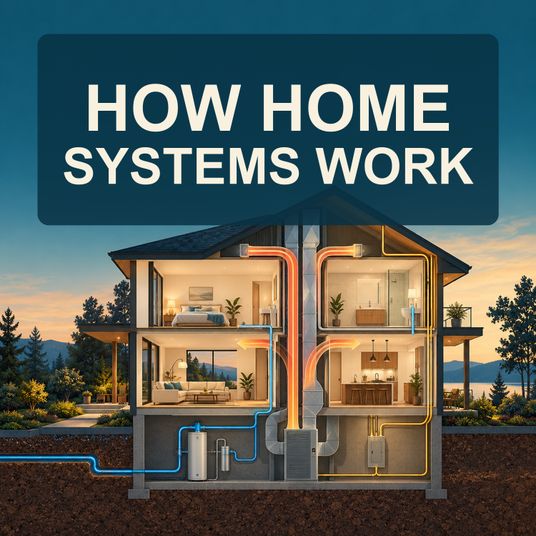
Open a hot-water tap and pressure in the home plumbing pushes heated water out of the tank. At the same time, cold replacement water enters through a tube that directs it toward the lower part of the tank. Heating resumes as stored energy leaves with the hot water and the incoming water lowers the tank temperature. General education only, not repair, installation, inspection, or code-compliance advice. Use qualified professionals and local requirements when action is needed. Sources and further reading: - U.S. Department of Energy, Water Heating: https://www.energy.gov/topics/water-heating - U.S. Department of Energy Building Science Education, Gas Storage Water Heaters: https://bsesc.energy.gov/energy-basics/gas-storage-water-heaters - U.S. Department of Energy, Sizing a New Water Heater: https://www.energy.gov/energysaver/sizing-new-water-heater
Insulation does not create heat, and it does not permanently trap it. It slows the rate at which thermal energy crosses the building enclosure. Tiny pockets of air resist conduction and convection. Reflective surfaces can reduce radiant exchange in the right configuration. Air sealing limits warm air from carrying heat through cracks. General education only, not repair, installation, inspection, or code-compliance advice. Use qualified professionals and local requirements when action is needed. Sources and further reading: - U.S. Department of Energy Building Science Education, Types of Insulation: https://bsesc.energy.gov/energy-basics/types-insulation-0 - U.S. Department of Energy, Guide to Home Insulation: https://www.energy.gov/sites/prod/files/guide_to_home_insulation.pdf - U.S. Department of Energy, Air Sealing Your Home: https://www.energy.gov/energysaver/air-sealing-your-home
A circuit breaker does not primarily protect an appliance. It protects the wiring from carrying more current than the circuit is designed to handle. Too much current heats conductors. Enough heat can damage insulation and surrounding material. The breaker watches the electrical path indirectly and opens its contacts when current stays too high or rises suddenly during a fault. General education only, not repair, installation, inspection, or code-compliance advice. Use qualified professionals and local requirements when action is needed. Sources and further reading: - U.S. Consumer Product Safety Commission, Guide to Home Wiring Hazards: https://www.cpsc.gov/s3fs-public/518.pdf - U.S. Consumer Product Safety Commission, Home Electrical Safety Checklist: https://www.cpsc.gov/safety-education/safety-guides/electronics-and-electrical-home/home-electrical-safety-checklist - National Institute of Standards and Technology, Circuit Breaker Basics: https://www.nist.gov/how-do-you-measure-it/how-does-circuit-breaker-work
A heat pump does not make winter heat by turning electricity directly into warmth at the indoor unit. It moves thermal energy. In summer, it collects heat from indoor air and releases it outdoors. In winter, a reversing valve changes the refrigerant path so the system can collect available heat outside and release it inside. General education only, not repair, installation, inspection, or code-compliance advice. Use qualified professionals and local requirements when action is needed. Sources and further reading: - U.S. Department of Energy, Heat Pump Systems: https://www.energy.gov/energysaver/heat-pump-systems - U.S. Department of Energy, Air-Source Heat Pumps: https://www.energy.gov/energysaver/air-source-heat-pumps