Full AP Course Review

Full AP Course Review

by Savant
Season 1

AP World History Modern Unit 8 Part B: Cold War & Decolonization (Part B)
This episode breaks down the origins of the Cold War and the simultaneous wave of decolonization after 1945, showing how superpower rivalry and the collapse of European empires reshaped the modern world. Listeners will see why the United States and Soviet Union moved from wartime allies to ideological enemies and how that tension influenced independence movements across Asia, Africa, and the Middle East.

S08E15 AP World History Modern Unit 8 Cold War and Decolonization Part A
In this episode of our Full AP Course Review podcast, we begin Unit 8 by exploring the origins of the Cold War between the United States and the Soviet Union after World<|eos|>

AP World History Modern Unit 7 Part B: Shifting Global Power After 1900
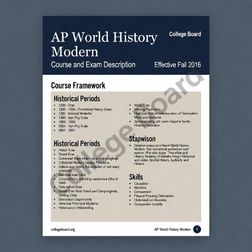
This episode continues our deep dive into AP World History Modern Unit 7 by examining how industrialization, nationalism, and imperial decline reshuffled global power after 1900. Listeners will see why rising nations such as Germany, Japan, and the United States challenged the old order and how those shifts set the stage for the world wars and beyond.

AP World History Modern Unit 7 Part A: Shifting Power After 1900
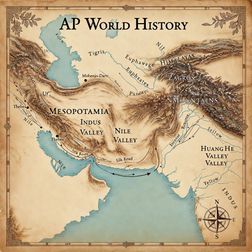
This episode launches Unit 7 of AP World History: Modern by examining how industrialization, nationalism, and imperial decline reshaped global power after 1900. We trace the rise of Germany, Japan, and the United States alongside the weakening of the Ottoman, Qing, and Austro-Hungarian empires, setting the stage for the conflicts that follow.

AP World History Modern Unit 6 Part B: Consequences of Industrialization
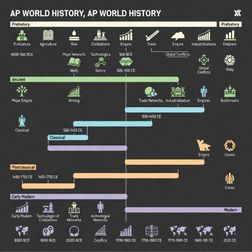
This episode unpacks why the Industrial Revolution began in Britain and how coal, capital, and steam power created an accelerating feedback loop that reshaped global production. Listeners will trace the textile innovations and iron-coal cycle that powered urbanization and set the stage for later social transformations.

AP World History Modern Unit 6 Part A: Industrialization Begins (Part A)
In this episode of Full AP Course Review, we launch into Unit 6 of AP World History Modern by exploring why the Industrial Revolution began in Britain and how textile innovations and steam power set off a self-reinforcing cycle of iron, coal, and factories. Listeners get a clear breakdown of the specific geographic, economic, and political conditions that made Britain the launchpad for industrialization.

AP World History Modern Unit 5 Part B: Scientific Revolution & Enlightenment (Part B)
In this episode of Full AP Course Review, we tackle Unit 5 Part B by unpacking the Scientific Revolution and its pivotal role in reshaping European thought between 1543 and 1700. Listeners will discover how Copernicus, Galileo, Kepler, Newton, Bacon, and Descartes transformed the way humans understood nature, authority, and knowledge itself. The discussion also highlights the exam traps and cross-unit connections that frequently appear on the AP World History Modern test.

AP World History Modern Unit 5 Part A: Scientific Revolution & Key Thinkers (Part A)
In this episode of Full AP Course Review, we kick off AP World History Modern Unit 5 by exploring the Scientific Revolution—a seismic shift in how Europeans understood nature, authority, and knowledge itself between 1543 and 1700. We break down the transition from deductive, scripture-based reasoning to empirical observation and experimentation, spotlighting the key figures and ideas that set the stage for the Enlightenment and political revolutions.

AP World History Modern Unit 4 Part B: Transoceanic Technology 1450-1750

In this episode of our AP World History Modern series, we dive into the technological breakthroughs that made transoceanic travel and global empires possible between 1450 and 1750. From maritime innovations like the lateen sail and caravel to gunpowder weapons and the printing press, you'll see how borrowed technologies fueled European expansion and reshaped world power.

S01E06 Microeconomics: Efficient vs Inefficient Markets

In this episode of Full AP Course Review, we dive into Unit 6.1: Socially Efficient and Inefficient Market Outcomes. Learn the precise definition of social efficiency (MSB = MSC), why competitive markets achieve it without externalities, and how market failures like negative and positive externalities create deadweight loss through over- or underproduction. Master the graphs and concepts to ace AP Microeconomics exam questions on efficiency vs. equity. Key Topics Covered:Socially efficient markets: MSB = MSC and maximized total surplus Competitive market benchmark: Equilibrium as the efficiency ideal Market failure basics: Overproduction and underproduction Negative externalities (e.g., pollution) and their graphs Positive externalities (e.g., gardens) and deadweight loss triangles Drawing step-by-step graphs for AP exam success What You'll Learn:Grasp why efficiency isn't fairness, identify deadweight loss on supply-demand graphs, and differentiate marginal private vs. social benefits/costs. Perfect for scoring points on multiple-choice and FRQs testing these core distinctions. Whether you're prepping for the AP exam or understanding real-world economics, this episode equips you to analyze market outcomes like a pro. AP Microeconomics, socially efficient markets, inefficient outcomes, market failure, externalities, deadweight loss, MSB MSC, allocative efficiency, negative positive externalities, AP exam graphs Subscribe to Full AP Course Review for complete AP prep across all subjects!
6 of 7