
How your heartbeat flushes brain waste
Episode notes
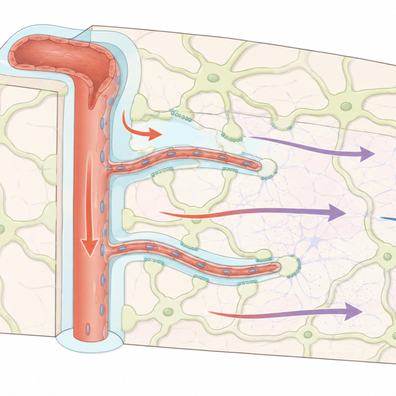
The glymphatic system is a macroscopic waste clearance network that utilizes perivascular channels created by astroglial cells to eliminate neurotoxic metabolites, such as amyloid-β, from the central nervous system. Because the brain lacks traditional lymphatic vessels, it relies on the continuous exchange between cerebrospinal fluid (CSF) and interstitial fluid (ISF) to maintain homeostasis.
According to the primary framework, the system operates through three segments: periarterial influx of CSF, parenchymal exchange facilitated by aquaporin-4 (AQP4) water channels on astrocyte endfeet, and perivenous efflux of waste-laden fluid.
The mechanical energy for this clearance system is provided by the cardiovascular system, which acts as the engine driving fluid through the brain.
The following references were used to create the podcast:
- Hauglund, N. L., et al. (2025). Norepinephrine-mediated slow vasomotion drives glymphatic clearance during sleep. Cell, 188, 606–622.
- Astara, K., et al. (2023). A novel conceptual framework for the functionality of the glymphatic system. Journal of Neurophysiology, 129, 1228–1236.
- Jessen, N. A., et al. (2015). The Glymphatic System – A Beginner's Guide. Neurochemical Research, 40(12), 2583–2599.
- Rasmussen, M. K., et al. (2022). Fluid transport in the brain. Physiological Reviews, 102, 1025–1151.
- Soldozy, S., et al. (2022). Interplay between vascular hemodynamics and the glymphatic system in the pathogenesis of idiopathic normal pressure hydrocephalus, exploring novel neuroimaging diagnostics. Neurosurgical Review, 45, 1255–1261.
- Hladky, S. B., & Barrand, M. A. (2022). The glymphatic hypothesis: the theory and the evidence. Fluids and Barriers of the CNS, 19:9.