
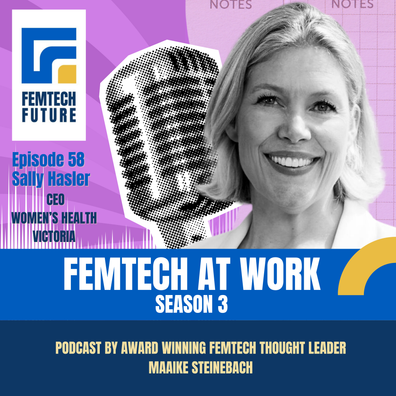
What a Fair Health System for Women Looks Like: Insights from Women’s Health Victoria
Episode notes
What happens when a state decides women’s health is non‑negotiable?
Today at FemTech at Work,we have Sally Hasler, CEO of Women’s Health Victoria, to unpack how one Australian state is using policy, research, and partnership to close the gender health gap. From chronic pain and reproductive coercion to AI-driven access and corporate responsibility, this conversation shines a light on what real systems change for women’s health can look like when government, healthcare, femtech, and philanthropy finally pull in the same direction.
If you care about women’s health, femtech, policy change, or just want to understand what it takes to redesign an entire system around equity, this episode is a powerful, practical roadmap.
Key Takeaways:
- How did Sally’s journey from government to the Women’s Foundation in Hong Kong to Women’s Health Victoria shape her mission to tackle gender inequity in health
- What does it really mean in practice when a health system stops treating women as “small men” and starts including sex and gender in every layer of research and care
- How is the Victorian government using policy, funding, and mandatory research requirements to close the gender health gap, and what can other countries understand from this approach
- In what ways does gender-based violence, including reproductive coercion, quietly shape women’s mental and physical health outcomes and how can systems change disrupt this
- How can corporates and insurers learn to apply a gender lens to products, policies, and workplaces so women aren’t penalised for seeking mental health or reproductive care
- Why do women spend up to nine years of their working lives in poor health, and what insights can we gain about the critical role workplaces play in shifting this reality
- In what ways could responsible AI help women anonymously access sexual and reproductive health information 24/7, and what safeguards are needed to avoid amplifying bias
Resources:
Sally Hasler: LinkedIn
Women’s Health Victoria: LinkedIn
Women’s Health Victoria: https://www.whv.org.au/
Maaike Steinebach: LinkedIn
Website Femtech Future https://www.femtechfuture.com
Instagram Femtech Future: @femtech_future
In a world where women are still treated as medical afterthoughts, conversations like this are not just interesting. They’re urgent! Sally’s work in Victoria shows that when we centre women’s lived experiences, demand evidence-based change, and embrace responsible femtech, we don’t just tweak the system, we rewrite it.
If this episode opened your eyes or gave you language for your own story, don’t let it stop here. Share this conversation with a friend, colleague, or policymaker who needs to hear it. Like the episode, leave a review so more people can discover these voices of change, and help us grow a global community that refuses to accept the gender health gap as inevitable.
Thank you for listening! Be part of the movement, keep the conversation going, and I’ll see you next week for another episode spotlighting the people who are reshaping the future of women’s health.