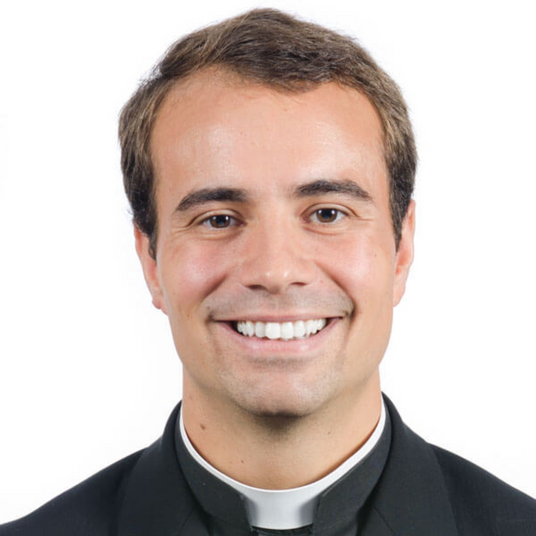
Father Jegar

Father Jegar

by Father Jegar Fickel
Season 1

2022 First Sunday of Lent

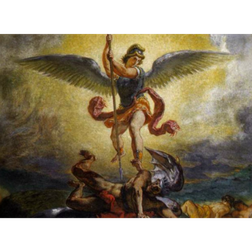
If we ignore that we are in a spiritual battle, we will become a pawn in Satan’s hand. In this compelling homily for the first Sunday of Lent, Father Jegar Fickel emphasizes the perennial challenge of spiritual warfare that faces every Christian. He explains that each Lent, we revisit Jesus’ temptation in the desert as a reminder of our own ongoing struggles against spiritual evils. Father Jegar outlines the Church's teaching on the reality of angels and demons, affirming that our daily experiences are influenced by these unseen forces. He draws on Saint Ignatius of Loyola’s discernment of spirits to explain how demons can disrupt or pacify us, depending on our spiritual state, to steer us away from God's will. Highlighting the importance of self-awareness in spiritual life, Father Jegar urges us to acknowledge and confront the ways in which evil spirits attempt to destabilize or numb us to God's presence. He points out that our responses to these temptations shape our spiritual journey and can either lead us toward or away from our divine calling. This homily invites us to use Lent as a time to fortify ourselves against spiritual attacks through prayer, fasting, and the sacraments, especially the Eucharist. Father Jegar calls on the congregation to engage more deeply with our faith to effectively combat the spiritual desolation that can so easily entrap us in the secular world.

2022 Ash Wednesday

Lent is a season of return, returning to the source of one’s very existence, and in so doing, to one’s authentic self. In this profound homily, Father Jegar Fickel invites us to enter the Lenten season with a spirit of introspection and renewal. He emphasizes the importance of recognizing our own faults and the necessity of experiencing personal salvation before we can truly help others. Father Jegar discusses the common human tendency to judge others while being blind to our own greater faults, using the metaphor of noticing a splinter in a brother's eye while ignoring the wooden beam in our own. He explains that Jesus’ teachings about judgment are not an injunction against discernment but a call to first undergo a deep personal transformation. This transformation involves recognizing and embracing our own brokenness, which allows us to experience God's saving grace. By advocating for a return to confession and the sacraments, Father Jegar underscores the need for a tangible experience of God's forgiveness. He argues that it is only after we have faced our own 'wretchedness' and received divine love in those places that we can begin to be vessels of true love and salvation for others. As we prepare for the Eucharist, Father Jegar challenges each of us to confront our own imperfections, not as a cause for despair, but as an opportunity for encountering God's transformative love. This Lent, we are called not just to abstain from certain pleasures but to engage deeply with our spiritual poverty, allowing Christ’s redemptive love to restore and refresh our hearts, making them wells of goodness for the world.

2022 Eighth Sunday in Ordinary Time

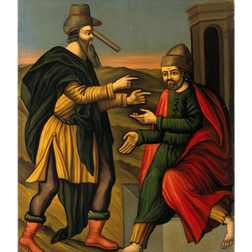
To become a vessel of salvation for another, I must first taste salvation myself. In this insightful homily, Father Jegar Fickel delves into the human tendency to judge others while overlooking our own shortcomings. He beautifully connects this to the Gospel message that emphasizes the importance of self-reflection and personal transformation before attempting to correct others. Father Jegar challenges us to confront our own 'wooden beams'—the significant faults within us—before addressing the 'splinters' in the eyes of our brothers and sisters. This process isn't just about self-improvement but about experiencing God's saving grace personally. By acknowledging our weaknesses and experiencing God's mercy, we become equipped to genuinely help others on their spiritual journey. This homily invites us to explore what salvation truly means in our lives. It isn't just about following rules or performing religious duties; it's about encountering God's unconditional love in our deepest failures and letting that love transform us. Father Jegar encourages us to embrace the sacrament of confession not merely as a duty but as a profound encounter with God's mercy, where we hear the liberating words: "Your sins are forgiven." As we prepare to receive the Eucharist, Father Jegar calls on each of us to reflect deeply on our need for God's grace. By admitting our brokenness and allowing God to work through our imperfections, we can truly become vessels of His love and salvation to the world.
2022 Sixth Sunday in Ordinary Time

There is always the temptation to prefer heaven on earth rather than Heaven itself. In this reflective homily, Father Jegar Fickel confronts this alluring but misguided desire. Using the poignant story of his sister-in-law's life-threatening ordeal, he illustrates how such harrowing experiences force us to reevaluate our perceptions of comfort and security. Father Jegar delves into the Beatitudes, which redefine the concept of blessedness through the lens of Christian suffering and longing for the divine. He challenges us to consider whether we are too attached to the idea of creating a perfect life on earth, at the expense of pursuing the true and eternal Heaven. The homily calls on the faithful to shift focus from the fleeting pleasures of this world to the everlasting happiness promised in the next. As we approach the Eucharist, the food for our journey, Father Jegar encourages a deep contemplation of our spiritual trajectory. He urges us to embrace the trials and tribulations of life not as obstacles, but as pathways to greater holiness and closeness to God, reminding us that our ultimate fulfillment can only be found in the Heavenly Kingdom.

2022 Fifth Sunday in Ordinary Time

Where have I placed parameters around Christ? In this transformative homily, Father Jegar Fickel challenges us to examine the limits we place on Christ's presence and action in our lives. Drawing on the Gospel story of Jesus entering Peter's boat and directing him to cast the nets into the deep, Father Jegar vividly illustrates how we often treat our relationship with Christ by setting boundaries and conditions, much like keeping parts of our house off-limits to guests. He invites us to consider how, like Peter, we might be reluctant to let Christ fully into our 'boats'—our personal lives, fears, dreams, and the hidden corners of our hearts. Father Jegar encourages us to trust Christ's command to venture into the deep, beyond our comfort zones, where true faith and reliance on God are tested. This homily calls us to break free from our self-imposed limitations and to allow God's grace to invade every aspect of our lives, promising that when we do open ourselves fully to Him, Christ responds with abundance beyond our expectations. Father Jegar invites us to reflect on where we might be saying, "Lord, you can come this far, but no further," and to pray for the courage to dismantle those barriers, so that we might experience the fullness of life that Christ offers.

2022 Fourth Sunday in Ordinary Time

The Prophet’s sole mission is an act of selfless love: to speak God’s Truth. In this insightful homily, Father Jegar Fickel focuses on the powerful essence of prophetic mission within the context of our Catholic faith, as exemplified by Jesus in the synagogue as He declares His mission from the prophecy of Isaiah. Father Jegar eloquently elucidates how Christ, in affirming His role as the awaited Messiah, embodies the ultimate act of selfless love—speaking God’s truth to bring liberation, sight, and freedom to humanity. This homily invites us to reflect on our own roles as modern-day prophets who are called to convey God’s truth with courage and love, without seeking personal gain. It encourages us to see our faith not just as a private comfort but as a prophetic call to act justly and speak truth in our daily lives, thereby participating in the transformative mission of Christ. Through this message, we are reminded that true prophecy is not about foretelling the future but about making God’s love and truth known in the present moment, inspiring us to live out our faith with genuine love and bold truthfulness.

2022 Third Sunday in Ordinary Time

Not in the future, not in the past, but in the present moment, Grace is provided. In this profound homily, Father Jegar Fickel explores the significant moment when Jesus, in a synagogue, declares the fulfillment of Isaiah's prophecies about the Messiah. Drawing from the Gospel narrative, Father Jegar explains how Jesus, by proclaiming "Today this Scripture has been fulfilled in your hearing," emphasizes the immediacy of God's grace and presence in our lives. This homily delves deep into the concept of the "sacrament of the present moment," inspired by Saint Jean-Pierre de Caussade's teachings, which invite us to recognize that grace is abundantly available to us here and now, not in some distant future or past reflection. Father Jegar encourages us to embrace the present as the primary place where God encounters us, urging us to let go of past regrets and future anxieties to truly experience God's providence and love at this moment. This message is a call to live fully in the present, where our salvation is continually unfolded and realized, reminding us that every moment is a direct encounter with the Divine.

2022 Second Sunday in Ordinary Time

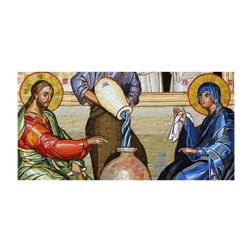
Our hearts have grown cold and empty, Mary knows, and she invites her Son to fill them with Divine Life. In this spiritually enriching homily, Father Jegar Fickel brings to life the sacred story of the Wedding Feast at Cana, a unique narrative found only in the Gospel of John. Father Jegar eloquently explores the theological depths of this event where Jesus performs His first miracle at the behest of His mother, Mary. This homily beautifully illustrates Mary’s role as the mediatrix who, perceiving the lack in human hearts, invites her Son to begin His public ministry of redemption. The transformation of water into wine not only addresses a momentary need but symbolizes the restoration of divine life within our souls, prefiguring the salvation offered through Christ's Passion. Join us as Father Jegar reveals how this miraculous event invites us to understand Mary's profound role in our spiritual lives and to renew our own commitment to live in fullness with God. This homily is an invitation to deepen our faith and to recognize the Eucharistic implications of Jesus's actions, which echo each time we participate in the Holy Mass. Let us open our hearts to the lessons of Cana: to fill our emptiness with divine presence and to heed Mary’s guidance, "Do whatever He tells you."
5 of 5