Farm To Stable: An Equine Nutrition Podcast (TM)

Farm To Stable: An Equine Nutrition Podcast (TM)

by Dr. Nettie Liburt
Season 3

Skin Health and Equine Nutrition

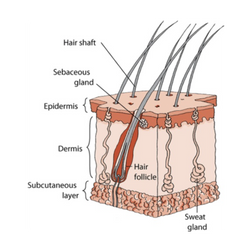
Cover Illustration Art Credit: Merck Veterinary Manual (link below) Many of us are in the throes of winter and the start of shedding season. Winter dryness also contributes to dry skin. Can nutrition help? As always, nutrition is supportive of skin health. While it can't cure everything, some key nutrients can help give your horse's skin and coat a boost for overall health. Links of Interest this week: Merck Veterinary Manual: Structure of Skin in Horses: https://www.merckvetmanual.com/horse-owners/skin-disorders-of-horses/structure-of-the-skin-in-horses Essential Fatty Acids and Skin Health (human focus): https://lpi.oregonstate.edu/mic/health-disease/skin-health/essential-fatty-acids

All About Vitamin E

This episode talks about why Vitamin E is an important part of a horse's diet, and covers the difference between natural and synthetic Vitamin E. Discussion also includes general scenarios in which supplemental Vitamin E should be considered, what form may be appropriate and why. Vitamin E is always a popular topic, so enjoy!

The Science of Haynets - Real Benefits and Considerations

Haynets are a common site in horse barns, but have you ever thought about why there are there? Are they stressful for horses? Do they have nutritional benefits? Do they really work to reduce waste? We’ll answer these questions and more in this episode, and talk about where the research came from. Cover Art Photo: iStock, Anja Janssen Links to research and more information: Extension Horses Fact Sheets: 5 Benefits of Slow Feed Hay Nets - https://horses.extension.org/5-benefits-of-slow-feed-hay-nets/ Extension Horses Fact Sheets: Do hay nets impact horse health? https://horses.extension.org/do-hay-nets-impact-horse-health/ DeBoer, et al., 2024. Effect of hay nets on horse bodyweight, body condition score, hay usage, and dental health in mature adult horses. Journal of Equine Veterinary Science. Vol. 136. https://doi.org/10.1016/j.jevs.2024.105051 Glunk, E., et al., 2014. The Effect of Hay Net Design on Rate of Forage Consumption When Feeding Adult Horses. Journal of Equine Veterinary Science. Vol. 34, pp. 986-991 https://doi.org/10.1016/j.jevs.2014.05.006 Glunk, et al., 2015. The effect of a limit-fed diet and slow-feed hay nets on morphometric measurements and postprandial metabolite and hormone patterns in adult horses. Journal of Animal Science. Vol. 93, pp. 4144–4152. https://doi.org/10.2527/jas.2015-9150 Ivester, et al., 2014. Environmental Exposures and Airway Inflammation in Young Thoroughbred Horses. Journal of Veterinary Internal Medicine. Vol. 28, pp.918-924. https://doi.org/10.1111/jvim.12333 Locke, et al., 2023. Effects of prolonged hay net feeding on equine behavior. Journal of Equine Veterinary Science. Vol. 124. https://doi.org/10.1016/j.jevs.2023.104529

Managing Changes or Additions to the Horse's Diet

I recently heard from a friend who is at a barn that changed the type of feed they were providing. Sadly, they ended up with a few cases of colic. While I don't know all the details, I thought it was a good topic to discuss - when making changes to a horse's diet, how and why it needs to be done slowly and carefully. Listen in for tips and guides on how to do this and what to do if you need to add something new to the diet as well.

Revisiting Winter Hydration Tips

Winter has come on strong here in much of North America, with some wild temperature swings. In winter, we rely more on hay for forage as pasture is unavailable. Hay and other dried forages have a lower water content compared to fresh pasture. In addition, extra hay is often provided to help a horse keep warm on cold days. More forage = more water needs! However, it is not uncommon for horses to drink less as temperatures drop. This week, we'll revisit some tips to help keep your horse hydrated in winter, and many of these tips are applicable all year as well. Some may sound familiar! The bottom line is that is is extremely important that a horse drinks sufficient water, especially in winter. Listen in for tips and reminders, and let us know if YOU have a good idea as well! The study referenced in this episode: Kristula and McDonnell, 1994. Drinking water temperature affects consumption of water during cold weather in ponies. Applied Animal Behaviour Science. 41(3-4):155-160. DOI: https://doi.org/10.1016/0168-1591(94)90020-5

Myofibrillar Myopathy (MFM) in Horses with Dr. Katie Young

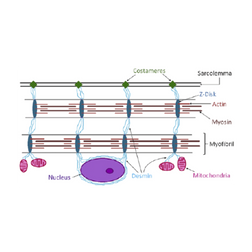
This week I am joined by special guest, Dr. Katie Young, an equine nutritionist who consults for Kentucky Equine Research and who councils clients independently. Dr. Young has spend her career in the equine feed industry and is a wealth of experience an knowledge! This week, Dr. Young talks about Myofibrillar Myopathy (MFM) in horses. We'll discuss how it differs from polysaccharide storage myopathy (PSSM) (types 1 and 2), what to look for and how to support MFM from a dietary standpoint. Horses with MFM may present with decreased performance or unwillingness to go forward. Dietary management is quite different from PSSM. Listen in to learn more! *Cover Art Graphic from: Koutakis, et al., 2015. Abnormal Accumulation of Desmin in Gastrocnemius Myofibers of Patients with Peripheral Artery Disease: Association with Altered Myofiber Morphology and Density, Mitochondrial Dysfunction and Impaired Limb Function. Journal of Histochemistry and Cytochemistry. DOI:10.1369/0022155415569348 Additional reading on MFM can be found at these links: https://ker.com/nmdl/resources/mfm/ Valberg, et al., 2017. Clinical and histopathological features of myofibrillar myopathy in Warmblood horses. Equine Vet J.;49(6):739-745. Online at: https://pubmed.ncbi.nlm.nih.gov/28543538/ Dr. Stephanie Valberg herself explains the diagnostics of MFM: https://www.youtube.com/watch?v=HdkNMUMhQvY

Anhidrosis in Horses

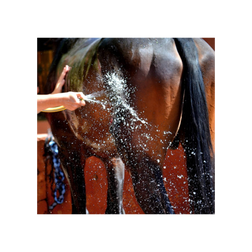
Welcome back to season 3 of Farm To Stable. It's the time of year here in North America when many equestrians are getting ready to head south to warmer climates for the winter. Dramatic change in environmental temperature from cold to hot can trigger or exasperate anhidrosis, a condition in which sweating is drastically reduced despite an increase in body temperature. So, how is anhidrosis managed? We'll talk about it in this episode. Research References: Johnson, E., et al. 2010. An epidemiologic study of anhidrosis in horses in Florida. Journal of the American Veterinary Medical Association. 236(10). DOI: https://doi.org/10.2460/javma.236.10.1091 Marlin, et al. 1996. Acclimation of horses to high temperature and humidity. Equine Athlete. 9: 8-11. Marlin, et al. 1996. Physiological responses in non-heat acclimated horses performing treadmill exercise in cool, hot, dry and hot humid condition. Equine Veterinary Journal (Suppl.) 22: 70-84. Marlin, D. & Nankervis, K. 2002. Thermoregulation. In: Equine Exercise Physiology. Blackwell Science. Publishing. Oxford, UK. Shmalberg, J and Xie, H. 2009. The clinical application of equine acupuncture. Journal of Equine Veterinary Science. 29(8): 645-652. Cover photo: istockphoto.com

BONUS EPISODE: Basics of Breeding Herd Nutrition w/ Dr. Kris Hiney & the Tack Box Talk Podcast

Check out this bonus episode of the "Farm To Stable: An Equine Nutrition Podcast" in collaboration with Dr. Kris Hiney, Extension Horses and the Tack Box Talk Podcast! As part of the Extension Horses Working Group, I'm fortunate to work with land-grant university experts from across the USA who are teachers, researchers and horse lovers from all disciplines. The purpose of university extension is to conduct research that helps the community, make that knowledge accessible and facilitate putting information to work. Dr. Hiney invited me to be a guest recently (Feb. 2025) to talk about basic nutrition of the equine breeding herd, since foaling season is in full swing. So I'm sharing that discussion here! Please check out Tack Box Talk for more fun, practical and interesting topics, and share this one as well. Here's a link: https://podcasts.apple.com/us/podcast/tack-box-talk/id1492355719 Happy riding!
Season 2

Tips for Helping a Horse Gain Weight

In this episode, I'll give some general tips for helping a horse gain weight. As winter gives way to spring, it is not unusual for horse owners and managers to notice that an animal has lost weight in the colder months. Also, weight may be needed to support additional training or performance. Whatever the reason, there are few simple things to begin with. Link to Body Condition Score Card (Texas A&M University): https://vetmed.tamu.edu/files/vetmed/vmth/laminitis/Equine_Body_Condition_Scoring.pdf Video about how to body condition score a horse: https://youtu.be/bq0ZXnSlsNQ?si=C-FmKaO5c9uCofxq Link for forage analysis services: https://equi-analytical.com/

Tips for Transitioning Onto Spring Pasture

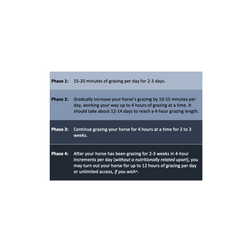
Here in North America, the temperatures are slowly getting warmer, and grass is growing faster and faster. For many horses, that means a transition from winter hay to spring pasture. As with anything, such a change requires time to minimize the risk of digestive upset, and should not be done suddenly. This week the discussion focuses on some general tips whether you have lush pastures growing, a small amount of pasture or only a dry lot. Some additional resources are here from: Penn State University: https://extension.psu.edu/transitioning-horses-to-spring-grazing University of Guelph: https://ovcpetnutrition.uoguelph.ca/2021/03/11/transitioning-your-horse-from-hay-to-grass-safely-this-spring/ These are quick reads with some easy to follow guidelines for transitioning to spring pasture. Thanks for listening! Episode Art Photo Graphic from the University of Guelph Factsheet, link posted above.
2 of 5